Tag Archive for: Stylish Spaces

The Queensland Coastal Home: 7 Ideas Worth Stealing

You don’t need an ocean view, or a prize-home budget, to capture the easy, breezy feeling of a Queensland coastal home. From indoor-outdoor living to subtropical greenery, here are seven ideas worth borrowing for your own place.

FORGET rooms filled with shells, anchors and signs pointing to the beach.

The best Queensland coastal homes aren’t necessarily “coastal” in any obvious sense at all. Their appeal comes from the way they respond to our climate and the way we live: plenty of natural light, rooms that open to the outdoors, cooling breezes, relaxed materials, greenery and spaces designed for casual entertaining.

Spend any time browsing beautiful Queensland homes, including those rather tempting homes regularly offered through Mater Prize Homes, and certain ideas appear again and again.

The good news? You don’t need to win the house to steal some of its best ideas.

Here are seven worth trying.

  • Jocelyn Magazine may receive a commission if you make an eligible purchase through links on this page, at no additional cost to you.
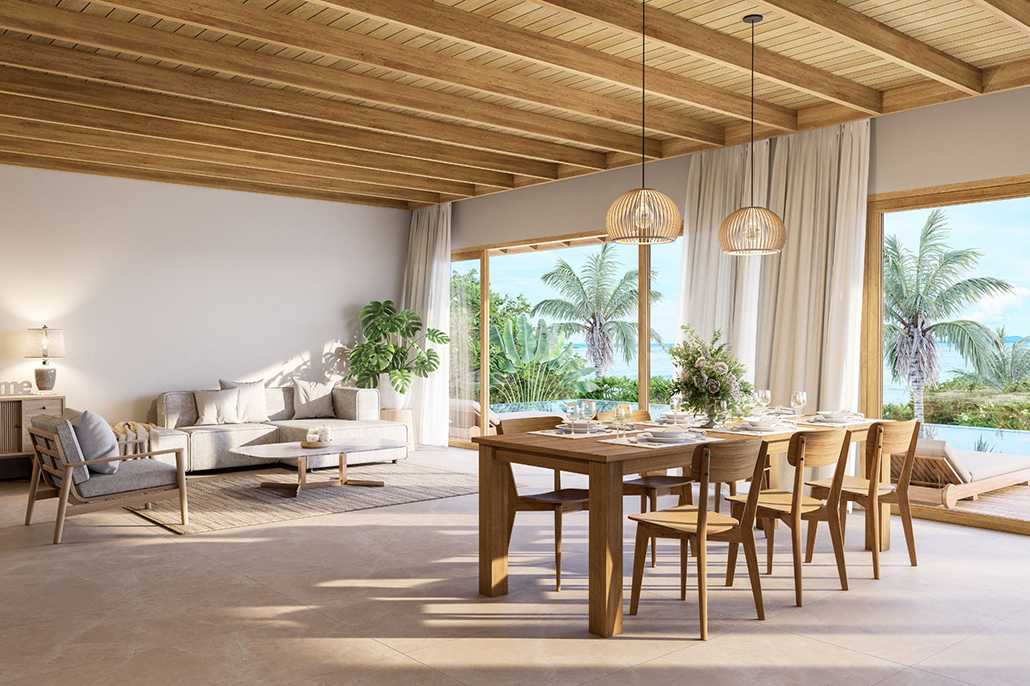
Queensland coastal living: Open-plan coastal dining and living area flowing into a tropical outdoor space

Opening living and dining spaces to the outdoors can make a home feel larger, lighter and more connected to its surroundings. Photos: Canva Pro.

1. Blur the line between indoors and out

One of the defining features of contemporary Queensland coastal living is that the outdoor area isn’t treated as somewhere you occasionally visit. It’s another room.

Large sliding or stacking doors, continuous or complementary flooring, covered patios and outdoor dining areas encourage people to move naturally between inside and outside.

It makes sense. Our climate allows us to use outdoor spaces for much of the year, whether that’s breakfast on the patio, an afternoon cuppa in the shade or dinner outside on a balmy evening.

There’s another advantage: a well-designed outdoor area can make the interior of a home feel considerably larger.

Even a relatively modest living room feels more expansive when the eye continues through open doors to a courtyard or garden beyond.

Steal this idea

You don’t need a huge deck or poolside pavilion.

In a townhouse, villa or smaller home, try using similar tones inside and out, keeping the view through the doorway uncluttered and creating one inviting destination outside; perhaps two comfortable chairs, a small table and some greenery.

The idea isn’t to make the outdoor space enormous. It’s to make it feel like somewhere you naturally want to go.

See also: How indoor-outdoor living adds to the relaxed feel at Oaks Hervey Bay.

2. Let natural light do some of the decorating

Queensland coastal living: Sunlight streaming through timber-framed windows into a relaxed sitting area

Natural light can become part of the decorating, bringing warmth, character and a sense of space to a room.

Beautiful coastal homes often feel luxurious before you’ve noticed a single piece of furniture. Much of that comes down to light.

Windows, glass doors, pale walls and uncluttered sightlines allow daylight to become part of the interior design. Colours appear fresher, rooms feel more spacious and the changing light throughout the day gives a home a character that can’t really be bought.

But there’s a distinctly Queensland qualification to all this.

More sunlight isn’t necessarily better.

The clever Queensland home balances natural light with shade. Orientation, blinds, awnings, verandahs and planting all have a role to play so that “light and airy” doesn’t turn into “blazing hot by two in the afternoon”.

Good orientation also takes local sun and prevailing breezes into account.

Steal this idea

Before buying another lamp or decorative object, look at what’s happening around your windows.

Are heavy window treatments swallowing daylight? Is furniture blocking part of a window? Has clutter gradually accumulated around the brightest part of the room?

Sometimes simply letting in more of the light you already have can change the whole feel of a space.
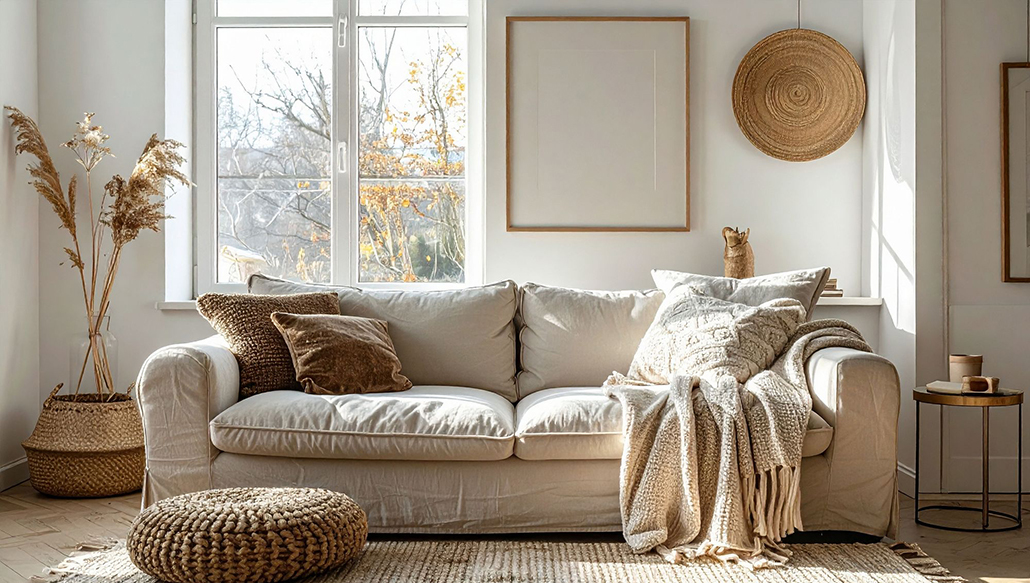
Queensland coastal living: Neutral coastal living room with natural woven textures and soft furnishings

Modern coastal style borrows from nature (warm neutrals, tactile fabrics and woven textures) rather than relying on obvious seaside motifs.

3. Go coastal without going nautical

There was a time when decorating a coastal home apparently required an impressive collection of shells, blue-and-white stripes and possibly an anchor.

Thankfully, we’ve moved on.

Contemporary Queensland coastal style tends to borrow its colours and textures from the landscape rather than decorating literally around a beach theme.

Think warm whites rather than stark white. Sand, stone and pale timber. Muted eucalyptus and olive greens. Soft ocean blues. Natural textures. Perhaps a little charcoal or black to give all that softness some definition.

The result feels calm and connected to its surroundings without announcing BEACH HOUSE from every available cushion.

It’s also a look that’s likely to age much better than heavily themed decorating.

Steal this idea

Start with a neutral base and introduce coastal colour through the things that are easiest to change.

Cushions, throws, artwork, ceramics and plants can completely alter the mood of a room without requiring you to repaint the walls or replace major pieces of furniture every time tastes change.

And you don’t have to use blue at all. A room filled with warm neutrals, timber and leafy greens can feel every bit as coastal.

Bring the coastal look home

The right lighting can completely change the mood of a room. Explore Mica Lighting for lamps and lighting ideas to add warmth, texture and relaxed style to your own coastal-inspired space.
Explore Mica Lighting

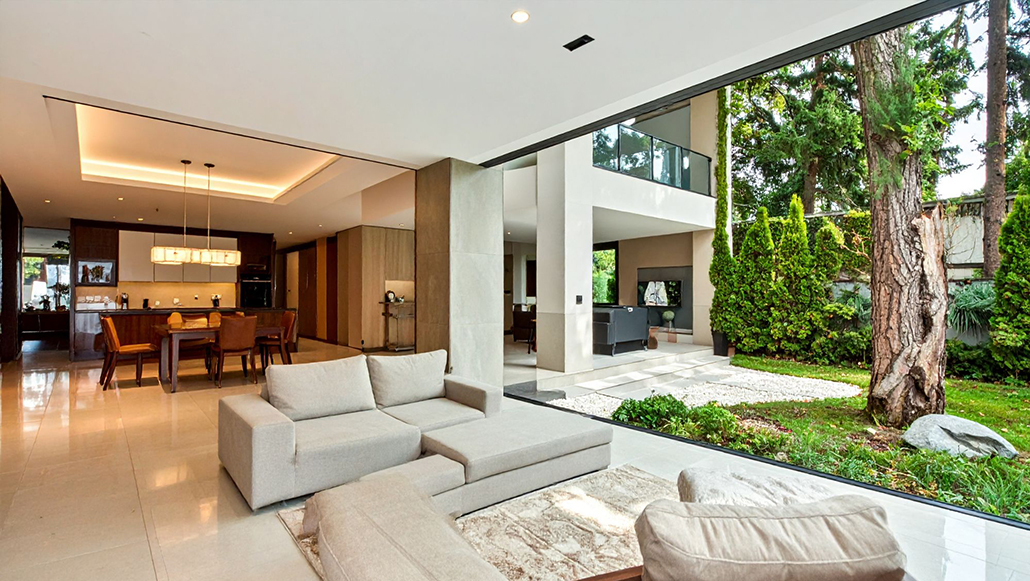
Queensland coastal living: Contemporary living room opening directly onto a lush green garden

A well-positioned garden can become living artwork, bringing greenery, privacy and a sense of calm into the home.

4. Make greenery part of the architecture

One of the loveliest things about Queensland living is that the garden doesn’t necessarily stop at the back door.

A strategically positioned palm, flowering shrub or lush courtyard seen through a window can become almost like living artwork.

Well-designed coastal homes use landscaping particularly effectively — not simply around the perimeter of the property, but as part of what you see from inside.

Greenery can soften hard architectural lines, provide privacy and make even a relatively ordinary outlook feel more secluded. It also creates that subtle connection between indoors and outdoors that makes coastal homes feel so relaxed.

And sometimes the smallest garden can do it beautifully.

Steal this idea

Try looking at your garden from the opposite direction.

Instead of standing outside deciding where another plant should go, sit in the rooms you use most and look out.

What do you see from your favourite chair?

What catches your eye when you’re standing at the kitchen sink?

What’s outside the bedroom window?

Sometimes one beautifully positioned plant outside a window can have more impact on the way you experience your home than filling an entire garden bed.

See also: Tropical living and leafy outlooks at Oaks Port Douglas.

5. Create one irresistible outdoor room
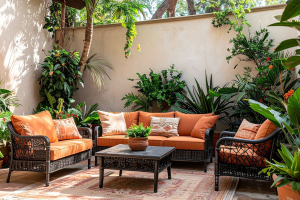
Small leafy courtyard with comfortable outdoor seating and tropical plants

A small courtyard can be every bit as inviting as a sprawling backyard when comfort, greenery and shade come together.

A sprawling backyard isn’t essential to coastal living.

What matters more is having one outdoor spot that actually makes you want to sit down.

In a dream home, that might be a vast covered deck overlooking a swimming pool and landscaped gardens. In real life, it could be a compact balcony, a townhouse courtyard or a shady corner beside the back door.

Size matters far less than comfort.

Somewhere pleasant to sit is the starting point. Then think about shade, a table for a drink, greenery, privacy and perhaps a little lighting so the space remains inviting after dark.

Wind matters too; something Queensland coastal dwellers know only too well. The prettiest outdoor setting in the world won’t get much use if you’re perpetually chasing cushions across the yard.

Steal this idea

Rather than spreading your outdoor budget thinly across an entire garden or courtyard, concentrate on the place you’re most likely to use.

Make one small area wonderful.

Give it the most comfortable chair. Add the plant you’ve been admiring. Find somewhere for the morning coffee or evening glass of wine.

A small outdoor space that’s used every day is worth far more than a large one that’s merely admired through the window.
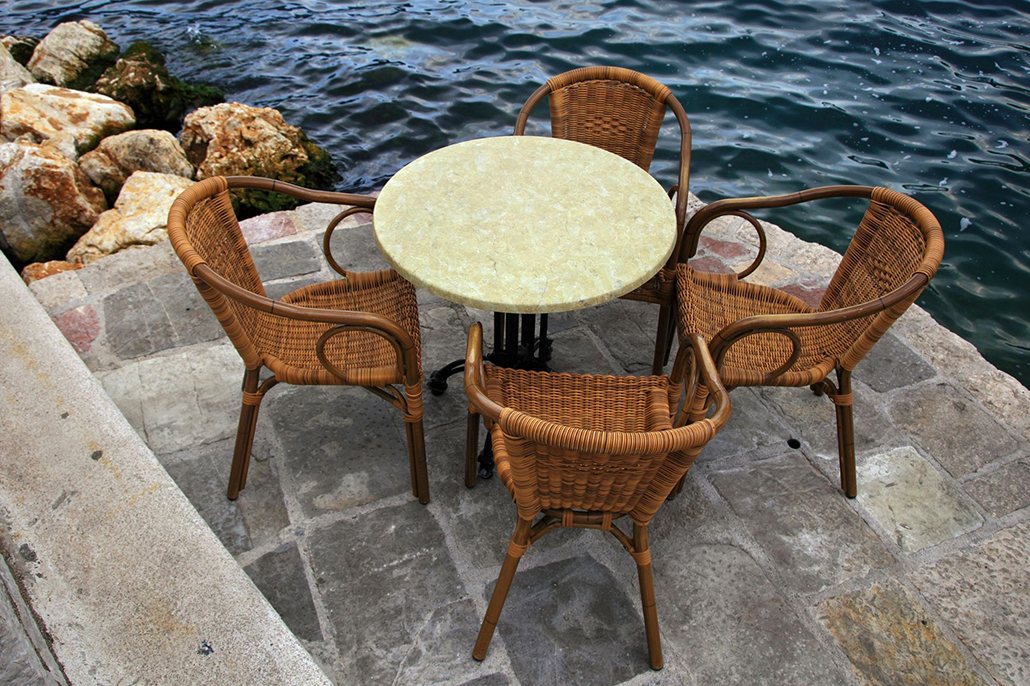
Woven outdoor chairs and stone table beside the water

Natural-looking materials such as woven fibres and stone bring texture and warmth to outdoor coastal spaces, but durability matters too.

6. Choose materials that can cope with real life

Coastal homes look relaxed partly because they don’t feel too precious to live in.

Natural-looking timber, stone, textured fabrics, woven materials and practical surfaces give rooms warmth without making them feel formal.

But Queensland adds another requirement. Things need to cope with Queensland.

There’s a difference between something that looks coastal in a showroom and something that will actually perform well in a Queensland coastal environment. Heat, humidity, strong sunlight and, closer to the water, salt air can all take their toll.

Outdoor furniture can corrode. Fabrics fade.

Ventilation and passive cooling also become important considerations in Queensland’s warmer, humid conditions.

Beautiful finishes that require constant fussing can become considerably less beautiful once you’re the person doing the fussing.

That doesn’t mean everything has to be indestructible and beige. It simply means practicality deserves a seat at the decorating table.

Look for easy-clean fabrics, fade-resistant materials and surfaces that tolerate everyday wear. Think about ventilation and moisture. If something will live outside, check how its materials cope with sun, rain and salt-laden air rather than assuming “outdoor” means “Queensland-proof”.

Steal this idea

When you’re considering something new for your coastal home, ask yourself two questions.

Does it look good?

And then:

Will I still like it after a few Queensland summers?

The second question may save you considerably more money than the first.
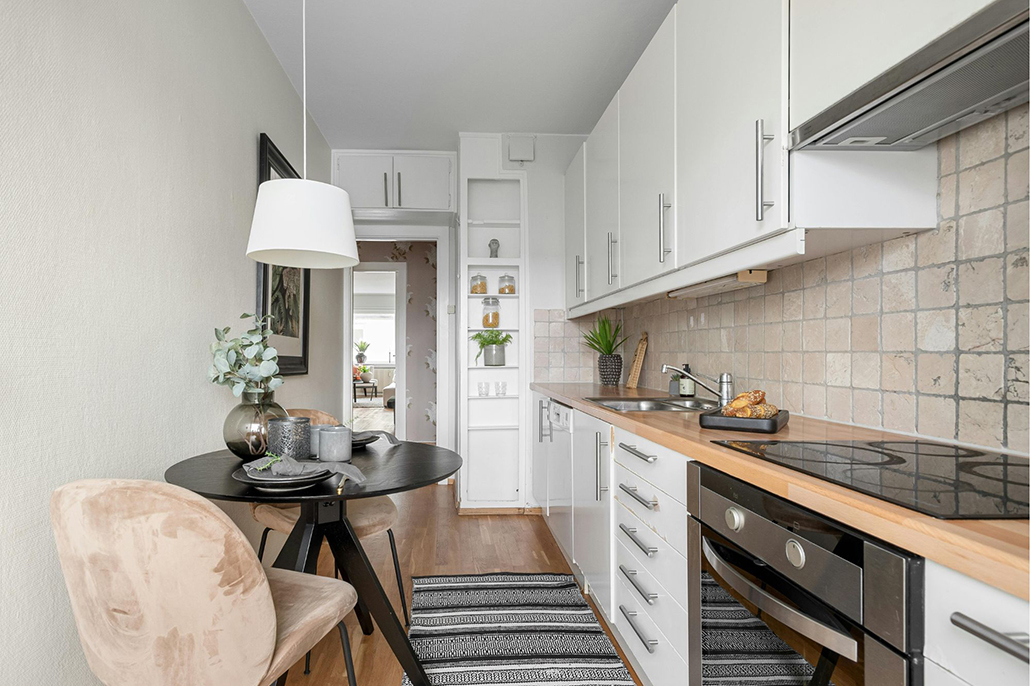
Compact kitchen with built-in storage and a small dining table

Good small-space design isn’t about squeezing in more; it’s about making every part of the home work harder for everyday life.

7. Design for the way you actually live

Perhaps the best lesson we can steal from beautiful homes isn’t about colour or furniture at all. It’s about ease.

The most appealing homes seem to anticipate everyday life. There’s somewhere to drop a bag, kick off shoes, store outdoor gear, pour a cold drink or sit with friends without worrying that everything has to remain immaculate.

That’s particularly important when you’re living in a smaller home.

Good storage, multipurpose spaces and thoughtful furniture placement can matter far more than additional square metres. A beautifully styled room that constantly gets in your way isn’t good design; however fabulous it looked in the photograph.

Think about the little annoyances in your own home. Is there nowhere sensible to leave shoes?

Do you walk through the door carrying shopping and immediately wonder where to put it?

Are outdoor cushions constantly being hauled inside?

Is the spot where you like your morning coffee inexplicably the least comfortable chair in the house?

These aren’t glamorous design problems. But solving them can change how a home feels every single day.

Steal this idea

Before buying another decorative object, identify one small irritation about the way your home works. Then fix that.

Add the hook. Move the chair. Find somewhere for the shoes. Create the coffee corner. Give the everyday clutter somewhere sensible to live.

Because a home shouldn’t merely photograph beautifully. It should make everyday life easier.

See also: Create a more relaxing space with these ideas for an at-home spa day.

You don’t have to own the dream home to borrow the dream

Perhaps that’s part of the pleasure of looking through beautiful homes. Most of us aren’t going to recreate them room for room and probably wouldn’t want to.

Instead, we notice something. The way sunlight falls across a pale timber floor. A garden framed perfectly by a window. Doors thrown open to a shaded terrace. A corner that looks made for morning coffee.

And we think: I could do something like that at home.

That’s the useful side of a little property dreaming. Take the idea. Adapt it to your space, your budget and the way you live.

Steal the look for less

You don’t need a designer budget to give your home a fresh coastal feel. Browse Harris Scarfe for homewares, bedding, cushions and everyday pieces that can help refresh a room without starting from scratch.

Shop Harris Scarfe Home

Start with the surfaces

From a bathroom refresh to an outdoor area, the right tiles can help create that relaxed coastal look while standing up to everyday life. Explore Lazy Tiles for inspiration for your next home project.

Explore Lazy Tiles

Or fancy the whole house instead?

Of course, there’s another way to get the coastal-home look. Take a peek at the latest Mater Prize Home and see what dream home is currently up for grabs.

View the Latest Mater Prize Home

  • Jocelyn Magazine may receive a commission if you make an eligible purchase through links on this page, at no additional cost to you.


Inside the Chaos of Body Corporate Maintenance

Why good intentions aren’t always enough

There’s a moment that tends to happen in many body corporate meetings. It’s not dramatic. No raised voices. No one storms out.

But you leave with a sense that something didn’t quite line up.

Not wrong, exactly, just inconsistent.

It often shows up around something as ordinary as maintenance.

  • Jocelyn Magazine is filled with ideas for coastal living, travel, downsizing, healthy eating and creative pursuits. If we inspire your next purchase through links in this email, we may receive a small commission, at no extra cost to you.
Person completing a body corporate maintenance checklist to report property issues

Clear documentation can make all the difference when raising maintenance issues.


The assumption gap

At a recent AGM, a simple idea was put forward: an annual maintenance reporting checklist. Nothing overly complex, just a structured way for owners to flag issues ahead of budgeting and planning.

The response? Largely dismissive. The prevailing view was that such a process was unnecessary.

Owners, it was suggested, should simply organise two quotes when they notice a problem and present them to the committee for approval.

On the surface, that sounds practical. Efficient, even.

But it rests on an assumption that doesn’t always hold true: that every owner knows this is how the body corporate maintenance process works.


What new owners don’t know

In reality, many owners — particularly new ones — aren’t always told this.

There’s rarely a welcome pack that includes maintenance pathways. No clear guide outlining responsibilities, or how to raise issues, or what the committee expects.

So people do what seems reasonable:

  • they mention issues informally
  • they wait for a scheduled discussion
  • or they assume someone else is handling it

Others take initiative, organise quotes, and hope they’ve followed the right process.

And sometimes, these approaches exist side by side with very different outcomes.


When process becomes personal

In the absence of a clear, agreed pathway, decisions can begin to feel uneven.

One owner gathers quotes for a repair, only to have the proposal declined.

Another quote — obtained separately, at a lower cost — is later accepted.

It may be entirely well-intentioned. Committees are often trying to balance limited budgets with necessary repairs.

But without a transparent process, the outcome can feel less about what is being proposed, and more about how — and by whom.

That’s where uncertainty creeps in.


The cost of informality

Informal systems can work, particularly in small complexes where communication is strong and expectations are shared.

But over time, they can also lead to:

  • inconsistent decision-making
  • delays in addressing maintenance
  • confusion around responsibilities, and
  • a sense of inequity among owners

None of which are intentional, perhaps.

Most committees are made up of volunteers doing their best, often without formal training, navigating legislation like the Body Corporate and Community Management Act 1997 while trying to keep costs under control. That’s no small task.


A case for something simple

Which is why even modest structure can make a difference.

A basic, annual checklist:

  • gives every owner the same opportunity to raise concerns
  • creates a shared timeline for consideration
  • supports more consistent budgeting
  • and reduces the guesswork around “what to do when something goes wrong”

It doesn’t replace initiative. Owners can still act when urgent issues arise.

But it provides a baseline, a common understanding.


This body corporate maintenance checklist is provided as a general guide for owners.
Processes may vary between body corporates and should align with applicable legislation and by-laws.

DOWNLOAD THE CHECKLIST HERE


Not about being right

It’s tempting, in these situations, to focus on who was right in the room. But that’s rarely the most useful question. A better one might be:

Is the process clear enough that a new owner would know exactly what to do?

If the answer is no, there’s an opportunity, not for conflict, but for improvement.


How things shift

Body corporate living is, in many ways, a shared experiment. It relies on goodwill, communication, and a degree of patience. And sometimes, it benefits from stepping back and looking not just at individual decisions, but at the systems behind them.

Because when those systems are clear and consistent, everything else tends to follow more easily. Even the small things. Like a crack in the rendering, waiting to be fixed.

Contractor carrying out exterior building maintenance on a townhouse complex in Queensland

From small repairs to larger works, maintenance is where decisions become visible.


Thinking of buying into a body corporate?

Before you commit, it’s worth taking a closer look at how a complex is really operating behind the scenes.

👉 Download the Body Corporate Health Check — a practical checklist to help you spot issues early and avoid costly surprises.


About the author

With several years’ experience as a body corporate secretary, Jocelyn brings a practical, real-world perspective to buying and living in townhouse and apartment complexes.


✨ Create a Space That Works for You

Townhouse and apartment living often comes down to making your space both practical and comfortable. A few thoughtful additions can make a real difference to how a home feels day to day.

If you’re settling into a smaller space or simply refining your surroundings, these partners offer a range of ideas worth exploring:

Mica Lighting
Beautiful lighting can help smaller rooms feel warmer, brighter and more inviting.

Newentor AU
From mattress toppers to dehumidifiers and portable air conditioners, practical comfort for everyday living.

Tefal Australia
Well-designed cookware and appliances can make compact kitchens easier and more enjoyable to use.

Kakadu Plum Co.
Natural Australian flavours and pantry staples to add something special to everyday meals.

Lazy Tiles
Stylish peel-and-stick tiles designed to refresh kitchens, bathrooms and small spaces without the renovation drama.

  • Jocelyn Magazine is filled with ideas for coastal living, travel, downsizing, healthy eating and creative pursuits. If we inspire your next purchase through links in this email, we may receive a small commission, at no extra cost to you.

How to Choose Retreat Accommodation in Hervey Bay

A practical, slightly dreamy guide for organising your next group getaway

THERE’S a moment, somewhere between the idea and the booking, when a retreat starts to feel real.

It might begin with a simple thought: What if we brought everyone together? Not just for a holiday, but for something more intentional.

A writers’ retreat. An artists’ gathering. A space to pause, create, and reconnect.

And then comes the big question: Where will everyone stay?

If you’re looking for retreat accommodation in Hervey Bay, the good news is you’re on the right track.

Choosing the right accommodation will shape the entire experience—how people connect, how they unwind, and how easily ideas begin to flow.

*This article contains affiliate links. If you click through and make a purchase, we may earn a commission, at no extra cost to you. It’s how we keep creating helpful stories and guides for you.

Humpback whale tail diving in Hervey Bay during migration season

A humpback whale dives beneath the surface, revealing its tail in the calm waters of Hervey Bay, one of the world’s best whale-watching destinations.

Why Hervey Bay Works So Well for Retreats

There’s something about Hervey Bay that suits creative people. It’s not flashy. It doesn’t try too hard. And that’s exactly the point.
  • Calm, swimmable waters
  • Soft coastal light (a dream for photographers and painters)
  • A relaxed pace that encourages reflection
  • Enough cafés and dining spots to keep things social

It’s the kind of place where mornings start slowly, conversations stretch longer, and ideas seem to land a little more easily.

For a retreat group accommodation in Hervey Bay, the balance between peaceful but not isolated is gold.


Planning your retreat? A few essentials to sort first:

→ Check cover for pre-existing conditions with AllClear Travel Insurance
→ Keep things organised with smart travel gear from Bagsmart

Small things sorted early = a much smoother retreat later.


People walking along Urangan Pier at sunset in silhouette

Evening walkers cross Urangan Pier as the sun sets, capturing the unhurried pace of life in Hervey Bay.

The First Big Decision: Together or Nearby?

Before diving into specific places, there’s one key choice to make:

Do you want everyone under one roof, or close by but separate?

Each has its own rhythm.

Option 1: All in One House (Airbnb-style)

  • Best for bonding
  • Shared meals, spontaneous chats
  • Feels like a “real” retreat

Option 2: Apartment Resort (multiple units)

  • Private space for each guest
  • Flexible budgets
  • Still easy to gather

For most creative groups, the sweet spot is often a blend of both: private rooms with shared moments.


Getting around Hervey Bay is easier with your own wheels:

→ Compare local options with Avis Car Rentals or Hertz Car Rentals

Ideal for group dinners, day trips, or a spontaneous run out to the vineyards.


Palm-lined Hervey Bay esplanade with cafes and Oaks resort accommodation

The Hervey Bay esplanade, lined with palm trees, cafés and beachfront accommodation at the Oaks, offers easy access to the water and relaxed coastal living.

The “Easy Yes” Option

Oaks Hervey Bay Resort and Spa

Click Here

If you want a retreat that’s easy to organise and easy to enjoy, this one ticks every box.

  • Book a couple of apartments across the group
  • Everyone gets their own room (or shares comfortably)
  • Kitchens for casual shared meals
  • Balconies for early morning writing or reflection

And then there’s the location—right on the Esplanade. Coffee is a short stroll away. So is dinner. So is that “just one more walk before sunset” feeling.

💡 Why it works: Simple, reliable, and feels like a treat without being over the top.

For a More Immersive Creative Reset

Kingfisher Bay Resort

Click Here

If your group is craving something deeper like less distraction with more immersion, this is where things shift.

Set on K’gari (Fraser Island), Kingfisher Bay Resort feels like stepping out of everyday life.

  • Bushland villas
  • Wildlife wandering through
  • A peaceful place that actually restores your thinking

There’s a little more planning involved (ferry transfers), but that’s part of the experience. It creates a sense of arrival, like you’ve gone somewhere meaningful.

💡 Best for: Writing retreats, creative intensives, or groups wanting genuine unplug time.

The Quiet Achievers (Mid-Range Gems)

Not every retreat needs to feel like a luxury escape. Sometimes, the best experiences come from places that simply work well.

Akama Resort

Click Here

  • Spacious, modern apartments
  • Relaxed marina location
  • Ideal for a central gathering space

Ramada by Wyndham Hervey Bay

Click Here

  • Studio and apartment-style options
  • Onsite dining
  • Slightly removed from the Esplanade buzz

Mantra Hervey Bay

Click Here

  • Good value without feeling basic
  • Flexible configurations for groups

These are the kinds of places where people settle in quickly without fuss or friction.

The “Feels Like a Retreat” Option

Best Western Plus Quarterdecks Retreat

Click Here

This one sits somewhere between a resort and a retreat centre.
  • Standalone villas
  • Tropical gardens
  • A genuine sense of calm

It naturally encourages a slower pace, which can be exactly what a retreat needs.

The Beachfront Balance

Grand Mercure Allegra Hervey Bay

Click Here

BreakFree Great Sandy Straits

Click Here

These options lean into one of Hervey Bay’s biggest strengths: being right by the water.

Morning walks. Ocean air. That slightly salty breeze that somehow clears your head.

💡 Perfect for: Groups who want a natural rhythm to write, walk, talk, repeat.

The Airbnb Alternative: Where Magic Happens

Click Here

If there’s one option that consistently creates memorable retreats, it’s this.

A well-chosen Airbnb can give you:

  • A long dining table for shared meals
  • Space for conversations that unfold naturally
  • A sense of being “away” together

It’s less structured and often more meaningful because of it.

💡 Best for: Creative groups, friendships, collaborative energy.


Make the most of the coastal setting:

→ Travel-friendly tech and Kindle reads via Amazon Australia

Because the right gear makes slow mornings and seaside walks even better.


Urangan Pier stretching into the ocean with long pylons beneath

The historic Urangan Pier extends nearly a kilometre into the bay, offering sweeping views and a favourite spot for fishing and walking.

What to Consider for Retreat Accommodation in Hervey Bay

This is where the practical side matters.

Room Configuration

Seven or more people means flexibility is key.
Look for:

  • Enough bedrooms
  • Multiple bathrooms

Shared Space

Is there:

  • A lounge big enough for everyone?
  • A dining area for group meals or discussions?

Location

Do you want:

  • Walkable cafés and beach access?
  • A quieter, tucked-away setting?

Budget Balance

Not everyone travels the same way.
Apartment-style stays can help accommodate different budgets within the same group.

Boats moored at Hervey Bay marina ready for whale watching tours

The Hervey Bay marina is the departure point for whale watching tours and island adventures across the Fraser Coast.

The Real Secret? It’s Not Just the Accommodation

Here’s something worth keeping in mind: it’s not just the property that makes the retreat.

It’s also what the space allows.

  • Conversations that don’t feel rushed
  • Time to think clearly
  • A sense of being slightly removed from everyday life

Hervey Bay simply supports that in a very natural way.

Breakfast with coffee and fresh dish overlooking the beach at Hervey Bay

A relaxed breakfast at Enzo’s on the Beach at Torquay where good coffee and fresh flavours are served with ocean views.

Final Thought: Choose the Experience First

If you’re picturing:

  • Easy, social, coastal: go with Oaks Hotel Hervey Bay
  • Deep, immersive, nature-based: choose Kingfisher Bay
  • Connected and intimate: look for a beautiful Airbnb
  • Balanced and flexible: consider Akama, Ramada or Mantra

There’s no single “right” option; just the one that aligns with the kind of retreat you want to create.

And that’s really what this is about. Not just booking accommodation… but setting the tone for something people will remember long after they’ve gone home.


Whale sculpture outside Hervey Bay Regional Gallery

Public art in Hervey Bay reflects the region’s connection to the ocean, with striking whale sculptures near the gallery precinct.

Ready to Plan Your Hervey Bay Retreat?

Whether you’re picturing sunrise writing sessions by the water, long lunches with your group, or simply a change of pace, having the right base makes all the difference.

Start here:

→ Browse coastal apartments and resort stays with Oaks Hotel Hervey Bay
→ Compare a wider range of group-friendly stays via ParkBooker
→ Organise transport with Avis Car Rentals or Hertz Car Rentals
→ Travel with confidence using AllClear Travel Insurance

Take your time choosing — the right setting doesn’t just host a retreat… it shapes it.

*This article contains affiliate links. If you click through and make a purchase, we may earn a commission, at no extra cost to you. It’s how we keep creating helpful stories and guides for you.

Pelican perched on railing near Urangan Pier in Hervey Bay

A curious pelican pauses along the waterfront, a common sight around Urangan Pier and the marina.