
Planning a K’gari escape from Hervey Bay? Discover your options for taking barges, tours, our own 4WD, day trips and overnight stays, plus why slowing down around Kingfisher Bay can be part of the experience.
Come explore the beauty of Hervey Bay – from the World Heritage-listed K’gari to whale-watching tours and safe and family friendly beaches.
Whale Watching in Hervey Bay: The Complete Seasonal Guide
From lively juveniles in July and August to mothers teaching their calves the ways of the whale in spring, every stage of Hervey Bay’s whale-watching season has something different to offer. Here’s how to choose when to go, find the right cruise and make the most of your day on the water.
- This article contains affiliate links. If you make a booking or purchase an item through one of these links, Jocelyn Magazine may receive a commission at no extra cost to you.
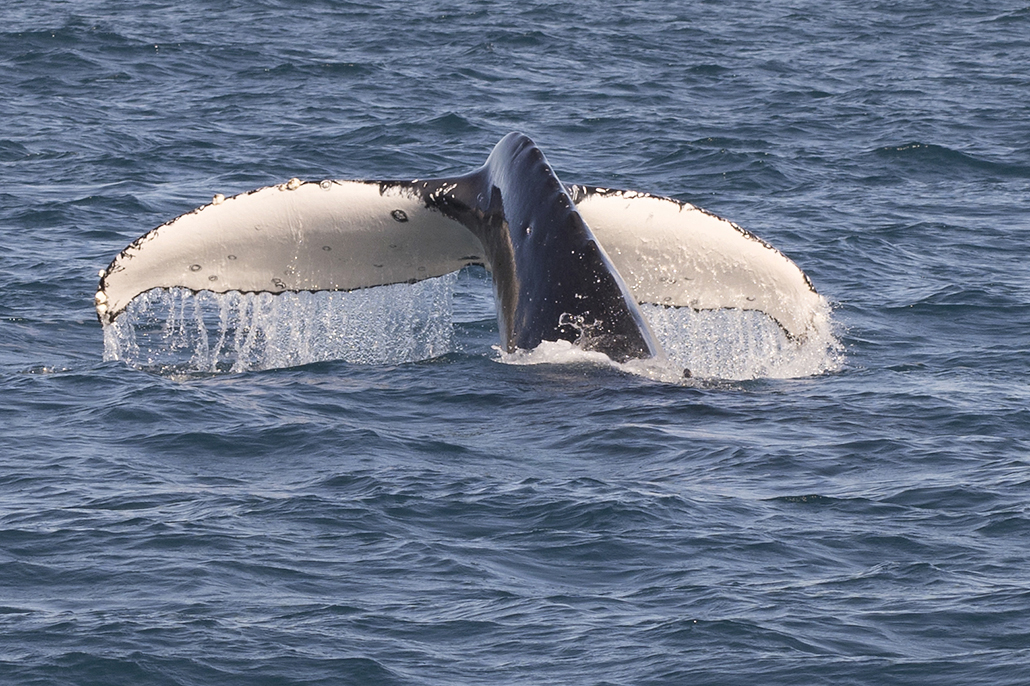
A humpback whale slips beneath the surface during the annual whale-watching season in Hervey Bay.
THE FIRST sign may be little more than a puff of white on the horizon, or it may appear right behind you.
On a recent tour with Whalesong Cruises, many of the other passengers had gathered at what is often considered the best vantage point: the bow. It offers exciting, unobstructed views of whales surfacing ahead, although it can also be the bumpiest part of the boat.
As someone prone to seasickness, I played it safe. Even though I’d taken medication beforehand, I found a seat at the stern, where the ride tends to be smoother. It was closer to the engines and a little louder, but I was in for a lovely surprise.
With my Canon EOS R5 and 100–400mm lens poised, I was scanning the side horizon when I heard a sudden blow behind my seat and saw spray shoot into the air. I turned to find a humpback had approached us from behind.
Whale-watching boats must follow laws governing how closely they can approach the whales. The whales, however, are curious creatures and sometimes decide to come closer to investigate us.
At that distance, my 100–400mm lens was far too long to capture the whole whale. Fortunately, my Samsung Galaxy S22 Ultra was dangling from my wrist, ready to catch what remained of the moment.
It was also a timely reminder that there is no single “best” place to stand on a whale-watching boat. While everyone is scanning the water ahead, a whale may surface beside you, or sneak up from behind.
Sometimes, the first sign is that fleeting puff of spray. Then comes the curve of a dark back, a fin raised above the water or, if luck and a lively whale are on your side, 40 tonnes of humpback launching into the air before landing in an explosion of white water.
Whale watching is always unpredictable. That is part of its magic. Yet in Hervey Bay, the experience is different from watching whales hurry past a headland on their annual migration.
The humpbacks that enter the bay often stay for days rather than merely passing through. In the comparatively calm, sheltered waters between the mainland and K’gari (Fraser Island), they rest, socialise and investigate their surroundings. Later in the season, mothers bring their calves into the bay to nurse and gather strength for the long journey south.
This special relationship between the whales and the local community helped Hervey Bay become the world’s first designated Whale Heritage Site in 2019. It remains one of Australia’s most rewarding places to see humpback whales in the wild; not simply because they visit in considerable numbers, but because they often appear to be in no great hurry to leave.
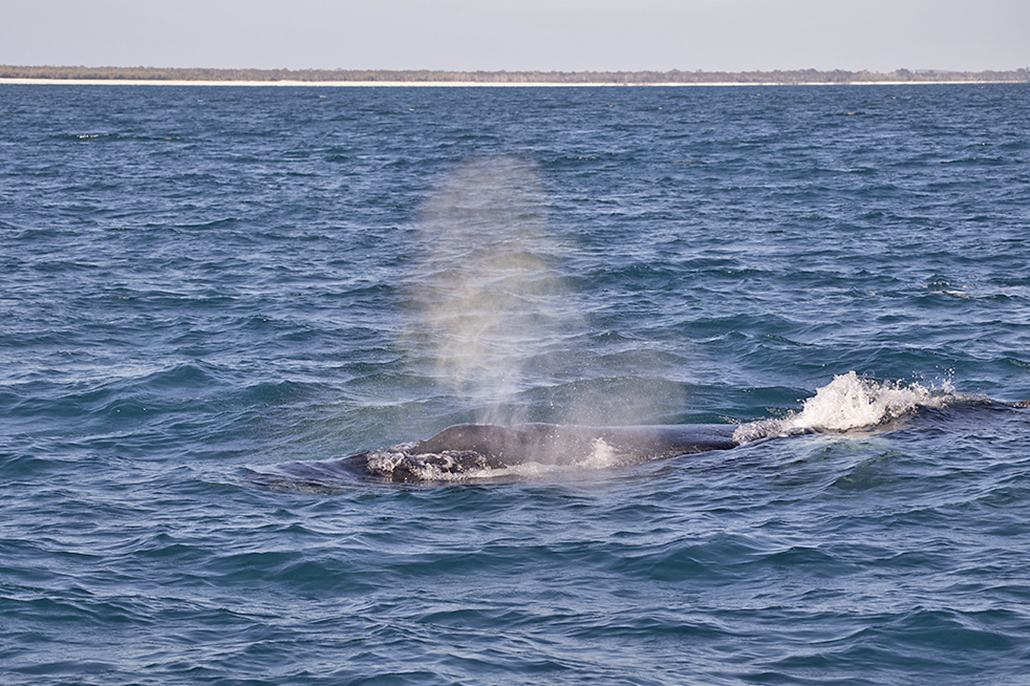
A puff of white spray is often the first sign that a humpback whale has surfaced nearby.
When is whale-watching season in Hervey Bay?
Hervey Bay’s whale-watching season generally runs from mid-July until late October, although whales are wild travellers and do not consult a calendar before setting off.
The timing and behaviour of the whales vary throughout the season. Early arrivals tend to include younger whales and lively social groups. As winter gives way to spring, mothers and calves become the main attraction on their southern migration.
There is no single “wrong” month to go. The best time depends on what you most hope to see.
July: the first arrivals
The first humpbacks usually begin entering Hervey Bay in July, with numbers building as the month progresses.
These early visitors are often juveniles, sub-adults and adults making their way south from the breeding grounds. They may form social groups, practise surface behaviours or show a healthy curiosity about the boats around them.
July has a pleasing sense of anticipation. The season is gathering momentum, crews are back on the water and every new arrival feels like a small announcement that the whales have returned.
It can also be a good time for energetic displays such as:
- breaching;
- tail slapping;
- pectoral-fin slapping;
- spy-hopping, when a whale raises its head vertically above the surface; and
- close approaches to vessels.
Not every operator begins on the same date, and early-season sighting guarantees may not yet apply, so check the details before booking.
August: peak numbers and social activity
By August, the season is in full swing. Whale numbers are generally high, cruise choices are plentiful, and the bay can be alive with social activity.
Young humpbacks are among the most entertaining visitors. Curious sub-adults sometimes approach a stationary boat and remain nearby, occasionally circling or swimming beneath it. This is commonly called mugging, although, unlike its city namesake, it generally leaves passengers delighted and still in possession of their valuables.
August is an excellent choice for first-time whale watchers and photographers hoping to see a variety of behaviours. It is also popular, particularly during weekends and major events, so it pays to book cruises and accommodation ahead.
September: mothers and calves take centre stage
If July is the overture and August the lively middle act, September brings a change in mood.
Mothers and their calves arrive in greater numbers as they migrate south. Hervey Bay’s protected waters provide a valuable place to rest, nurse and prepare for the journey towards the Southern Ocean.
For whale watchers, this can be one of the most endearing stages of the season. Calves must learn the physical and social skills they will need as adult whales, and their early efforts can be exuberant. You may see a young whale practising breaches, tail slaps and pectoral-fin slaps while its mother rests nearby.
The smaller whale is still an impressive animal, of course. ‘Baby’ is a relative term when the baby in question is several metres long and capable of drenching half a viewing deck.
September often offers the most dependable combination of strong whale numbers, mothers and calves, comfortable spring weather and a full choice of tours. It is also one of the most popular times to visit.
October: the final journey south
During October, mothers and their increasingly strong calves continue south. The season gradually winds down, but that does not make its final weeks an afterthought.
Early October can still produce beautiful encounters with family pairs lingering in the bay. There may be fewer boats on the water, too, giving the day a quieter feel.
As the month progresses, whale numbers and cruise choices generally decline. Operators finish their seasons on different dates, and sighting guarantees may end before the final scheduled tour. Confirm that your chosen cruise is operating and read its current terms before arranging the rest of your visit.
The short answer: August is hard to beat for high numbers and energetic social whales, while September is the spring sweet spot for mothers and calves. Early October can reward travellers seeking a quieter experience, provided tours are still running.
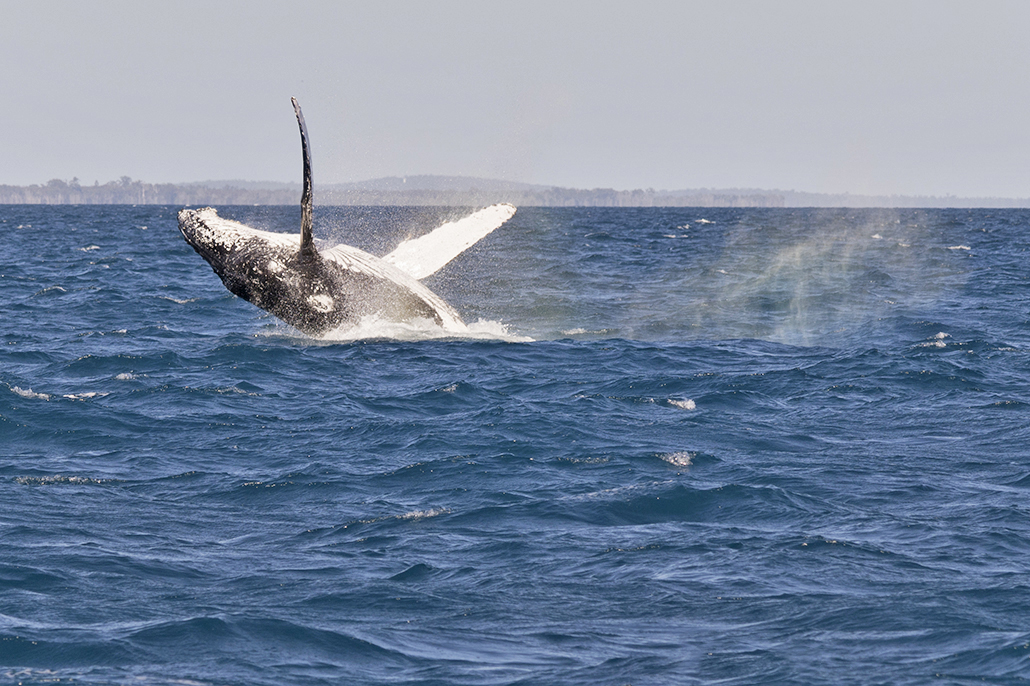
A lively humpback launches from the water, one of the whale season’s most exhilarating sights.
Why do humpback whales stop in Hervey Bay?
Humpback whales migrate along Australia’s east coast each year between the cold, food-rich waters of Antarctica and their warmer breeding grounds to the north.
Hervey Bay sits beside this migratory route, but its importance goes beyond geography. K’gari helps shelter the bay from the open ocean, creating comparatively calm, shallow waters where whales can pause.
The stopover serves different purposes throughout the season. Younger whales socialise and appear to practise adult behaviours. Mature animals rest and interact. Mothers later use the bay as a nursery, nursing their calves and allowing them time to develop before continuing south.
Research cited by Fraser Coast Tourism & Events indicates that mature females may remain for just over a week, while mothers with calves can stay for up to two weeks. For visitors, that means the possibility of longer, more relaxed encounters than those experienced at locations where whales are mainly travelling past.
It is important, though, to allow the whales to set the terms. Responsible operators must follow approach rules, reduce speed and maintain required distances. If a whale chooses to come closer, the vessel may need to remain stationary until it moves away.
That is when a scheduled cruise can suddenly become wonderfully unscheduled.
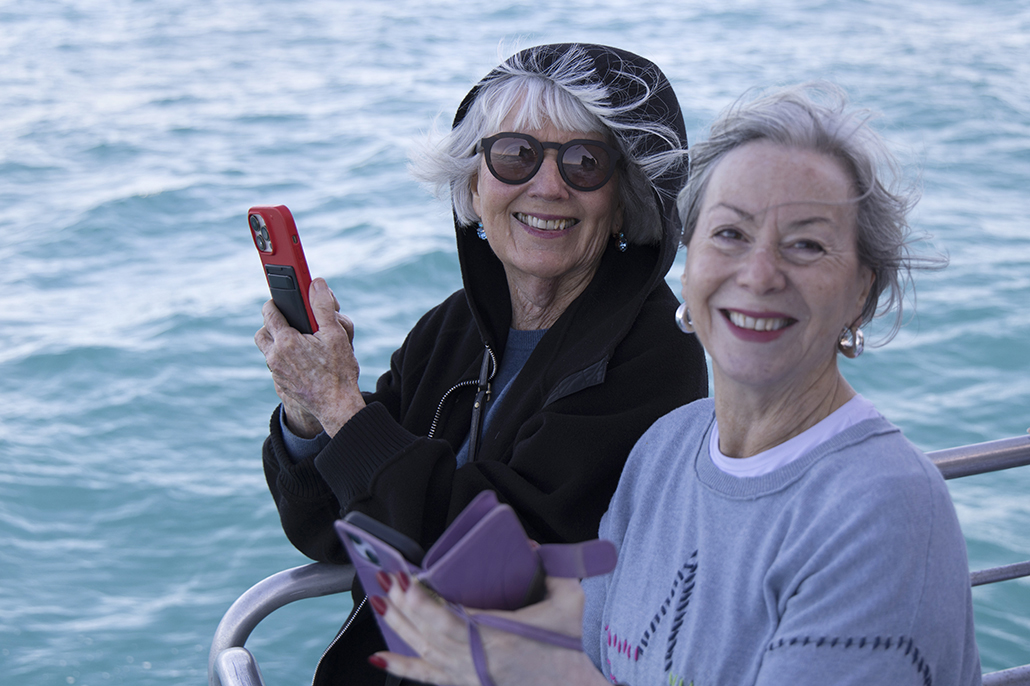
Paris Ink co-authors Penelope Jools and Julia Audova enjoy some time on the water during CWIP Publishing’s Hervey Bay writers’ retreat.
What might you see on a whale-watching cruise?
No two trips are the same, and no ethical operator can promise a breach on cue. Depending on the day and the stage of the season, you may see:
- a blow as the whale exhales at the surface;
- the arched back and dorsal fin as it swims;
- a tail fluke lifted before a deeper dive;
- breaching;
- tail and pectoral-fin slapping;
- spy-hopping;
- mothers resting or travelling with calves;
- calves nursing or practising surface behaviours;
- social groups interacting; or
- curious whales approaching and lingering near the boat.
Keep an eye out for other wildlife as well. Dolphins, turtles, seabirds and, with a little luck, dugongs may also be seen in the Great Sandy Strait and surrounding waters.
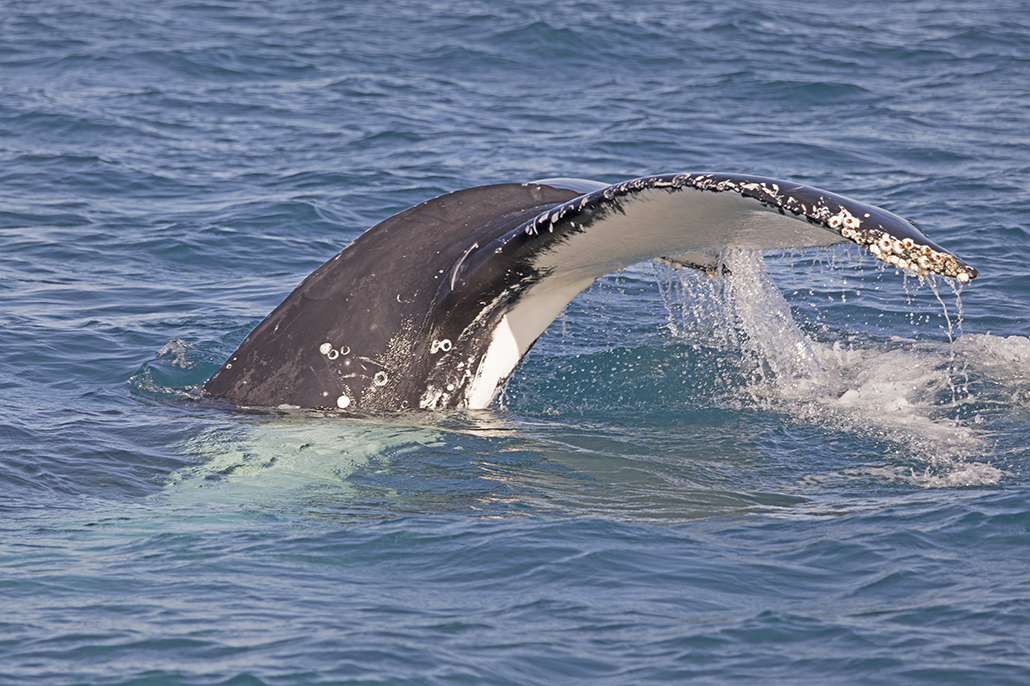
A close encounter reveals the markings and barnacles on the underside of a humpback whale’s tail.
How to choose the best Hervey Bay whale-watching cruise
There is no single cruise that will be “best” for everybody. A keen photographer, a family with young children and a traveller using a wheelchair may each need something quite different.
Hervey Bay’s fleet ranges from smaller vessels and sailing catamarans to larger boats with several viewing levels. Tours can run for around three hours, a half-day or a full day, and some combine whale watching with time on or around K’gari.
Before booking, compare:
- cruise duration;
- passenger capacity;
- viewing areas and rail height;
- indoor seating, shade and protection from wind;
- food and drinks included;
- toilets and accessibility;
- minimum ages;
- transfers from local accommodation;
- conservation or research programs;
- sighting-guarantee dates and conditions; and
- cancellation arrangements if weather intervenes.
Which style of cruise may suit you?
| If you are… | Look for… |
| A first-time whale-watcher | A half-day cruise with good commentary, several viewing areas and shelter |
| A keen photographer | Clear sightlines, space to move, a lower viewing deck and manageable passenger numbers |
| Travelling with children | Shade, toilets, food, a suitable duration and an operator that accepts children of their age |
| Short on time | A three-hour or half-day cruise |
| Seeking a leisurely outing | A longer cruise with meals or refreshments included |
| Interested in conservation | Marine-naturalist commentary, research links or recognised ecotourism credentials |
| Visiting K’gari as well | A combined whale-and-island experience |
| Travelling with limited mobility | Step-free or ramp access, suitable gangways, accessible toilets and seating on the accessible deck |
Current Hervey Bay operators include Whalesong Cruises, Hervey Bay Whale Watch aboard Quick Cat II, Pacific Whale Foundation Eco-Adventures, Tasman Venture, Spirit of Hervey Bay, Blue Dolphin Marine Tours and Hervey Bay Dive Centre.
Tour offerings change, so treat the names as a starting point rather than a ranking. Check each operator’s current schedule and choose the boat and experience that best match your priorities.
Morning or afternoon: which is better?
Whales do not become more cooperative simply because you booked the 7 am departure. Their behaviour can change from hour to hour, but it is not reliably better at one particular time of day.
Choose according to the weather forecast, your comfort and the rhythm of your visit.
A morning cruise may suit you if:
- you prefer cooler conditions;
- the forecast suggests lighter winds early;
- you like softer morning light;
- you want the afternoon free to explore; or
- you are comfortable with an early check-in.
An afternoon cruise may suit you if:
- you prefer a slower start;
- you are arriving in Hervey Bay that morning;
- you enjoy warmer conditions; or
- the cruise offers late-afternoon light or a sunset return.
Sea breezes can strengthen later in the day, although local conditions vary. If you are prone to seasickness, check the marine forecast and ask the operator for advice rather than relying on a blanket rule.
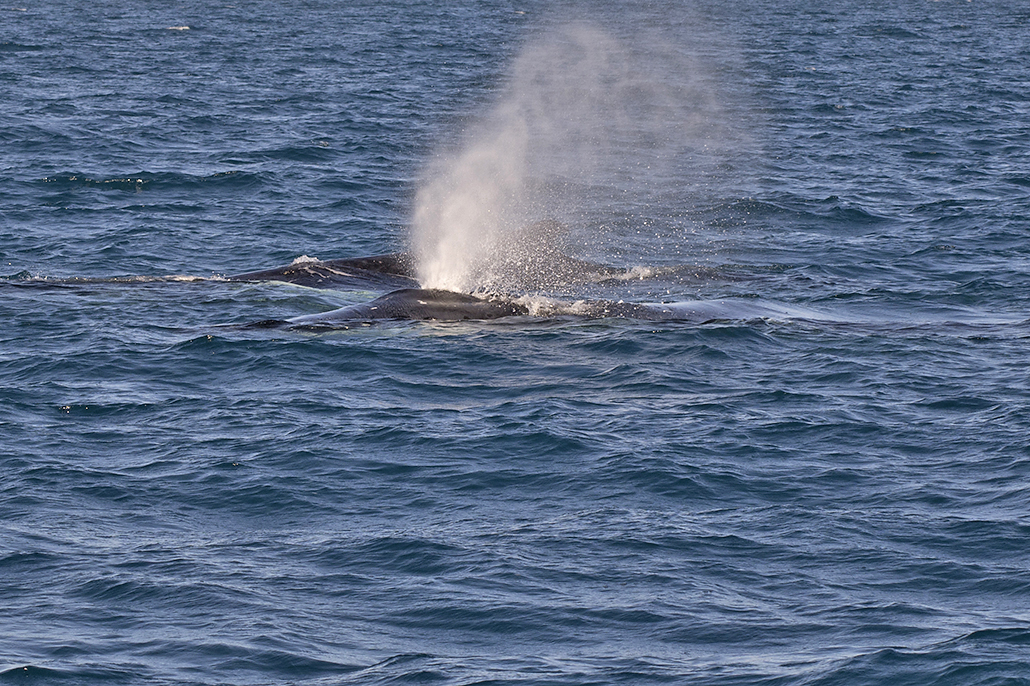
Hervey Bay provides sheltered waters where humpbacks can rest, socialise and investigate their surroundings.
Whale photography tips that help
Photographing a whale from a moving boat is a useful lesson in humility. The whale surfaces where it chooses, the deck moves beneath you and another passenger’s hat can develop an uncanny instinct for entering the frame at precisely the wrong moment.
A few simple settings and habits improve the odds.
Use a fast shutter speed
For breaches and other energetic behaviour, begin around 1/1000 second or faster if the light allows. A slower speed may be sufficient for a resting whale or a tail fluke, but boat movement can introduce blur even when the animal seems still.
Use continuous autofocus and burst mode
Continuous autofocus helps track a moving whale, while a controlled burst gives you several frames through the peak of an action. Avoid holding the shutter down indiscriminately unless you fancy sorting through 700 nearly identical photographs of splash.
Do not zoom in too tightly
Start with a little more room around the whale than you think you need. A breach can rise well beyond the frame, and it is easier to crop later than reconstruct a missing tail.
A flexible telephoto zoom is particularly useful. On a full-frame camera, a lens in the 100–400mm range offers reach while still allowing you to pull back quickly when a whale approaches. A phone or wider lens is valuable for whales close to the boat and for showing the scale of the encounter.
Watch the whale, not the screen
Look for patterns. A whale may surface several times before diving, and the direction of travel can help you anticipate where it will reappear. Listen to the crew, who are skilled at reading behaviour and spotting activity.
Reviewing every image immediately is a fine way to miss what happens next.
Brace yourself safely
Keep your stance wide and stable, use the railing for balance when appropriate and follow crew directions. A neck or cross-body strap adds security, but make sure it cannot snag as you move around other passengers.
Protect your equipment
Carry a lens cloth and a small waterproof bag or cover. Sea spray leaves marks that become surprisingly obvious against dark water or a clean blue sky. Pack a spare battery and memory card, and check both before departure.
Most importantly, take time to look without the camera. A sharp photograph is satisfying; seeing a humpback rise beside the boat with your own eyes is the part you are likely to remember.
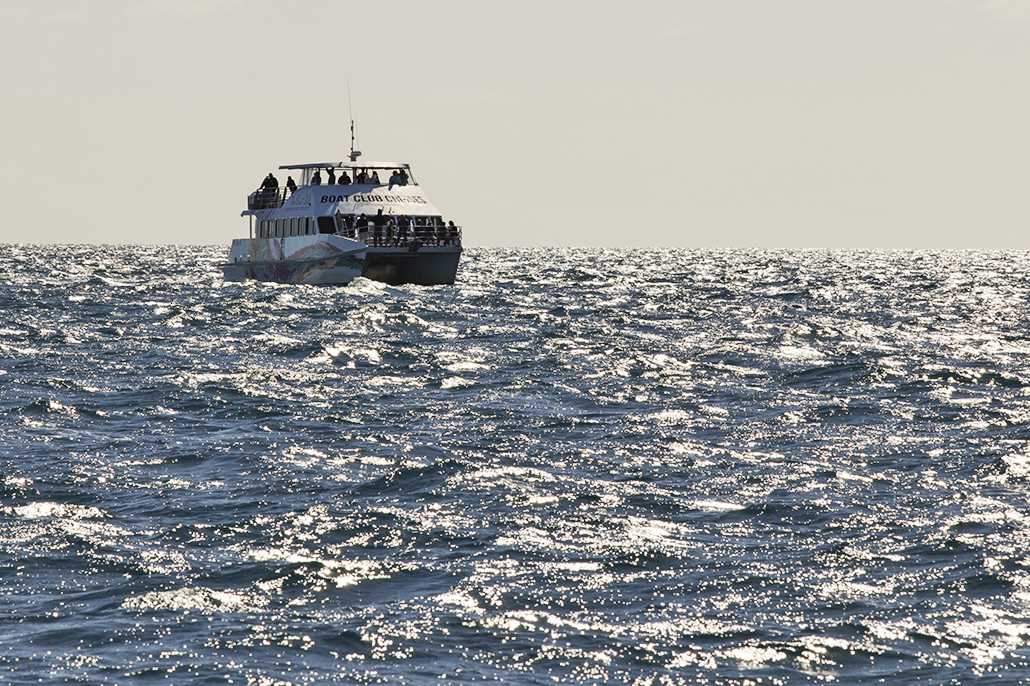
Whale-watching vessels must maintain regulated approach distances, but curious humpbacks sometimes choose to come closer.
What to wear and pack
A calm, sunny morning at the marina can become cool once the boat gathers speed. Dress for conditions on the water, not merely those beside your parked car.
Pack:
- layered clothing;
- a wind-resistant jacket;
- a securely fitted hat;
- sunglasses;
- sunscreen;
- comfortable shoes with non-slip soles;
- a reusable water bottle;
- a camera or phone;
- a spare battery or power bank;
- binoculars, if you enjoy using them;
- a lens cloth;
- a small waterproof bag; and
- any medication you may need.
If you are susceptible to motion sickness, speak with a pharmacist or health professional before the trip and take any recommended medication at the correct time. Waiting until you feel unwell is generally too late.
Some cruises include meals, snacks and drinks; others offer them for sale or expect passengers to bring their own. Check before you pack half the pantry.
Accessibility and comfort
“Accessible” can mean different things on different vessels, so it is worth discussing your particular needs with the operator before booking.
Ask about:
- accessible parking and drop-off points;
- the distance from parking to check-in;
- ramps, steps and gangway gradients;
- whether a wheelchair or walker can remain in use during boarding;
- which decks are accessible;
- accessible toilet facilities;
- seating with back support;
- shade and enclosed areas;
- assistance for hearing, vision or sensory needs;
- dietary requirements; and
- room for a carer or companion.
Whalesong advertises wheelchair ramps, an accessible toilet, communication boards and audio guides. Quick Cat II promotes wheelchair and pram access around its main deck. These features may make either vessel worth investigating, but tide levels, gangway angles and individual mobility can affect boarding on the day.
Explain your requirements clearly when booking rather than assuming the word “accessible” covers them. The operator is best placed to advise what is practical and safe.
Travellers who tire easily may also prefer a shorter cruise, a sheltered seat and accommodation close to the marina. Accessibility is not only about whether wheels can cross a gangway; it is about whether the entire experience is comfortable and enjoyable.
Stay close to the whales
Turn your whale-watching cruise into a relaxing coastal break at Oaks Hervey Bay Resort and Spa. Its spacious apartment-style accommodation and location near the Great Sandy Straits Marina make it a convenient base for early departures—and a comfortable place to unwind afterwards.
Check rates and availability at Oaks Hervey Bay Resort and Spa
Affiliate link: JM may earn a commission if you book through this link, at no extra cost to you.
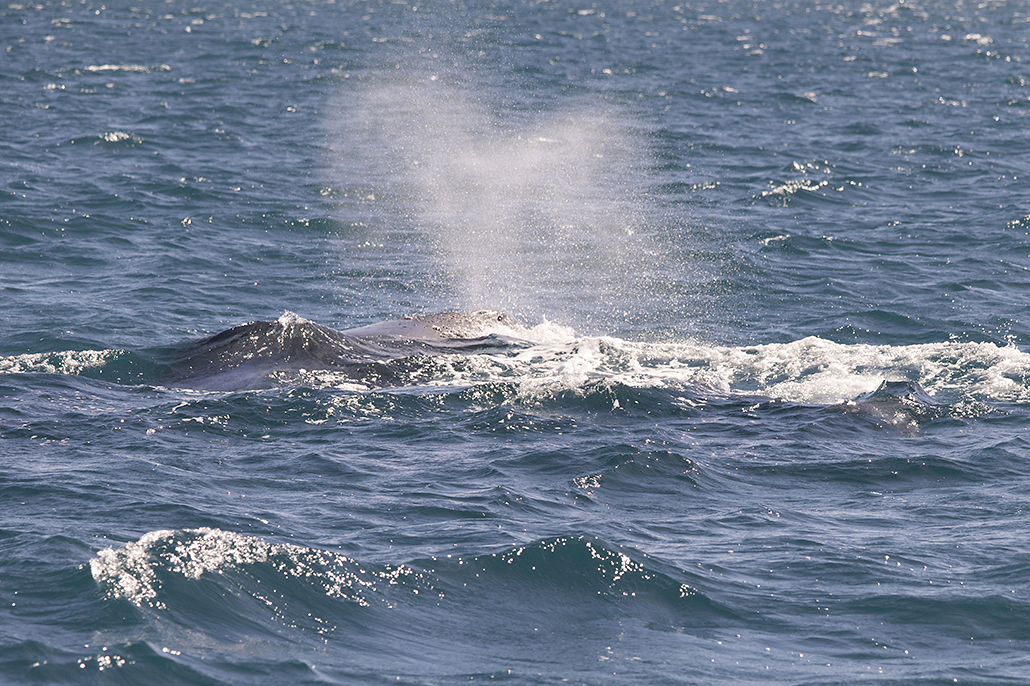
Splashes and sudden bursts of spray can signal energetic whale activity just beneath the surface.
Turn your whale-watching cruise into a coastal escape
Where to stay for a Hervey Bay whale-watching escape
Staying overnight removes the pressure of driving into Hervey Bay immediately before an early cruise and gives you time to enjoy the coast once you return.
The Great Sandy Straits Marina
Accommodation around The Great Sandy Straits Marina is convenient for early whale-watching departures. You will be close to the boats, marina restaurants and the Great Sandy Strait, with less distance to cover at the beginning of the day.
Urangan Esplanade
Stay near the Hervey Bay waterfront and leave time for Urangan Pier, the Esplanade and a leisurely meal after your day on the water.
The Urangan end of the Esplanade suits travellers who want waterfront walks, cafés and easy access to Urangan Pier.
Oaks Hervey Bay Resort and Spa, opposite the waterfront near Urangan Pier, offers self-contained one, two and three-bedroom apartments, two swimming pools and on-site facilities. Its apartment-style accommodation may be especially useful for couples planning a longer stay, families or friends sharing a whale-watching weekend.
Check availability at Oaks Hervey Bay Resort and Spa
Torquay or Scarness
Torquay and Scarness offer a more central Esplanade base, with casual dining, beaches and foreshore paths nearby. Allow extra time to drive to the marina and park before check-in.
Wherever you stay, confirm the cruise departure point. Most tours leave from the Great Sandy Straits Marina in Urangan, but arrangements can differ.
Make a weekend of it
Whale watching may be the reason for the visit, but it need not be the entire itinerary.
After your cruise, you might:
- walk part or all of Urangan Pier;
- visit the Hervey Bay Botanic Gardens;
- have lunch or dinner overlooking the marina;
- follow the Esplanade between Urangan, Torquay and Scarness;
- learn more about the region’s marine life at the Fraser Coast Discovery Sphere;
- add a day trip or longer stay on K’gari; or
- book another cruise and discover just how different two days on the same bay can be.
Allowing two or three nights also gives you some flexibility if strong winds or unsuitable conditions cause a tour to be rescheduled.
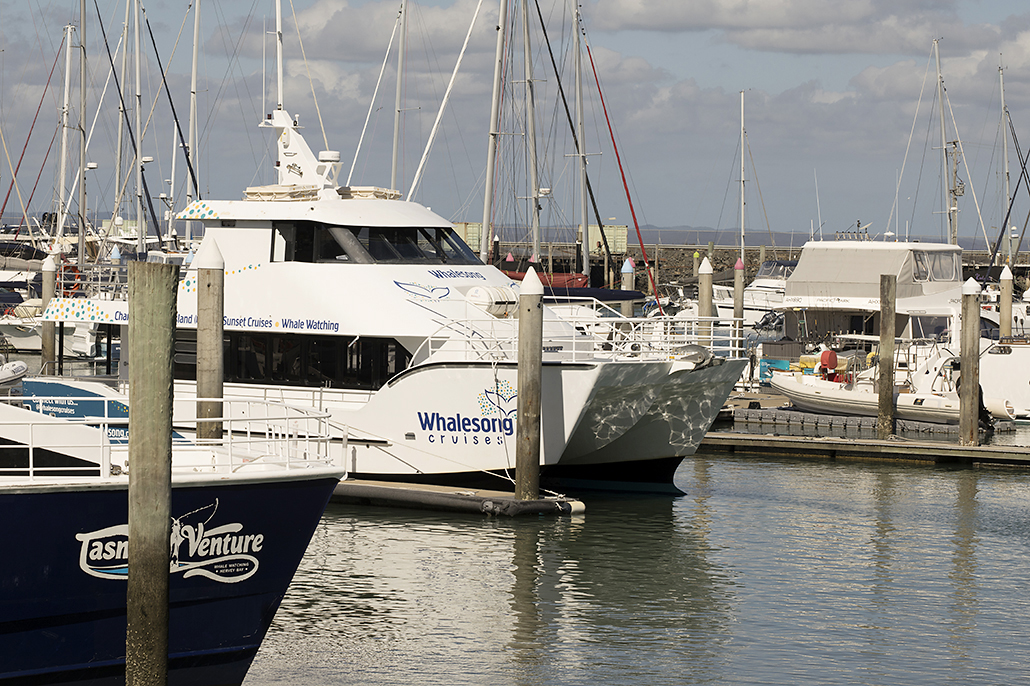
Whalesong Cruises and Tasman Venture at the Great Sandy Straits Marina, where several Hervey Bay whale-watching cruises depart.
Frequently asked questions
When is the best month for whale watching in Hervey Bay?
August generally offers high whale numbers and lively social activity. September is particularly rewarding for mothers and calves. The “best” month depends on the experience you prefer.
Is September a good time to see whales?
Yes. September is often considered the spring sweet spot, when mothers and calves become more prominent while a broad choice of cruises is still operating.
Can I see whales in October?
Yes, particularly in early October, when mothers and calves may still be resting in the bay before continuing south. Numbers and tour availability decline as the month progresses, so check current schedules.
Are whale sightings guaranteed?
Some operators offer a sighting guarantee during specified dates, usually in the core season. The remedy is commonly a complimentary return trip rather than a refund. Read the operator’s current terms, as guarantee periods may not cover the first or final weeks.
Are whales more active in the morning?
There is no reliable daily timetable for whale behaviour. Choose a departure that suits your schedule, comfort and the weather forecast.
Will I get seasick?
Hervey Bay is sheltered by K’gari, but it is still a marine environment and conditions can change. If you are prone to motion sickness, seek advice before the cruise, consider an earlier departure when lighter winds are forecast and choose a seat with fresh air and a view of the horizon.
Are Hervey Bay whale-watching boats wheelchair accessible?
Some vessels advertise wheelchair access and accessible toilets, but facilities and access to individual decks vary. Contact the operator before booking and explain your specific mobility and transfer needs.
How far ahead should I book?
Book as early as possible for weekends, school holidays and the popular mother-and-calf period in September. Early booking also gives you a better choice of vessels and departure times.
What happens if the weather is poor?
The operator may delay, reschedule or cancel a tour if conditions are unsafe. Check the cancellation policy and keep your contact details current. Travel insurance may be worth considering if the cruise is part of a larger trip.
A season of different stories
Hervey Bay’s whale season does not deliver the same performance for four months. It unfolds in chapters.
July announces the first arrivals. August fills the bay with youthful energy and social encounters. September welcomes mothers and calves into their sheltered nursery. October offers the final, sometimes quieter days before the whales continue south.
Whichever chapter you choose, go prepared, but leave room for the unexpected. The weather may change, the whales may ignore the script, and the photograph you planned may never materialise.
Then a calf may breach beside the boat, a curious humpback may rise close enough for you to hear it breathe, and the carefully planned day will become memorable for reasons no itinerary could promise.
In Hervey Bay, the whale-watching season is not merely something to observe. For a few hours on the water, it is something you feel part of.
Useful links and editorial sources
- Fraser Coast Tourism: Whale Watching in Hervey Bay
- Fraser Coast Tourism: Everything You Need to Know Before You Go
- World Cetacean Alliance: Hervey Bay Whale Heritage Area
- Whalesong accessibility information
- Quick Cat II vessel and accessibility information
- Oaks Hervey Bay Resort and Spa
Editorial note: Confirm operator names, operating dates, departure times, prices, inclusions, accessibility arrangements and sighting-guarantee terms before booking. The article was written using information current on 1 August 2026.
Plan your Hervey Bay whale-watching escape
A little forward planning can make your time on the Fraser Coast considerably smoother, leaving you free to concentrate on spotting blows, breaches and the occasional curious whale beside the boat.
Arrange travel insurance
Travel insurance may provide cover for selected unexpected events before or during your Australian holiday. Check the policy details, limits and exclusions carefully to ensure the cover suits your circumstances.
Explore travel insurance with AllClear
Hire a car for the Fraser Coast
A hire car gives you the flexibility to travel between your accommodation, the Great Sandy Straits Marina and other Fraser Coast attractions at your own pace.
Check Avis car hire options and rates
Keep your travel essentials organised
From packing cubes and toiletry bags to camera and tech organisers, Bagsmart offers practical accessories for keeping everything in its place—at least until you begin hunting for that spare camera battery.
Browse travel organisers and bags at Bagsmart
This block contains affiliate links. If you make a purchase or booking through one of these links, JM may earn a commission at no extra cost to you. Always check prices, terms, exclusions and product suitability directly with the provider.
How a Casual Lunch Deal Turned Into a Complex Building Rescue
“We accidentally bought the building.”
That’s how developer and builder Glen Winney at Win Projects describes the beginning of what became one of Hervey Bay’s most ambitious and complex building rescues. It started, he says, over lunch.
Winney was meeting with boat club figures when the conversation turned to the old Sporties building at 8 Pier Street, Urangan; a landmark many locals would remember as One Stop, Twisties Nightclub or, in later years, Sporties Club.
The upstairs had fallen quiet after COVID. The building was ageing. The future was uncertain. Then came the offhand comment.
“I’ll buy it,” Winney joked.
By the end of lunch, it was no longer a joke.
What followed was a years-long journey to transform the 50-year-old complex into what reopened last week as The Place, a mixed-use precinct with commercial businesses below and nine warehouse-style apartments above.
But as Winney quickly discovered, saving an old building is rarely as simple as it looks.
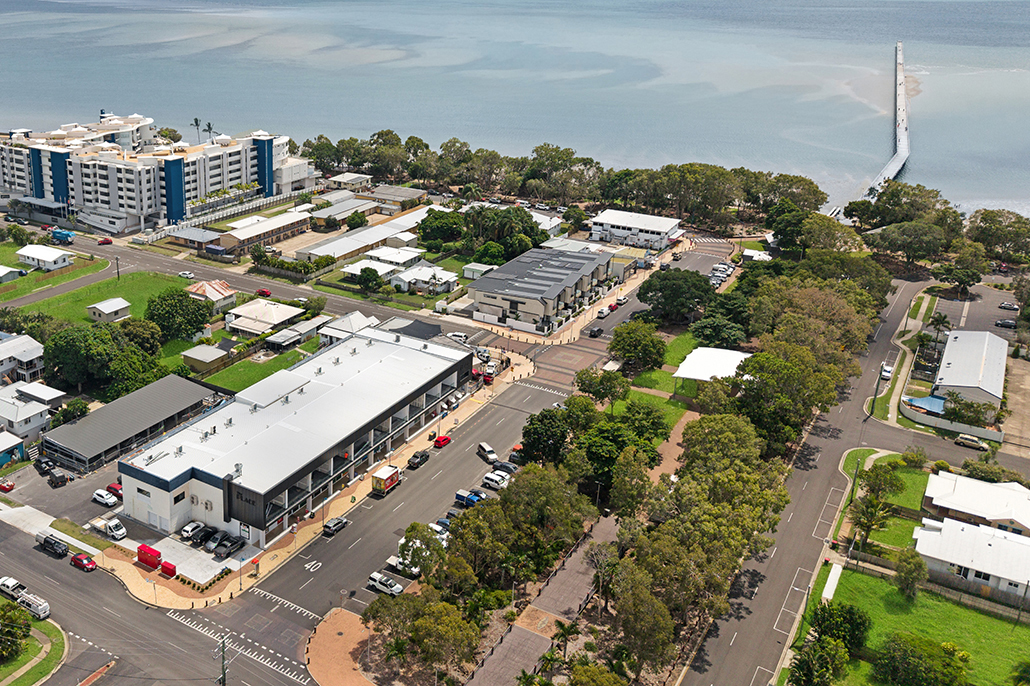
The Place occupies one of Hervey Bay’s most significant locations, just metres from Urangan Pier and the Esplanade.
Why Demolition Would Have Been Easier
For many developers, knocking down the old building would have been the obvious option. Faster. Cleaner. More predictable.
But Winney says that was never really the point.
“It’s easy for a developer or builder to just rip it down and build something new and shiny,” he said.
Instead, he wanted to keep something that mattered to the area.
The Place Urangan had lived many lives. Before the current structure, the site was home to Stevenson’s Grocery and a local bakery. Later, it became One Stop, a practical shopping hub for Urangan locals.
Upstairs, it hosted weddings, birthdays and community events before transforming into Twisties Nightclub during Hervey Bay’s nightlife boom, then later Sporties Club.
For many locals, it wasn’t just a building. It was part of growing up. Winney saw value in that. But preserving history came at a cost.
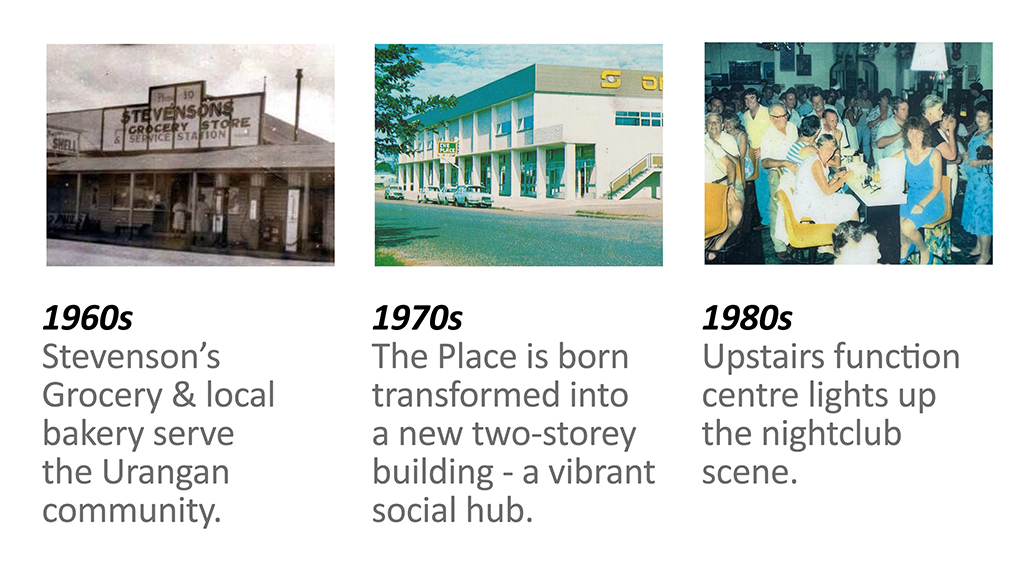
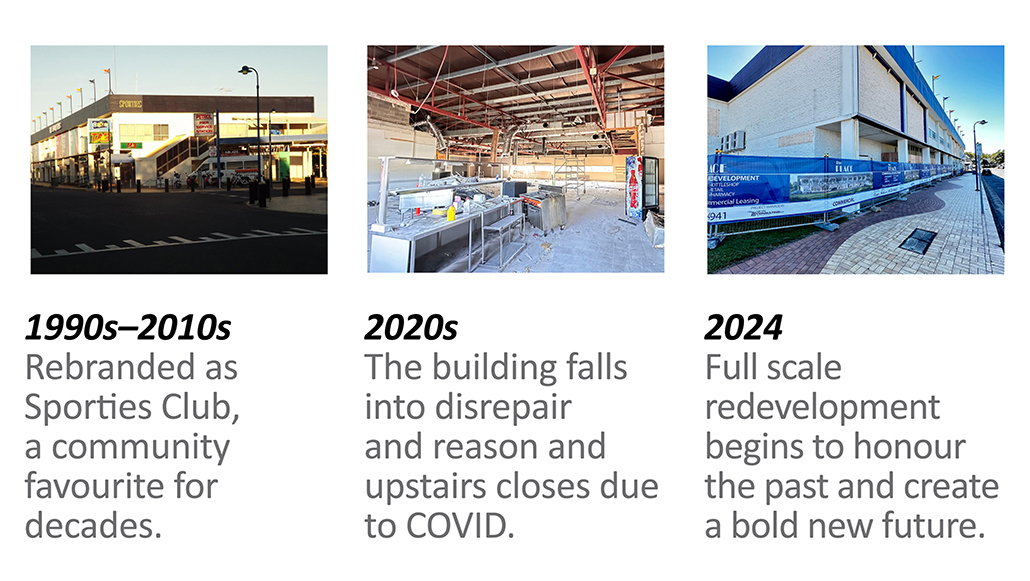
The building’s evolution from Sporties Club through closure and eventual redevelopment.
The Hidden Problems Under the Floor
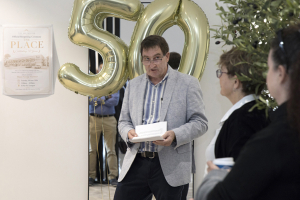
Developer Glen Winney speaking during the official reopening of The Place.
Once work began, the real surprises started. And they kept coming.
First came the stormwater. Workers discovered major stormwater infrastructure running directly beneath the building, forcing a complete redesign of drainage through the car park and surrounding areas.
Then came the electrical mains. The main power supply, Winney discovered, ran underneath the neighbouring building, a major complication that stalled upgrades and triggered a long process with Ergon to reroute power and install new infrastructure.
Then there was water. The original supply lacked enough pressure to meet modern fire requirements. That meant rerouting mains, digging beneath concrete and installing a major pump system.
Each discovery pushed the project further away from a cosmetic renovation and deeper into what Winney describes as a full-scale rebuild.
“It was honestly challenges day in, day out,” he said.
And that was before they even tackled the biggest hurdle.
Nine Apartments, Nine Fire Compartments
The upstairs space once operated as one enormous commercial function and entertainment zone; about 1,500 square metres in total. Converting that into nine apartments meant rethinking everything. Especially fire compliance.
Under modern regulations, each apartment needed to become its own fire compartment, a huge challenge inside an older building designed for open, communal use.
“Everybody from the fire department right through said, ‘No, you can’t do it,’” Winney said.
The solution required specialist fire engineers from Brisbane, steel reinforcements beneath trusses, new fire walls, vermiculite fire-proofing sprayed across structural braces, and complex separation between hallways and units.
It wasn’t glamorous work. But it was essential. And it changed the entire internal logic of the building. What was once one giant social space became nine distinct homes.
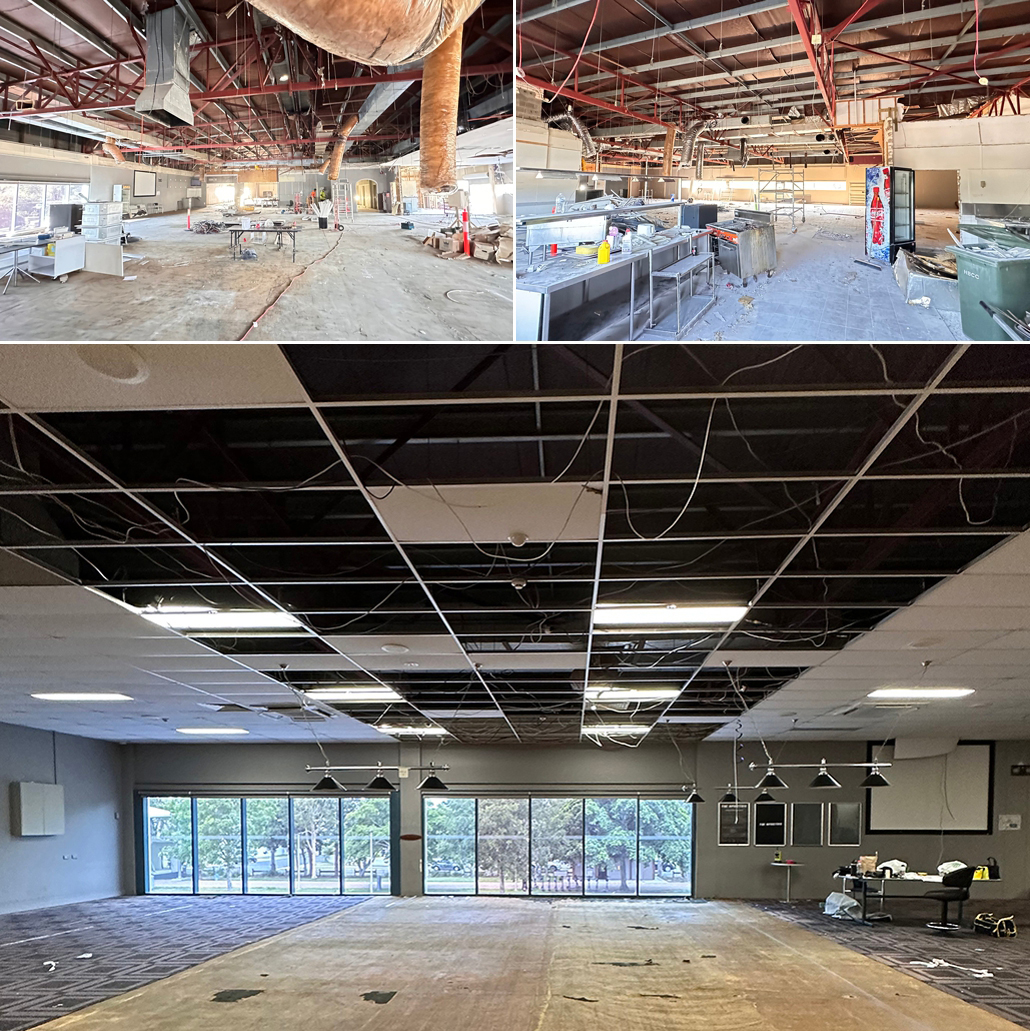
Removing decades of additions revealed the true complexity hidden within the ageing structure.
Untangling a 1974 Body Corporate
Then there was the paperwork. And in many ways, that proved just as complex as the physical build.
The Place operated under an old 1974 body corporate structure; one that had been altered, patched and complicated over decades.
There were easements running through spaces that no longer existed. Passageways on title that had disappeared. Areas legally recognised that no longer matched the physical building.
To make the redevelopment work, Winney and his team had to effectively dismantle the old arrangement and rebuild it.
That meant creating three separate body corporates: a principal body corporate, a residential body corporate and a commercial body corporate. The process took around a year.
For anyone who has ever dealt with strata paperwork, it’s a reminder that the legal structure behind apartment living can be just as important as the walls themselves. In this case, it was foundational.
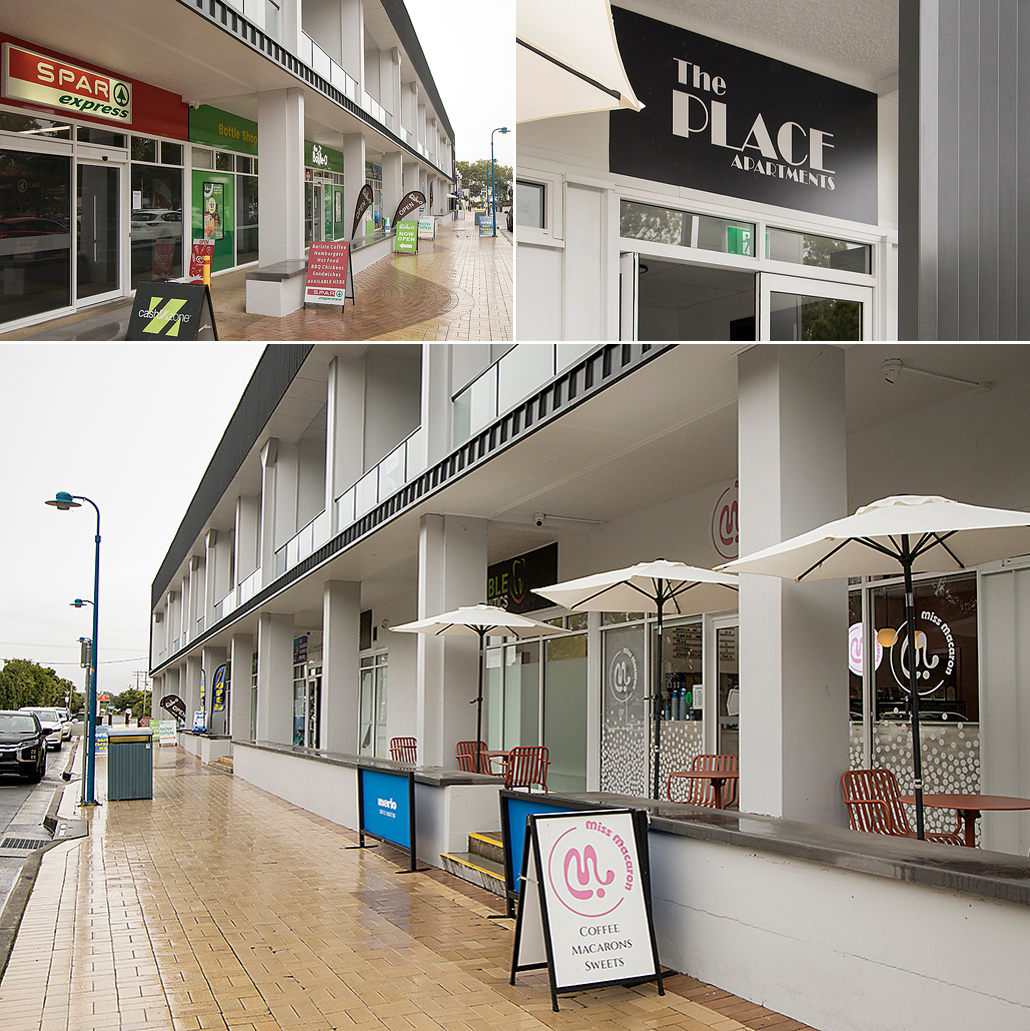
The redevelopment sought to create a neighbourhood hub where local businesses and residents could coexist.
Building Around Business
One of the trickiest parts of the project was that life downstairs never entirely stopped. Businesses remained. Trades worked around operating tenants.
Eastons Anglers Den, a long-standing fixture in the precinct since the early 1990s, was deliberately retained to preserve some of the site’s long connection to the Urangan fishing community.
Winney says keeping that continuity mattered.
At the same time, new businesses moved in, including Core Condition Pilates & Massage Studio, Chemart Chemist, SPAR Express Urangan, The Bottle-O, Miss Macaron and Invisible Orthodontics.
It meant The Place wasn’t rebuilt in isolation. It was rebuilt while business carried on. Messy, noisy and complicated. But alive.
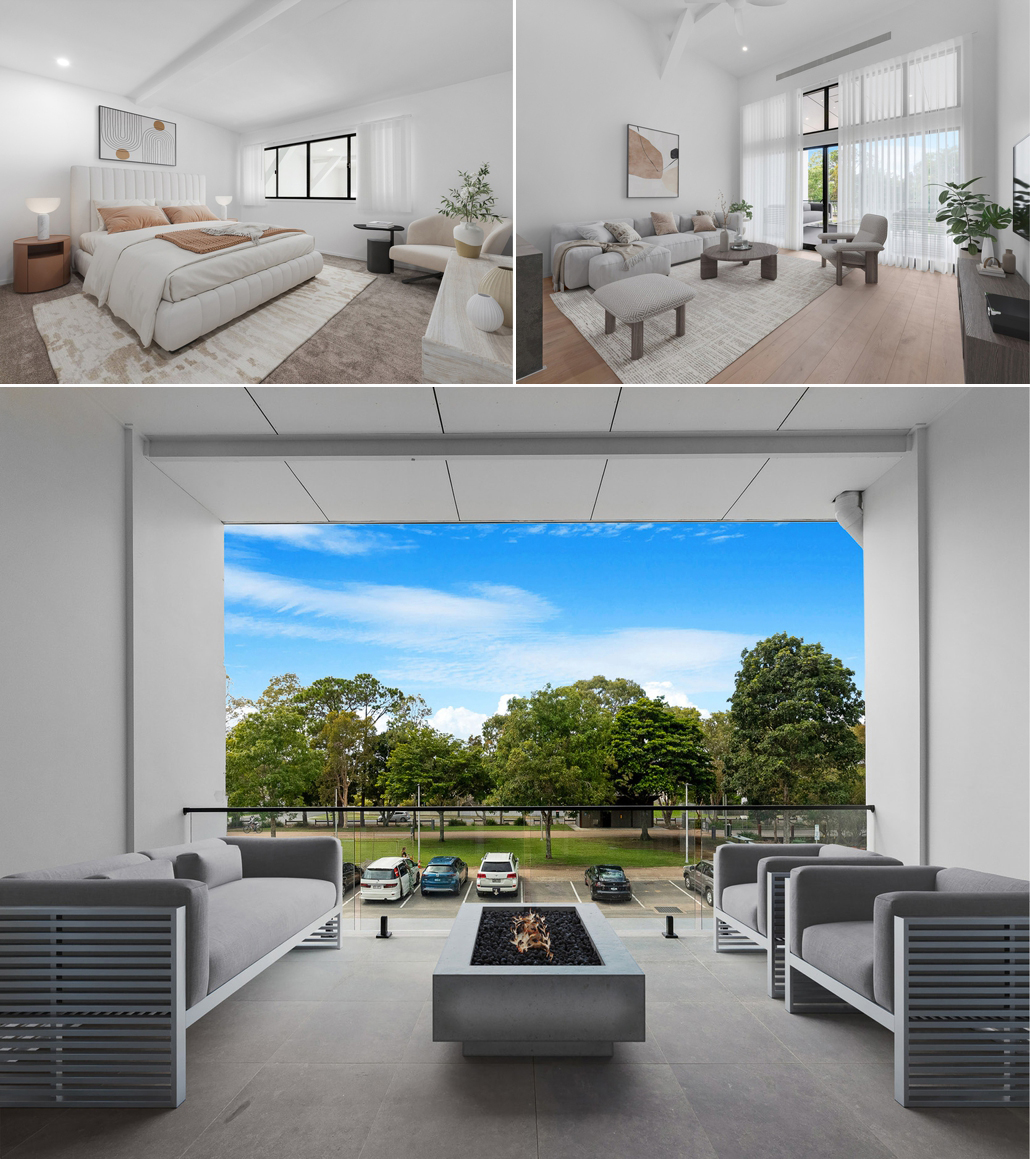
The Place apartments were designed to offer a different style of coastal living to the traditional suburban home.
A Different Kind of Coastal Living
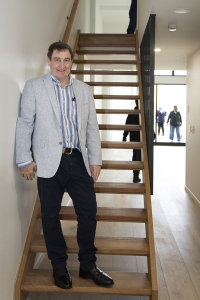
Developer Glen Winney inside one of the new warehouse-style apartments.
For Winney, the final result is about more than preserving history. It’s about changing the shape of how people live in Hervey Bay.
He believes the region needs alternatives to the traditional three and four-bedroom suburban model.
The apartments at The Place are aimed largely at owner-occupiers; people wanting walkability, lower maintenance and flexible living. Some live locally. Others split their time between Hervey Bay and places like the Sunshine Coast.
The industrial design, with its high ceilings, loft elements and exposed character, deliberately nods to Urangan’s past as a working port and industrial area. It echoes the cranes, rail sidings, cargo sheds and steamships that once made nearby Urangan Pier one of Queensland’s busiest regional export ports.
It’s not the kind of apartment style commonly seen in Hervey Bay. That, Winney says, is exactly the point.
After 50 years, The Place has been many things: shopping centre, nightclub, social club and local institution. Its latest chapter may be its most practical yet; not because it erased the past, but because it decided the past was worth carrying forward.
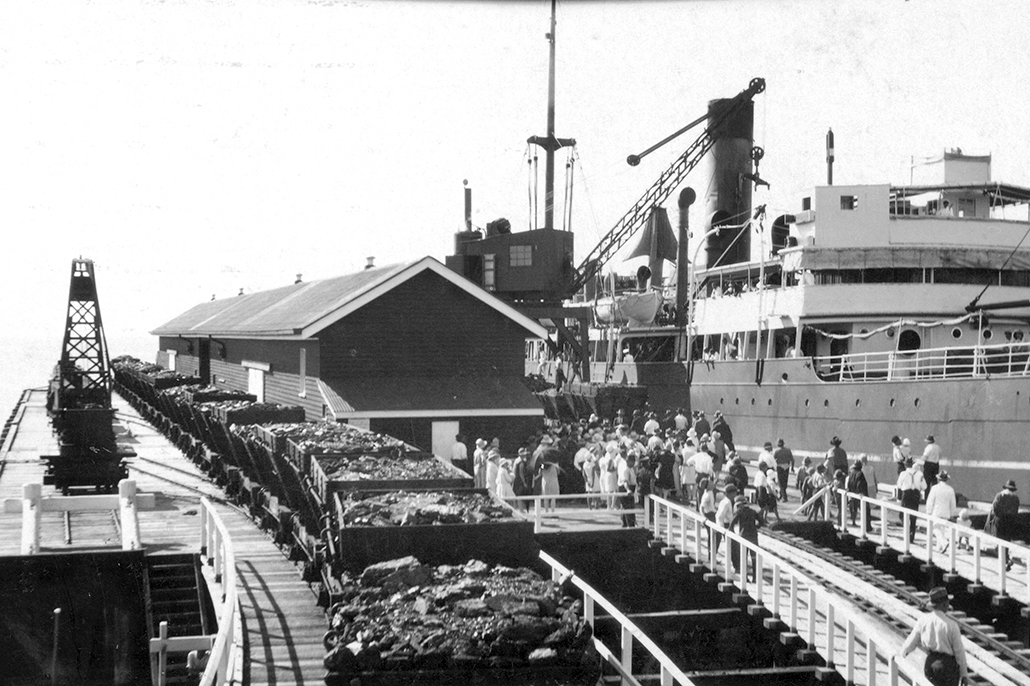
Urangan’s industrial heritage was built around the pier, shipping and export trade. Elements of that working history influenced the warehouse-inspired design language adopted at The Place redevelopment.
Curious about apartment-style coastal living?
The Place reflects a growing interest in walkable neighbourhoods, lower-maintenance homes and lock-up-and-leave living on the Fraser Coast.
Visitors wanting to experience that lifestyle for themselves before buying may enjoy a stay at Oaks Hervey Bay Resort and Spa, within walking distance of cafés, restaurants and the Urangan waterfront.
Disclosure: This article contains an affiliate link. If you make a booking through that link, Jocelyn Magazine may receive a small commission at no additional cost to you. These partnerships help support independent storytelling focused on place, property, local history and coastal living.
How The Place Urangan Went from Nightclub Icon to Coastal Living Hub
THERE are few buildings in Hervey Bay that can stir memories quite like The Place in Urangan.
Mention the address — 8 Pier Street — to a long-time local and chances are you’ll hear a story. Shopping at One Stop with Mum. Weddings upstairs. Dancing at Twisties. Friday drinks at Sporties. Over five decades, this corner of Urangan shaped itself into the memory bank of a growing coastal city.
Now, after a major transformation, The Place Urangan has opened a new chapter.
Officially reopened on 30 June 2026 by Fraser Coast Mayor George Seymour, the landmark has been reborn as a mixed-use precinct, blending a vibrant commercial hub on the ground floor with nine warehouse-style apartments above. It’s a bold move in a region still dominated by traditional suburban housing.
For local developer and builder Glen Winney, the project was about more than construction.
It was about keeping a piece of Hervey Bay alive.
“We need more alternative accommodation here,” Winney said during the reopening.
“We’ve got plenty of three and four-bedroom houses, but if we’re going to attract a better market — people who want to live here or even holiday here — they need something different.”
That “something different” now sits above a ground-floor collection of businesses that serve both locals and visitors, from health and wellness to convenience retail.
It’s a practical shift; one that reflects how coastal living itself is changing.
- Some links in related Jocelyn Magazine articles may earn a small commission at no extra cost to you.
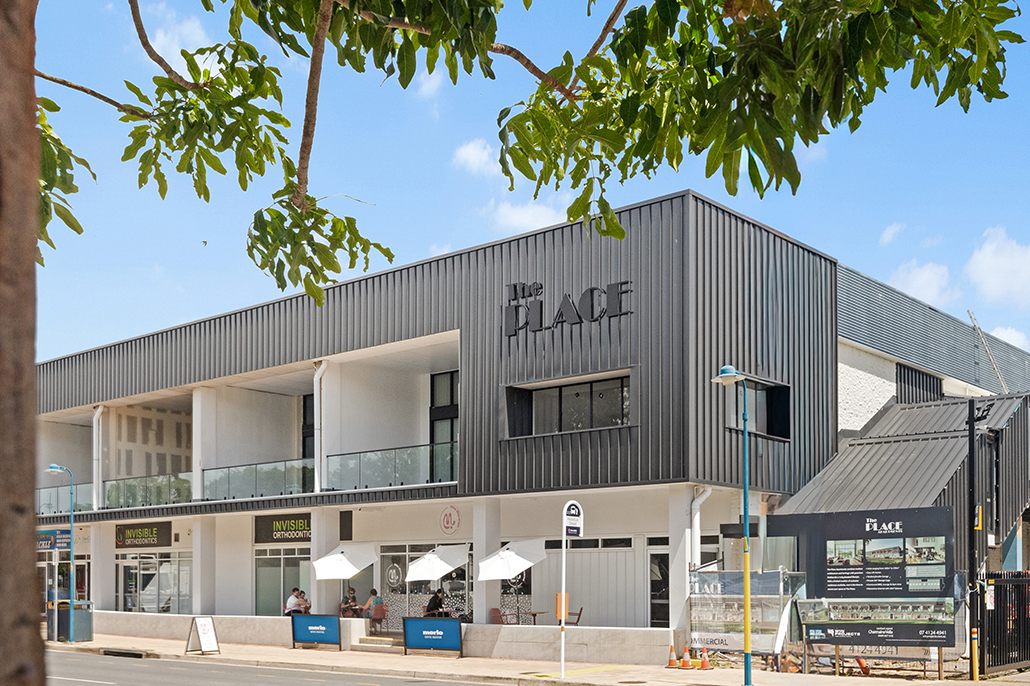
The Place in Urangan has reopened as a mixed-use precinct, blending commercial spaces with nine warehouse-style apartments above.
Why The Place Urangan Matters for Hervey Bay’s Future
Standing on the balcony overlooking Urangan, it’s easy to see why this location matters.
The marina, the pier, the esplanade and everyday conveniences all sit within easy reach; exactly the sort of walkable lifestyle many downsizers and part-time coastal residents now seek.
Mayor George Seymour said the redevelopment represented the kind of adaptive thinking Hervey Bay needs.
“This corner has always been really important for Urangan,” he said.
“To see what’s happened here is really special; to see it alive again.”
Seymour, known for his deep interest in Fraser Coast history, reflected on his own memories of the building.
“I have a lot of really fond memories of being up here, playing pool, enjoying music, having drinks,” he said.
Quoting Winston Churchill, Seymour added: “We shape our buildings and afterwards our buildings shape us.”
It was a fitting line for a building that has worn so many identities.
Before it became One Stop, the site housed neighbourhood essentials like Stevenson’s Grocery and a bakery. back when Urangan was still a much smaller fishing and pier community.
Later came weddings, community events, the nightclub era of Twisties, and the much-loved Sporties Club.
Each chapter reflected the needs of its time. This latest one may be the most practical yet.
A nod to Urangan’s industrial past
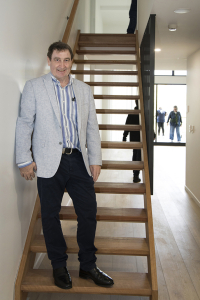
Developer and builder Glen Winney.
The apartments themselves offer a style of living rarely seen previously in Hervey Bay.
Winney describes them as warehouse-inspired, with soaring 4.8-metre ceilings, loft-style spaces, generous storage and double garages; features more commonly associated with inner-city industrial conversions than seaside Queensland.
“It’s very much an industrial design,” he said.
“I actually wanted even more industrial when I started.”
But modern fire and compliance regulations meant some of that raw aesthetic had to be softened.
Still, the industrial feel remains as a deliberate nod to Urangan’s working past.
“Urangan was very much an industrial area, so it’s a nod to that history,” Winney said.
That balance between heritage and reinvention is part of what makes The Place feel grounded.

Win Projects staff (from left) Ashleigh Roberts, Bri McManus and Neisa Rasmussen welcome guests to the official reopening of The Place in Urangan.
Community at the centre
Among the businesses operating downstairs is Core Condition Pilates & Massage Studio, owned by Timi Delahunty.
Her business moved into the precinct just over a year ago, and she says the location has brought more than just foot traffic.
“We love the lifestyle,” Delahunty said.
“We get to walk into a really beautiful space every day.”
But it’s the community that stands out most.
“There’s a good sense of community around here. We come in, get macaroons, the supermarket’s there, the pharmacy’s there. It’s turned into something really nice.”
That sense of neighbourhood connection may be one of the strongest assets of The Place. Not just because it offers housing, but because it places daily life within arm’s reach. For a city increasingly discussing density, downsizing and walkability, that matters.
Perhaps that’s the success of this redevelopment. The Place Urangan hasn’t erased its past. It has built on it.
For those who danced there, celebrated there, or simply passed through over the years, the building still holds its stories. Only now, it has room for a few new ones.
As well as Core Condition Pilates & Massage Studio, the ground-floor precinct also includes a mix of everyday essentials and specialist businesses, including SPAR Express Urangan, The Bottle-O, Chemart Chemist, Miss Macaron, Invisible Orthodontics and Eastons Anglers Den, creating a practical neighbourhood hub for locals and visitors alike.
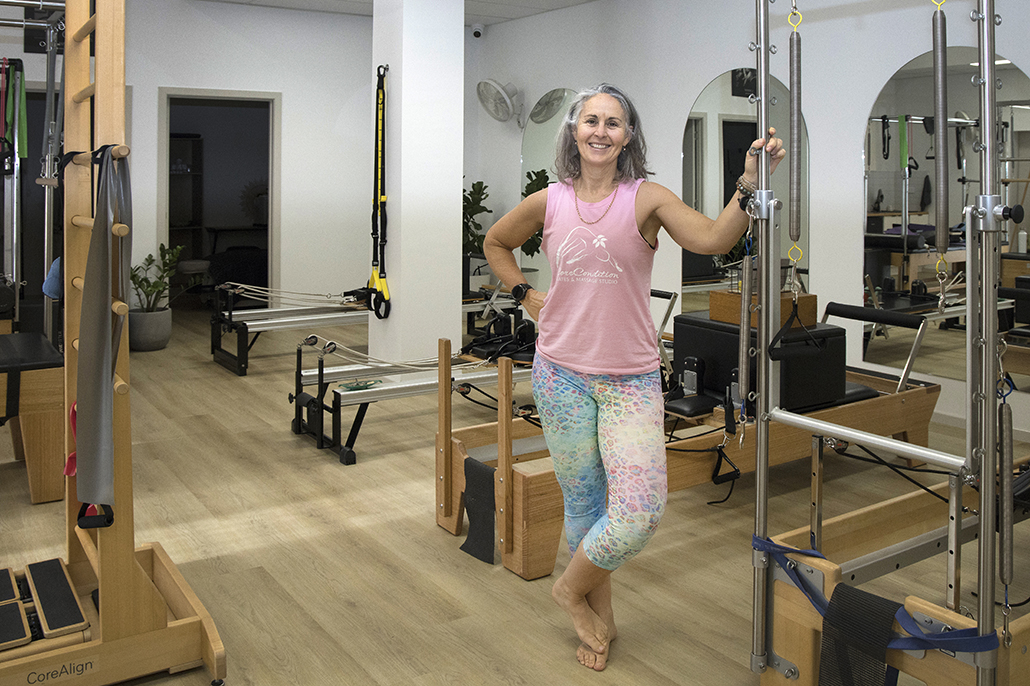
Timi Delahunty from Core Condition Pilates & Massage Studio says the precinct has created a strong sense of community.

A collage of The Place Urangan’s latest chapter, featuring the new warehouse-style apartments, shared spaces and historical images that trace the building’s 50-year evolution in Hervey Bay.
Planning your own Hervey Bay stay? Browse accommodation options in our local stay guide.
Whale season is coming: Hervey Bay’s 2026 season runs July–October, with peak sightings in August–September. If you’re ready to plan, jump straight into Whale Watching Hervey Bay to compare tour operators, departure times and package options. Book early to secure your spot.
Whale Watching in Hervey Bay: A First-Time Visitor’s Guide
TO STAND on the deck of a boat while a 40-tonne humpback whale surfaces nearby has a way of putting everyday worries into perspective. You arrive hoping to see whales. You often leave with a renewed appreciation for the natural world.
Every winter, thousands of humpback whales visit the calm waters of Hervey Bay during their annual migration along Australia’s east coast. For many visitors, it’s a bucket-list experience. For locals, it’s one of the highlights of the year.
If you’re planning your first whale-watching cruise, here are 11 things worth knowing before you go.
- This article contains affiliate links. If you purchase through these links, Jocelyn Magazine may earn a small commission at no extra cost to you.
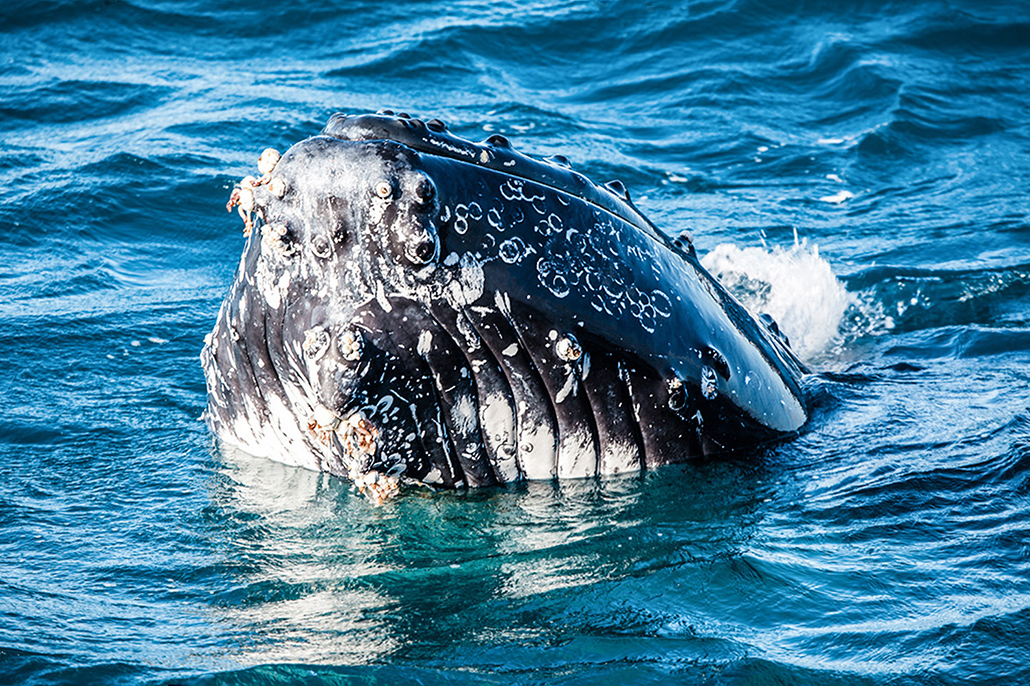
Close-up of a humpback whale surfacing near a whale watching vessel in Hervey Bay, showing barnacles and distinctive markings.
1. Hervey Bay is one of the world’s best whale watching destinations
Whale watching is available in many parts of Australia, but Hervey Bay is unique.
The bay’s sheltered waters provide a resting place for humpback whales during their migration. Unlike many locations where whales simply pass by, whales often spend days or even weeks in the bay, giving visitors exceptional viewing opportunities.
It’s one of the reasons Hervey Bay has earned an international reputation as a premier whale-watching destination.
2. The season runs from July to October
Whales can begin arriving from mid-July, with numbers generally increasing through August and September.
October often brings excellent opportunities to see mothers travelling south with young calves.
While sightings are possible throughout the season, August and September are usually considered peak whale-watching months.
3. Thousands of humpback whales visit each year
The annual migration is one of nature’s great journeys.
Humpback whales travel thousands of kilometres between their Antarctic feeding grounds and the warmer breeding waters of Queensland and further north.
Many pause in Hervey Bay waters along the way, creating one of Australia’s most spectacular wildlife experiences.
4. The whales aren’t just passing through
One of the most fascinating things about Hervey Bay is that whales often stop here rather than simply continuing their migration.
Researchers have observed whales resting, socialising and caring for calves in the protected waters between the Fraser Coast and K’gari.
That means encounters can be longer and more interactive than in destinations where whales remain constantly on the move.
5. Mothers and calves are often the stars of the show
By late season, many visitors are lucky enough to see mothers travelling with young calves.
Watching a calf surface beside its mother or practise breaching for the first time is something few people forget.
These gentle interactions are among the reasons photographers and wildlife enthusiasts return year after year.
Passengers onboard a whale watching cruise witness a humpback whale surfacing close to the vessel in Hervey Bay.
6. Every whale-watching trip is different
No two cruises are ever quite the same.
One day you might see whales breaching repeatedly. Another day they may approach the vessel, circle beneath the boat or spend time resting near the surface.
Part of the excitement is never knowing exactly what behaviour you’ll witness.
7. Winter is actually the best time to visit
For travellers from southern Australia, this may come as a pleasant surprise.
While much of the country is experiencing cold weather, Hervey Bay often enjoys mild winter days, clear skies and comfortable temperatures.
Whale season coincides with some of the most pleasant weather of the year on the Fraser Coast.
8. You don’t need expensive camera gear
Professional cameras can certainly help, but they’re not essential.
Visitors often capture wonderful memories using smartphones or compact cameras.
In fact, some of the best whale watching experiences happen when you put the camera down for a moment and simply enjoy the encounter.
9. Most tours have excellent sighting success
One of the questions visitors ask most often is whether they’ll actually see whales.
While nature can never offer guarantees, Hervey Bay’s whale-watching operators enjoy very high sighting rates during the season.
Operators often have policies in place should sightings unexpectedly not occur.
10. You may see more than whales
Keep your eyes open throughout the cruise.
Depending on conditions, you may also encounter dolphins, turtles, seabirds and other marine life.
For wildlife lovers, the journey itself can be just as rewarding as the whale encounters.
11. Whale watching has a way of staying with you
Most people book a whale-watching cruise expecting a memorable day on the water.
What often surprises them is the emotional impact.
Seeing a humpback whale in its natural environment creates a sense of scale that’s difficult to describe. Standing beside an animal larger than a bus yet moving with remarkable grace can leave you feeling both humbled and inspired.
It’s one of the reasons so many visitors return to Hervey Bay for whale season year after year.
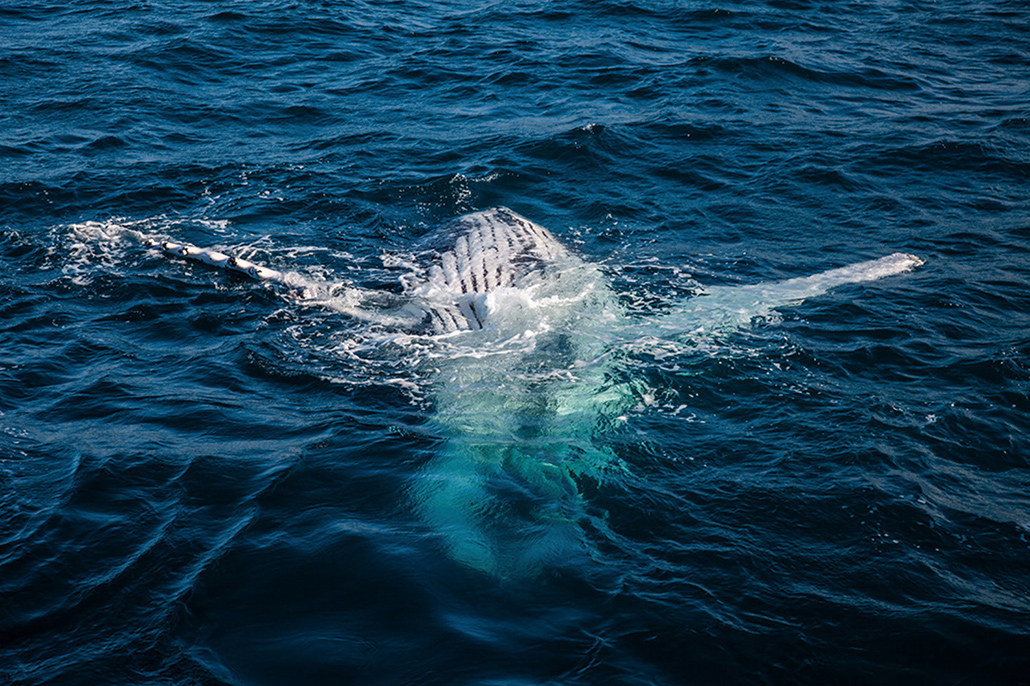
A humpback whale moves just below the waterline in Hervey Bay, offering a glimpse of its striped underside.
Don’t wait until peak season: many tours start filling in August. Visit Whale Watching Hervey Bay to choose your tour below and book now to get the best spot and price.
Planning a Whale Watching Trip to Hervey Bay?
Whether you’re visiting the Fraser Coast for a weekend or a longer Queensland road trip, whale season offers a chance to witness one of Australia’s most remarkable natural spectacles.
Bring a camera, pack a light jacket, and don’t forget to look up from the viewfinder occasionally. Sometimes the most memorable moments are the ones you simply experience.
Make the most of your Fraser Coast getaway with these travel essentials:
Stay Near the Marina
Many whale watching tours depart from Urangan Marina, making nearby accommodation a convenient choice.
Oaks Hotels & Resorts offers a range of accommodation options within easy reach of Hervey Bay’s waterfront, restaurants and tour departure points.
Explore Beyond the Whales
Planning to discover more of the Fraser Coast before or after your cruise? A hire car makes it easy to visit Maryborough, Toogoom, Burrum Heads and other local attractions.
Avis Car Rental offers vehicle hire options for travellers arriving by air, rail or road.
Travel With Confidence
Travel plans don’t always go exactly as expected. Travel insurance may help protect against unexpected disruptions, cancellations and medical expenses.
AllClear Travel Insurance specialises in cover for travellers, including many pre-existing medical conditions.
Disclosure: This article contains affiliate links. If you purchase through these links, Jocelyn Magazine may earn a small commission at no extra cost to you. Thank you for supporting independent publishing.
Photos: Jocelyn Watts
Discover the Toogoom Vietnam Shed
A REMARKABLE piece of Australian military history stands just minutes from the beaches of Toogoom on Queensland’s Fraser Coast.
Originally manufactured during the Vietnam War as an army mess hall, the Toogoom Vietnam Shed spent more than four decades in storage before beginning a new chapter as the home of the Toogoom & District RSL Sub-Branch.
Located about 16km from Hervey Bay, the restored shed now serves as both a community hub and an intriguing stop for travellers interested in military history, regional stories and lesser-known attractions across the Fraser Coast.
The Australian Army built the structure during the Vietnam conflict between 1962 and 1972 as one of hundreds of prefabricated halls designed for soldiers’ meals and recreation.
As Australia began withdrawing troops in the early 1970s, the Army never deployed many of the buildings.
Toogoom & District RSL Sub-Branch president and Vietnam veteran Ken Higgins said military contacts helped secure the shed before Australian Army personnel transported it north and assembled it in Toogoom in 2014.
“At Nui Dat we had one the same as this with verandas at each end,” he recalled.
“We played darts at one end, and at the other, the corporal ran the bar.”
Before its relocation, the shed sat in storage at Wallangarra Army Base near the Queensland-New South Wales border for around 45 years.
The project quickly became a community effort. While soldiers camped nearby, local volunteers painted the building and lined the interior walls with hardwood tongue-and-groove timber salvaged from the original packing crates.
Today, the building serves not only as a tribute to veterans but also as an emergency facility for the Toogoom community.
“It’s cyclone proof and authorities want to use it as an emergency centre,” Mr Higgins said.
“It’s self-contained and wired for a generator. If the power goes out, we just turn the generator on and everything runs as normal.”
- Some links on Jocelyn Magazine are affiliate links. If you purchase through them, JM may earn a small commission at no extra cost to you.
Unique Military Stop on the Fraser Coast
The Fraser Coast Military Heritage Trail links several significant sites across the region, including Maryborough’s Gallipoli to Armistice Memorial, military museum, memorial gates, cenotaph, wartime air raid shelter and the historic Z Force training grounds on K’gari (Fraser Island).
For travellers looking beyond whale watching and beaches, the Toogoom Vietnam Shed offers a different perspective on the Fraser Coast, one shaped by local stories, resilience and remembrance.
Mr Higgins said the group never intended to glorify war. Instead, members wanted to create a welcoming space for education, community activities and social connection.
“Cadets will use it, and we plan to run community health programs and have speakers come here to talk about rural firefighting and first aid,” he said.
The project has also inspired similar restoration efforts elsewhere in Australia, where community groups, sporting clubs and Scouts have adapted former military sheds for new purposes.
Why the Toogoom Vietnam Shed Matters
Part history lesson, part community project and part visitor attraction, the Toogoom Vietnam Shed highlights the enduring connection between regional Australia and military service.
It also shows that some of the Fraser Coast’s most interesting attractions lie beyond the obvious tourist trail. In places like Toogoom, local volunteers have preserved stories that might otherwise have been forgotten.
Combined with nearby beaches, fishing spots and relaxed coastal living, Toogoom offers visitors another reason to slow down and explore across Hervey Bay and the greater Fraser Coast.
Planning a Fraser Coast Road Trip?
Whether you’re exploring military history sites around Hervey Bay, taking a coastal drive to Toogoom, or discovering the stories behind places like K’gari and Maryborough, these travel partners may help make the journey easier and more comfortable.
Stay Nearby
🏨 Oaks Hervey Bay Resort & Spa
A relaxed waterfront base close to the Urangan Marina, ideal for exploring the wider Fraser Coast region at your own pace.
On the Road
🚗 Avis Car Rentals
Handy for Fraser Coast road trips, regional Queensland exploring and flexible day trips between Hervey Bay, Maryborough and Toogoom.
Travel With Confidence
🧳 AllClear Travel Insurance
Travel insurance designed for Australians, including cover options for many pre-existing medical conditions.
Smart Travel Gear
🎒 BAGSMART Australia
Organised luggage, travel bags and practical accessories suited to road trips, rail journeys and short coastal getaways.
- Jocelyn Magazine may earn a small commission from qualifying purchases or bookings made through affiliate links, at no extra cost to you. Thank you for supporting independent Australian publishing.
First published 2015. Updated 10 May 2026.
Hervey Bay Resort Approval Tests Growth vs Nature
FOR YEARS, coastal communities across Australia have walked a fine line between promise and pressure.
Growth brings jobs, investment, and the kind of amenity that keeps towns alive. It also places strain on fragile ecosystems, reshapes local character, and raises a simple but confronting question. Who benefits, and who carries the cost?
That tension sits at the heart of the newly approved Esplanade resort at Torquay in Hervey Bay.
Following a lengthy appeal process, the Planning and Environment Court has finalised its decision, approving the development subject to conditions negotiated between the Fraser Coast Regional Council, the developer, and the Wildlife Preservation Society of Queensland, Fraser Coast Branch.
It is not often that a development of this scale reaches a point of agreement after legal challenge. In that sense alone, this outcome stands apart.
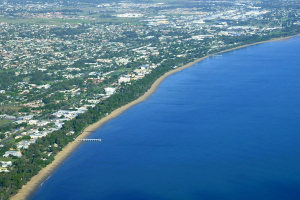
A broader view of the Hervey Bay coastline, where development and natural landscape meet.
What Changed After the Court Appeal
The Fraser Coast development itself remains substantial. A five-star hotel, residential apartments, and supporting retail and dining will still take shape along the Esplanade. Yet the version that has emerged from mediation is not the one first proposed.
Building heights have been reduced. The residential tower drops from 18 to 16 storeys, while the hotel tower has been cut more sharply, from 18 to 12. Design changes have been made. Lighting conditions have been tightened to reduce impact on the surrounding environment.
These adjustments matter. They reflect a process that has tested assumptions rather than simply endorsed them.
And that is where the broader significance lies.
Why This Outcome Matters Beyond Hervey Bay
Across Queensland and beyond, coastal development debates often fall into familiar patterns. One side argues for economic growth and regional opportunity. The other calls for protection of natural systems and community character. Both positions carry weight. Both can also become entrenched.
What we have seen in this case is something more constructive.
Under Queensland planning laws, community groups have the right to seek a review of decisions. That mechanism can be seen as an obstacle, particularly when projects are delayed or costs rise. Yet it also provides a pathway for scrutiny and improvement.
Here, that pathway led to change.
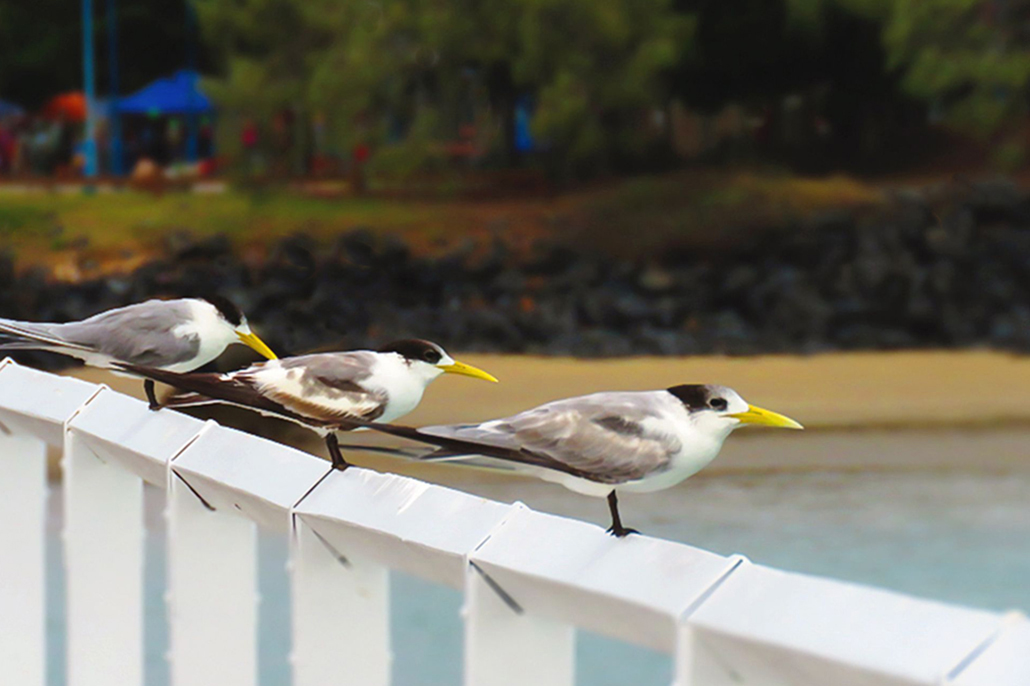
Birdlife is part of daily life on the Fraser Coast and a key consideration in coastal development decisions.
Development, Environment, and the Role of Mediation
The Wildlife Preservation Society of Queensland raised concerns that were taken seriously enough to reshape the proposal. Expert review and mediation followed. The final approval reflects those discussions.
It is worth acknowledging that outcome. Not as a victory for one side, but as evidence that the system can produce a more balanced result when all parties engage.
There is also a deeper layer to consider.
Sir David Attenborough has long argued that the natural world is not separate from human progress, but central to it. He has often described it as one of the greatest sources of beauty and inspiration. It is a perspective that resonates strongly in places like Hervey Bay, where the environment is not just a backdrop but a defining feature.
That makes decisions like this more than planning exercises. They shape how a region evolves and how its identity is preserved or altered over time.
What Happens Next Will Shape the Outcome
A development of this scale will inevitably change the Esplanade. It will bring new visitors, new energy, and new expectations. It may also alter how the coastline feels for those who live there and for the wildlife that depends on it.
The revised conditions, particularly around height and lighting, are intended to soften that impact. Whether they succeed will not be determined in a single moment. It will be measured over years, in how the development sits within its surroundings and how well its effects are managed.
That responsibility now shifts to the next stage.
Detailed design, construction approvals, and operational planning will determine how closely the finished project aligns with the intent of the Court’s conditions. This is where good intentions are either realised or diluted.
So where does that leave the community?
First, there is reason to recognise the effort involved. The Council, the developer, and the Wildlife Preservation Society of Queensland have each contributed to a process that has reached agreement rather than stalemate. That is no small achievement.
Second, there is a cautious sense of balance. The core of the development remains, but it has been shaped by environmental considerations that might otherwise have been overlooked or underplayed.
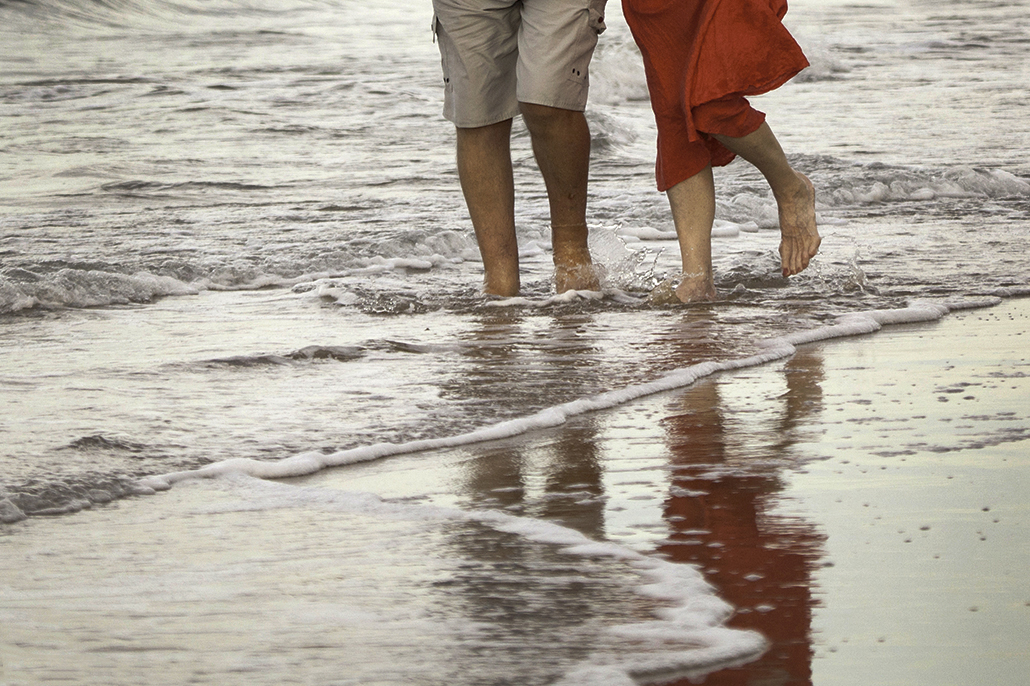
The lifestyle that draws people to places like Hervey Bay remains at the heart of the growth conversation.
Can Growth and Nature Truly Co-Exist?
Finally, there is a shared stake in what comes next.
Hervey Bay’s appeal has always rested on more than infrastructure. It lies in its open spaces, its wildlife, and the slower pace that draws people in the first place. Any new development must work within that context if it is to enhance rather than erode what makes the area distinctive.
The hope now is that this project can do just that.
That a five-star resort and the natural environment can exist side by side. That visitors can arrive for the amenity and stay for the landscape. That economic growth and environmental care do not have to be opposing forces, but can, with careful planning, support one another.
It is an outcome built on compromise. Whether it becomes a success story will depend on how that compromise is honoured in the years ahead.
How to Choose Retreat Accommodation in Hervey Bay
A practical, slightly dreamy guide for organising your next group getaway
THERE’S a moment, somewhere between the idea and the booking, when a retreat starts to feel real.
It might begin with a simple thought: What if we brought everyone together? Not just for a holiday, but for something more intentional.
A writers’ retreat. An artists’ gathering. A space to pause, create, and reconnect.
And then comes the big question: Where will everyone stay?
If you’re looking for retreat accommodation in Hervey Bay, the good news is you’re on the right track.
Choosing the right accommodation will shape the entire experience—how people connect, how they unwind, and how easily ideas begin to flow.
*This article contains affiliate links. If you click through and make a purchase, we may earn a commission, at no extra cost to you. It’s how we keep creating helpful stories and guides for you.
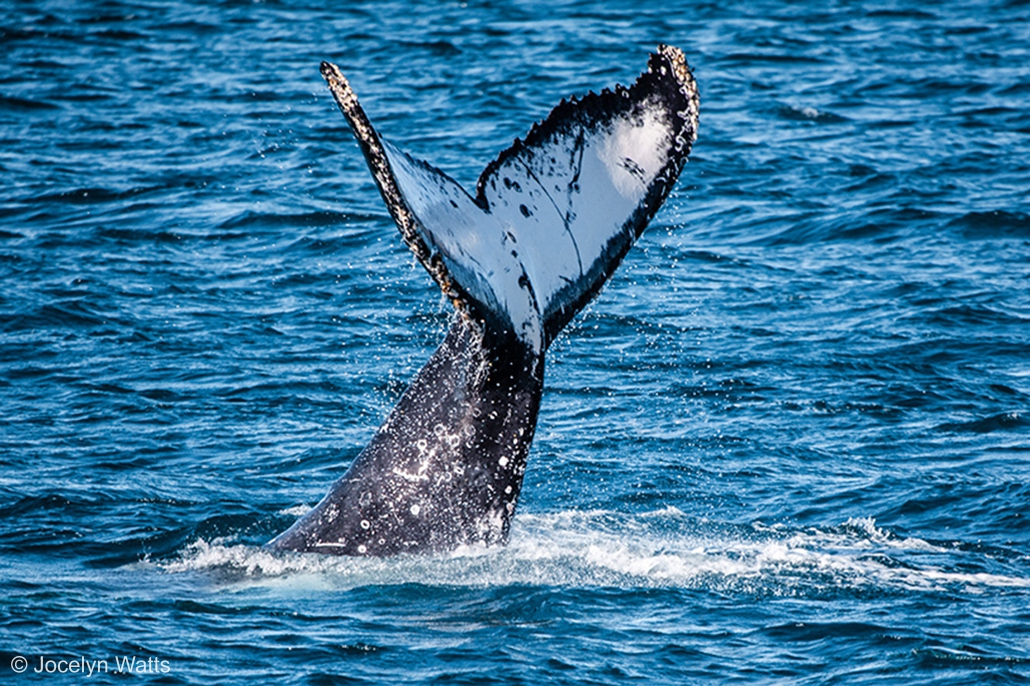
A humpback whale dives beneath the surface, revealing its tail in the calm waters of Hervey Bay, one of the world’s best whale-watching destinations.
Why Hervey Bay Works So Well for Retreats
- Calm, swimmable waters
- Soft coastal light (a dream for photographers and painters)
- A relaxed pace that encourages reflection
- Enough cafés and dining spots to keep things social
It’s the kind of place where mornings start slowly, conversations stretch longer, and ideas seem to land a little more easily.
For a retreat group accommodation in Hervey Bay, the balance between peaceful but not isolated is gold.
Planning your retreat? A few essentials to sort first:
→ Check cover for pre-existing conditions with AllClear Travel Insurance
→ Keep things organised with smart travel gear from Bagsmart
Small things sorted early = a much smoother retreat later.
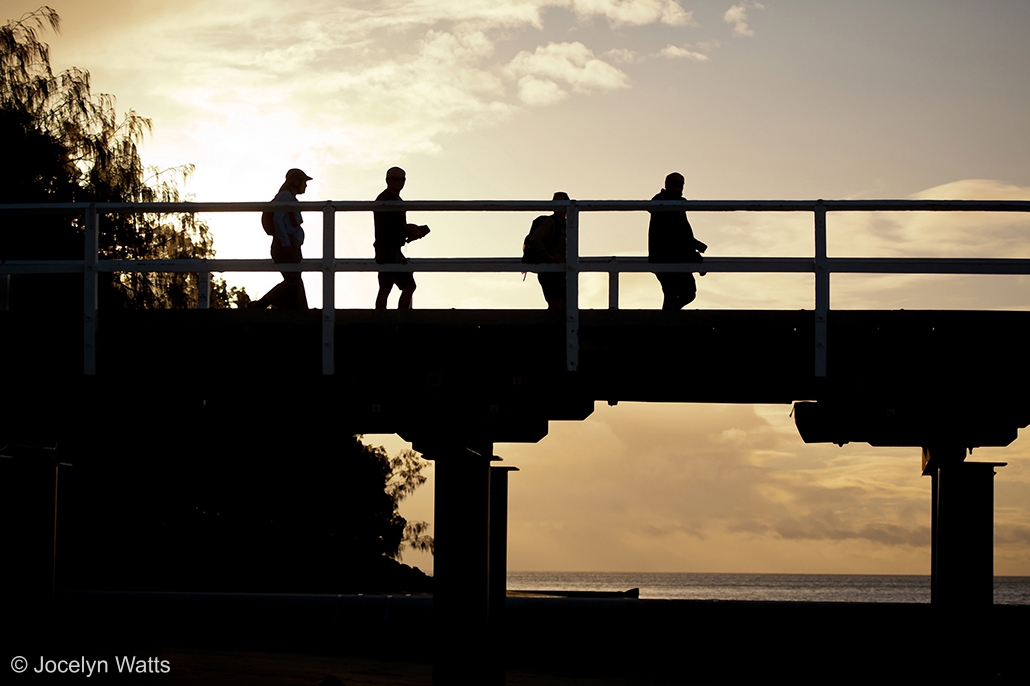
Evening walkers cross Urangan Pier as the sun sets, capturing the unhurried pace of life in Hervey Bay.
The First Big Decision: Together or Nearby?
Before diving into specific places, there’s one key choice to make:
Do you want everyone under one roof, or close by but separate?
Each has its own rhythm.
Option 1: All in One House (Airbnb-style)
- Best for bonding
- Shared meals, spontaneous chats
- Feels like a “real” retreat
Option 2: Apartment Resort (multiple units)
- Private space for each guest
- Flexible budgets
- Still easy to gather
For most creative groups, the sweet spot is often a blend of both: private rooms with shared moments.
Getting around Hervey Bay is easier with your own wheels:
→ Compare local options with Avis Car Rentals
Ideal for group dinners, day trips, or a spontaneous run out to the vineyards.
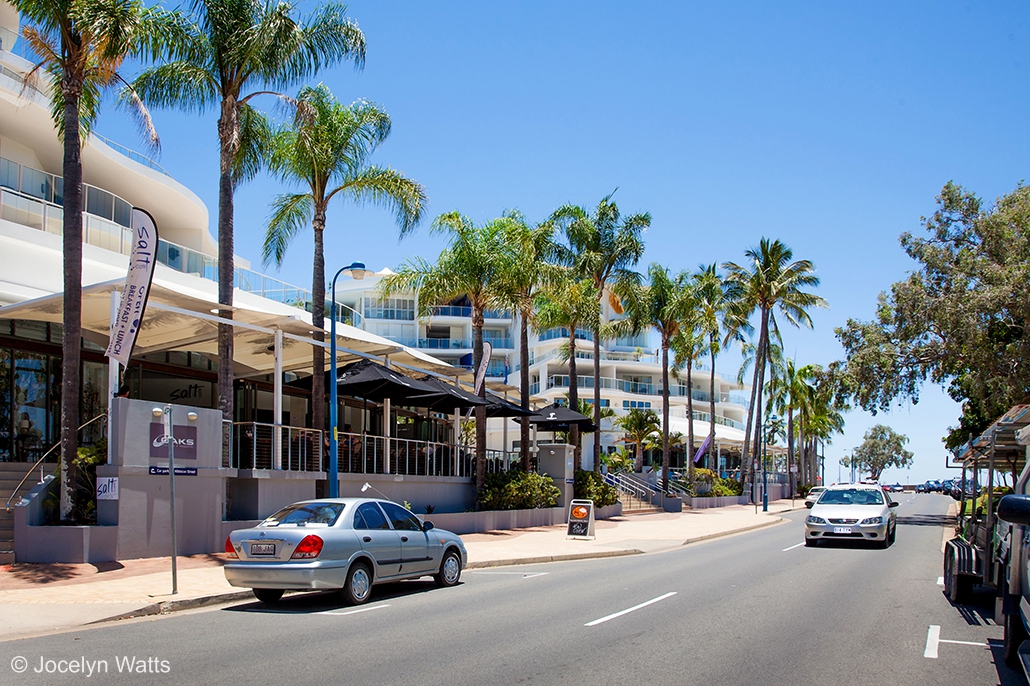
The Hervey Bay esplanade, lined with palm trees, cafés and beachfront accommodation at the Oaks, offers easy access to the water and relaxed coastal living.
The “Easy Yes” Option
Oaks Hervey Bay Resort and Spa
If you want a retreat that’s easy to organise and easy to enjoy, this one ticks every box.
- Book a couple of apartments across the group
- Everyone gets their own room (or shares comfortably)
- Kitchens for casual shared meals
- Balconies for early morning writing or reflection
And then there’s the location—right on the Esplanade. Coffee is a short stroll away. So is dinner. So is that “just one more walk before sunset” feeling.
💡 Why it works: Simple, reliable, and feels like a treat without being over the top.
For a More Immersive Creative Reset
Kingfisher Bay Resort
Set on K’gari (Fraser Island), Kingfisher Bay Resort feels like stepping out of everyday life.
- Bushland villas
- Wildlife wandering through
- A peaceful place that actually restores your thinking
There’s a little more planning involved (ferry transfers), but that’s part of the experience. It creates a sense of arrival, like you’ve gone somewhere meaningful.
💡 Best for: Writing retreats, creative intensives, or groups wanting genuine unplug time.
The Quiet Achievers (Mid-Range Gems)
Not every retreat needs to feel like a luxury escape. Sometimes, the best experiences come from places that simply work well.
Akama Resort
- Spacious, modern apartments
- Relaxed marina location
- Ideal for a central gathering space
Ramada by Wyndham Hervey Bay
- Studio and apartment-style options
- Onsite dining
- Slightly removed from the Esplanade buzz
Mantra Hervey Bay
- Good value without feeling basic
- Flexible configurations for groups
These are the kinds of places where people settle in quickly without fuss or friction.
The “Feels Like a Retreat” Option
Best Western Plus Quarterdecks Retreat
- Standalone villas
- Tropical gardens
- A genuine sense of calm
It naturally encourages a slower pace, which can be exactly what a retreat needs.
The Beachfront Balance
Grand Mercure Allegra Hervey Bay
BreakFree Great Sandy Straits
These options lean into one of Hervey Bay’s biggest strengths: being right by the water.
Morning walks. Ocean air. That slightly salty breeze that somehow clears your head.
💡 Perfect for: Groups who want a natural rhythm to write, walk, talk, repeat.
The Airbnb Alternative: Where Magic Happens
A well-chosen Airbnb can give you:
- A long dining table for shared meals
- Space for conversations that unfold naturally
- A sense of being “away” together
It’s less structured and often more meaningful because of it.
💡 Best for: Creative groups, friendships, collaborative energy.
Make the most of the coastal setting:
→ Travel-friendly tech and Kindle reads via Amazon Australia
Because the right gear makes slow mornings and seaside walks even better.
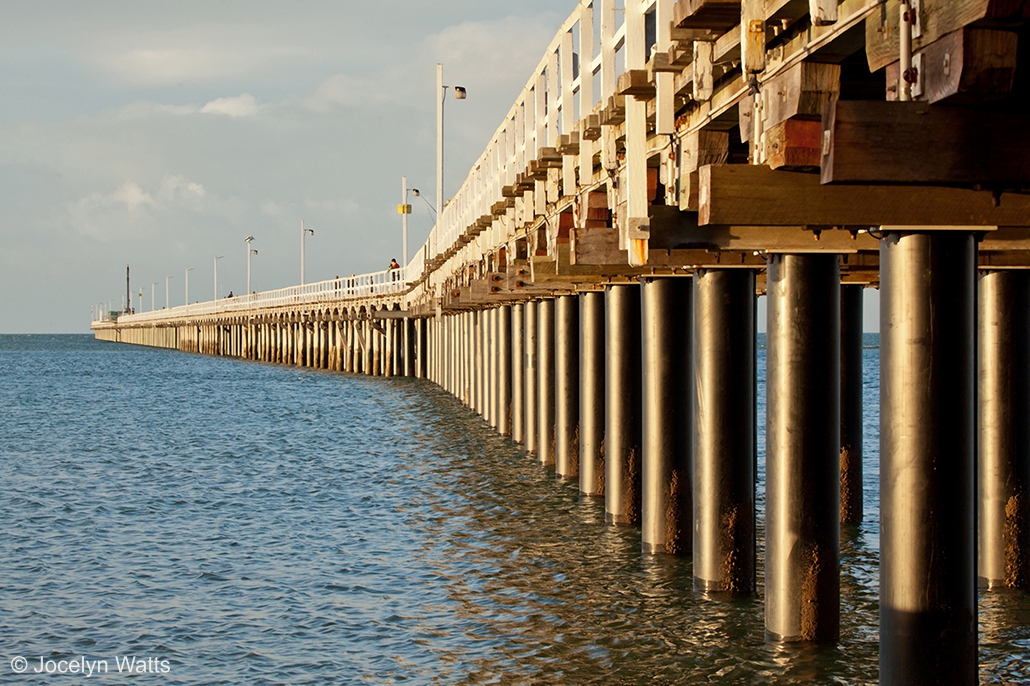
The historic Urangan Pier extends nearly a kilometre into the bay, offering sweeping views and a favourite spot for fishing and walking.
What to Consider for Retreat Accommodation in Hervey Bay
This is where the practical side matters.
Room Configuration
Seven or more people means flexibility is key.
Look for:
- Enough bedrooms
- Multiple bathrooms
Shared Space
Is there:
- A lounge big enough for everyone?
- A dining area for group meals or discussions?
Location
Do you want:
- Walkable cafés and beach access?
- A quieter, tucked-away setting?
Budget Balance
Not everyone travels the same way.
Apartment-style stays can help accommodate different budgets within the same group.
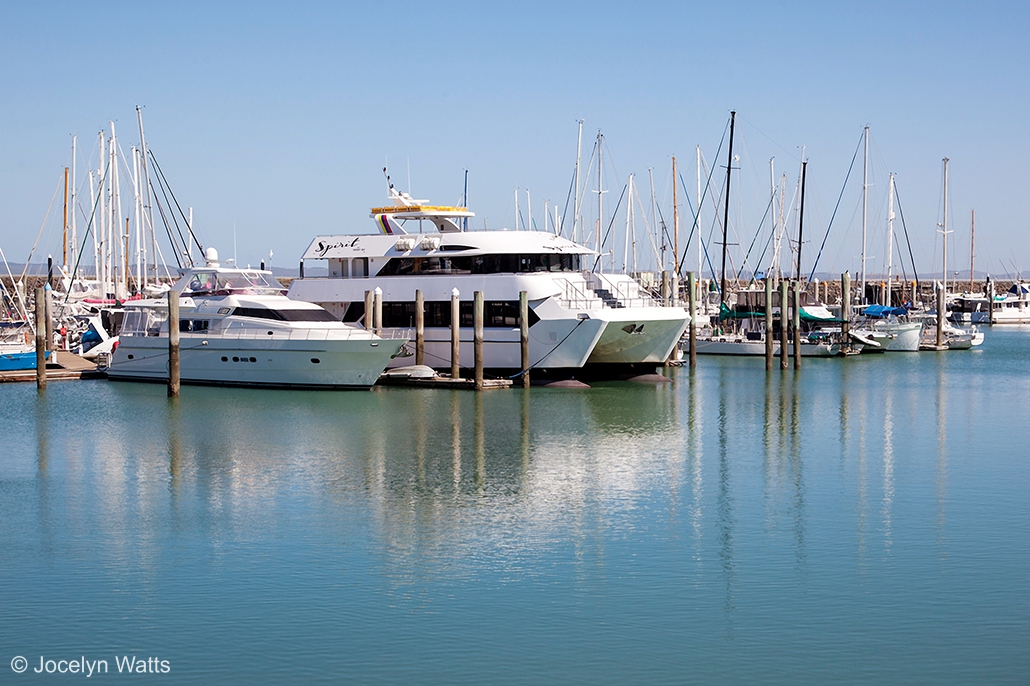
The Hervey Bay marina is the departure point for whale watching tours and island adventures across the Fraser Coast.
The Real Secret? It’s Not Just the Accommodation
Here’s something worth keeping in mind: it’s not just the property that makes the retreat.
It’s also what the space allows.
- Conversations that don’t feel rushed
- Time to think clearly
- A sense of being slightly removed from everyday life
Hervey Bay simply supports that in a very natural way.
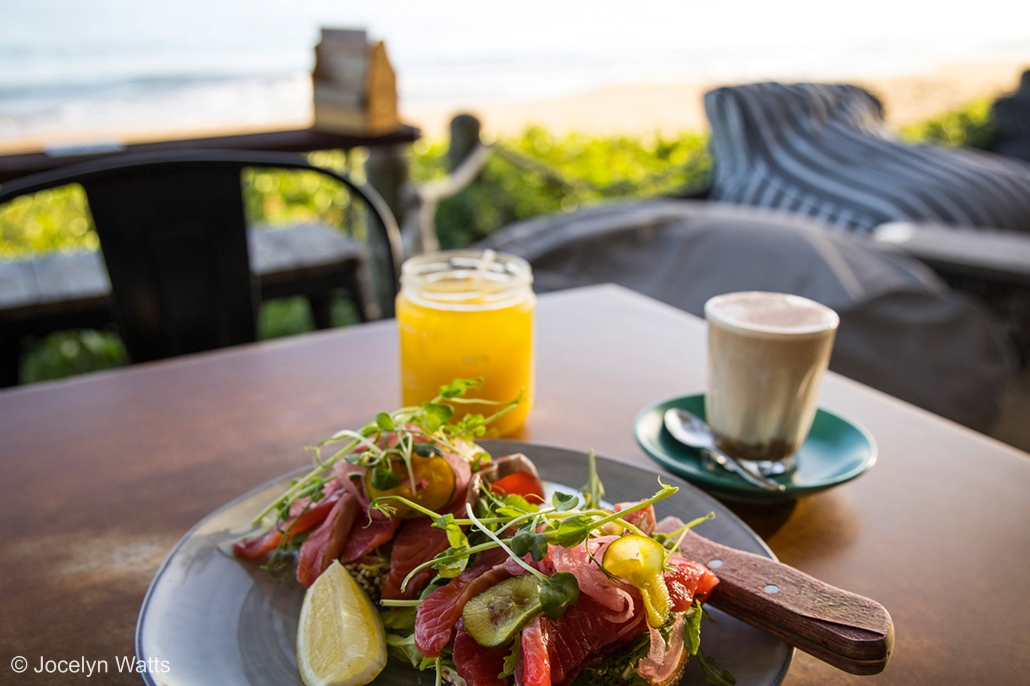
A relaxed breakfast at Enzo’s on the Beach at Torquay where good coffee and fresh flavours are served with ocean views.
Final Thought: Choose the Experience First
If you’re picturing:
- Easy, social, coastal: go with Oaks Hotel Hervey Bay
- Deep, immersive, nature-based: choose Kingfisher Bay
- Connected and intimate: look for a beautiful Airbnb
- Balanced and flexible: consider Akama, Ramada or Mantra
There’s no single “right” option; just the one that aligns with the kind of retreat you want to create.
And that’s really what this is about. Not just booking accommodation… but setting the tone for something people will remember long after they’ve gone home.
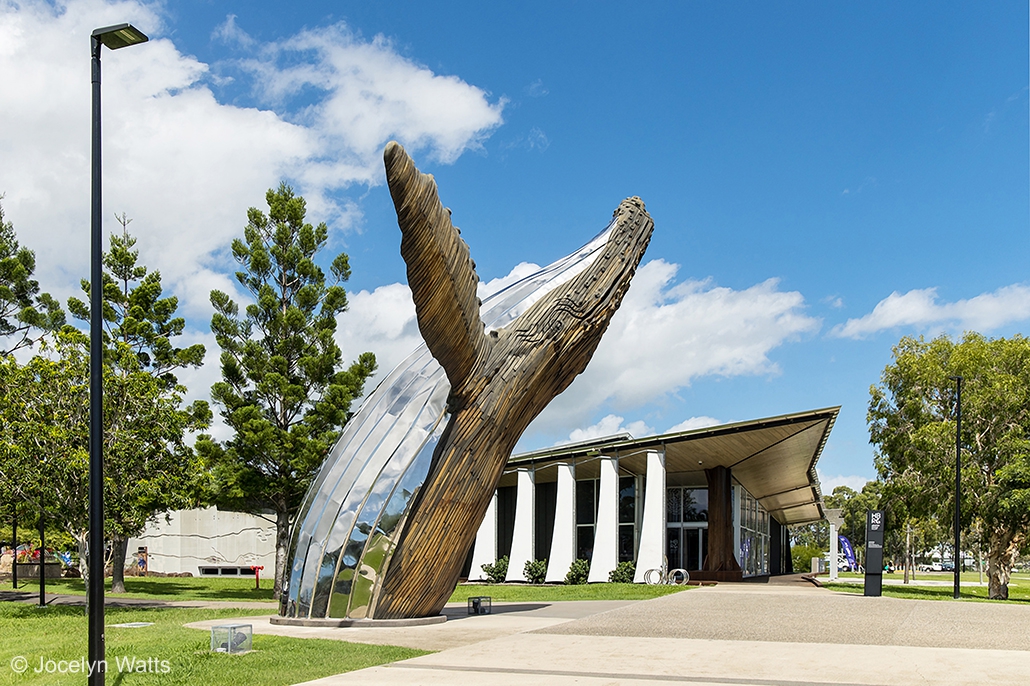
Public art in Hervey Bay reflects the region’s connection to the ocean, with striking whale sculptures near the gallery precinct.
Ready to Plan Your Hervey Bay Retreat?
Whether you’re picturing sunrise writing sessions by the water, long lunches with your group, or simply a change of pace, having the right base makes all the difference.
Start here:
→ Browse coastal apartments and resort stays with Oaks Hotel Hervey Bay
→ Compare a wider range of group-friendly stays via ParkBooker
→ Organise transport with Avis Car Rentals
→ Travel with confidence using AllClear Travel Insurance
Take your time choosing — the right setting doesn’t just host a retreat… it shapes it.
*This article contains affiliate links. If you click through and make a purchase, we may earn a commission, at no extra cost to you. It’s how we keep creating helpful stories and guides for you.
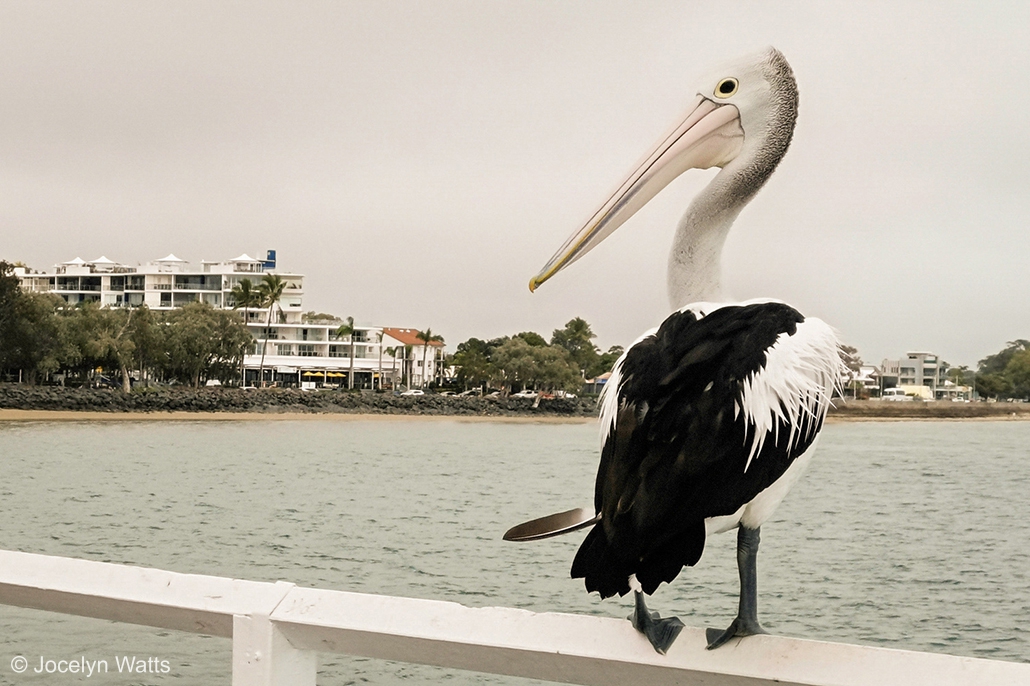
A curious pelican pauses along the waterfront, a common sight around Urangan Pier and the marina.
Why I Chose an Oaks Hervey Bay Staycation — and Properly Switched Off
THERE’S something a little rebellious about checking into a resort when home is just 15 minutes away.
No airport queues. No packing the car like you’re fleeing civilisation. No “did I leave the iron on?” spiral halfway down the highway. Just a short drive, a familiar stretch of road, and then, somehow, the unmistakable feeling that you’re on holiday.
That was exactly the point of my Oaks Hervey Bay staycation. I wasn’t chasing novelty or ticking off destinations. I wanted rest. The kind that doesn’t require recovery time afterwards. A break that felt earned, not exhausting.
And yes, I live locally in Hervey Bay. Which turned out to be an advantage.
*This article contains affiliate links. If you click through and make a purchase, we may earn a commission, at no extra cost to you. It’s how we keep creating helpful stories and guides for you.
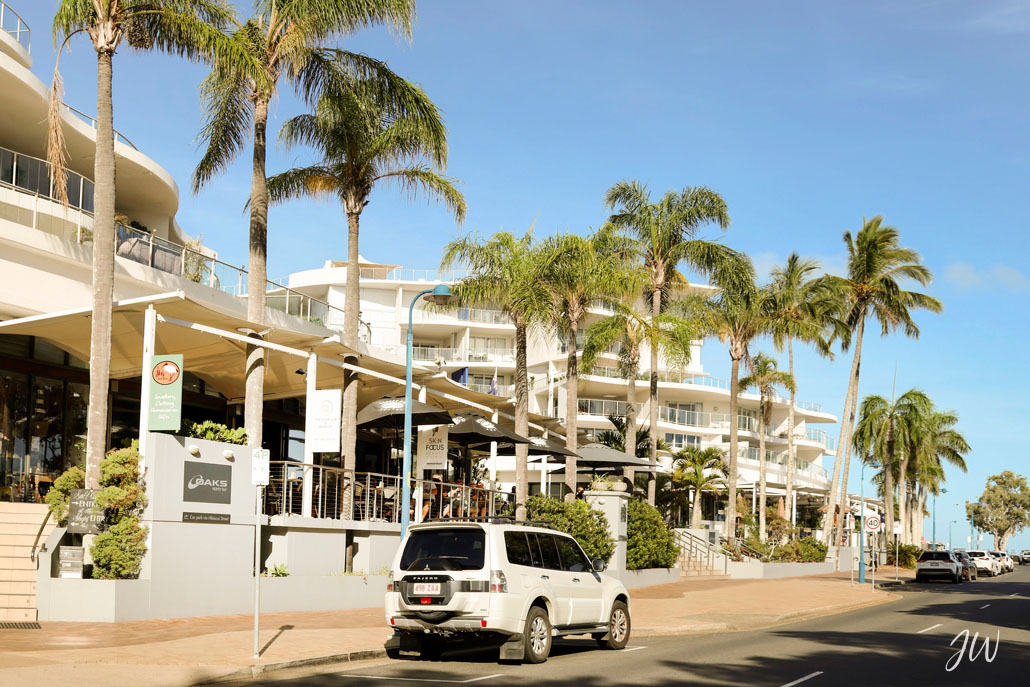
Even from the street, Oaks Hervey Bay signals a slower pace — palms overhead, cafés below, and the ocean just across the road.
A holiday without the hard work
This wasn’t to be a review in the glossy-brochure sense, and it wasn’t a whirlwind escape designed to impress Instagram. It was a deliberate decision to holiday close to home — to step out of routine without piling on the stress that often comes with getting somewhere “properly away”.
The beauty of a local staycation is the mental permission it gives you to slow down. If you forget something, it’s not a disaster. You don’t need contingency plans or emergency purchases. In fact, about six hours after checking out, I realised my smart watch charger was still plugged in beside the bed. One quick stop at reception and it was soon back in my hand. No drama. No courier fees. No silent self-recrimination.
That ease seeped into everything else.
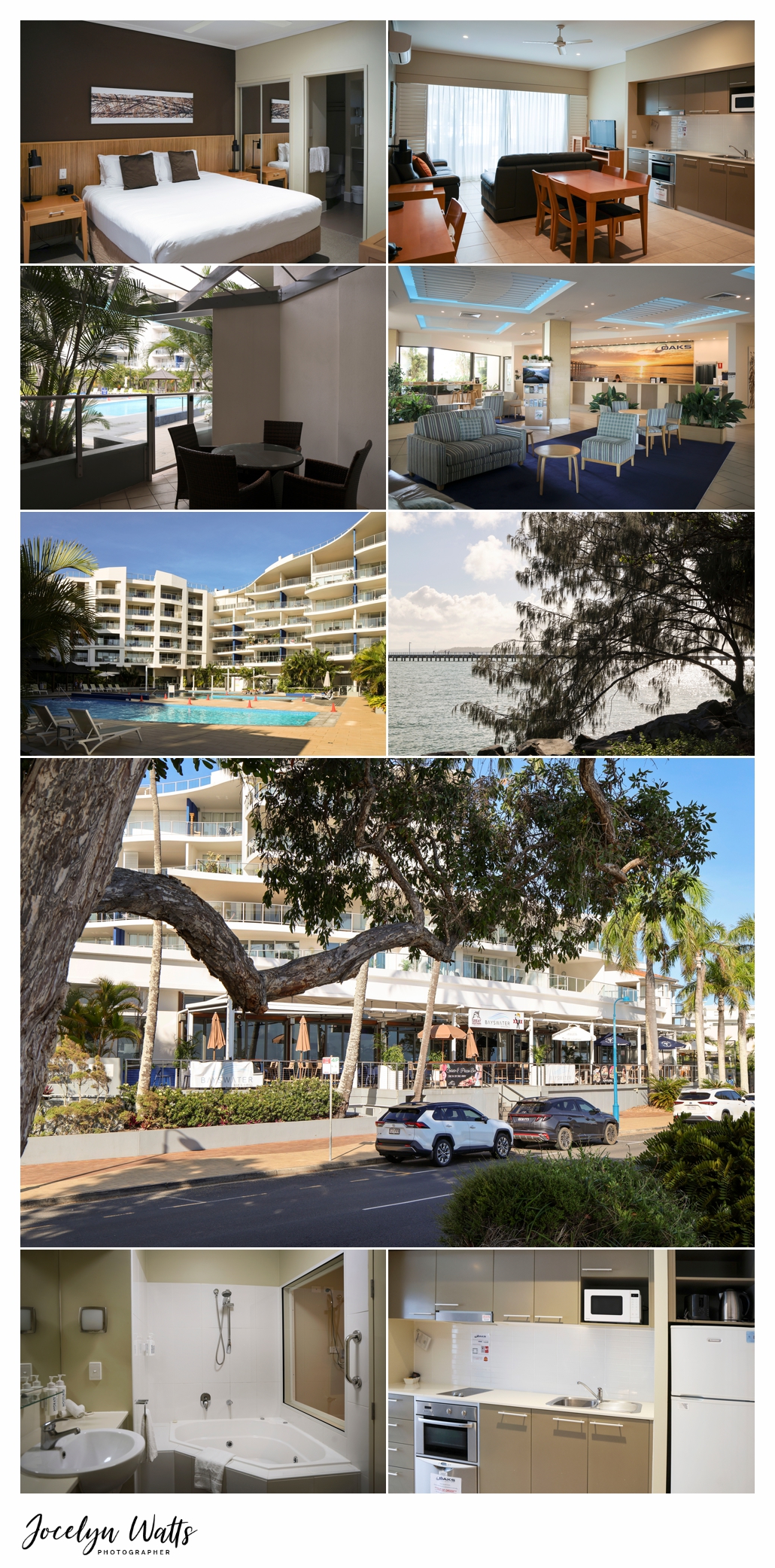
The Oaks apartment itself helped. A kitchen meant breakfast didn’t require clothes with buttons. A laundry meant packing light. A spa bath meant lingering longer than strictly necessary. And the pool — well, I don’t have one at home, which made it feel like a genuine luxury rather than an amenity you politely ignore.
The downstairs apartment opened directly onto the lagoon-style pool, framed by tropical gardens that felt a world away from suburban routines. It was the sort of setting that encourages long swims, unhurried afternoons and the radical act of doing nothing particularly well.
Pool days, visitors and sensible boundaries
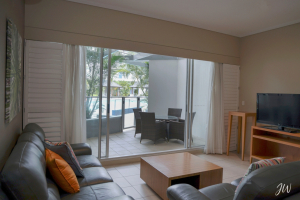
Sliding doors open to a private terrace at Oaks Hervey Bay, where indoor comfort meets poolside calm.
One of the pleasures of staying so close to home was being able to share it, within reason.
I invited family to visit during the day, and as long as I was with them, they could enjoy the pool too. There are clear limits around how many people can be in the apartment at any one time, which is fair enough and worth checking with reception if you’re planning visitors. Fire safety rules aren’t optional, even on holidays.
The shared amenities by the pool made it easy for day visitors to change after a swim, and access was refreshingly practical. While reception is officially accessed from Hibiscus Street, it’s just as easy for visitors walking along the Esplanade to pop in without feeling like they’re sneaking through a back door.
The overall vibe is relaxed rather than restrictive — the sort of place that trusts adults to behave like adults.
Eating out, without overthinking it
One of the great pleasures of staying somewhere well-located is not having to plan meals with military precision.
Breakfast or lunch at Salt Café Urangan was an easy choice. Sitting right on the Esplanade, it’s the kind of place where locals and visitors blur together — ocean views, a steady rhythm of foot traffic, and that holiday hum that doesn’t demand conversation but rewards it if it happens.
For dinner, Bayswater Bar & Grill delivered exactly what you want at the end of the day: good food, an unpretentious atmosphere, and the Urangan Pier doing its thing in the background. Both venues are part of the Oaks complex, but importantly, they’re open to everyone. You don’t have to be staying at the Oaks to enjoy them, which keeps the feel grounded rather than gated.
Beyond that, the Esplanade does what it does best. Cafés, takeaways and restaurants are either within walking distance or a short drive away. Choice without overwhelm. Convenience without compromise.
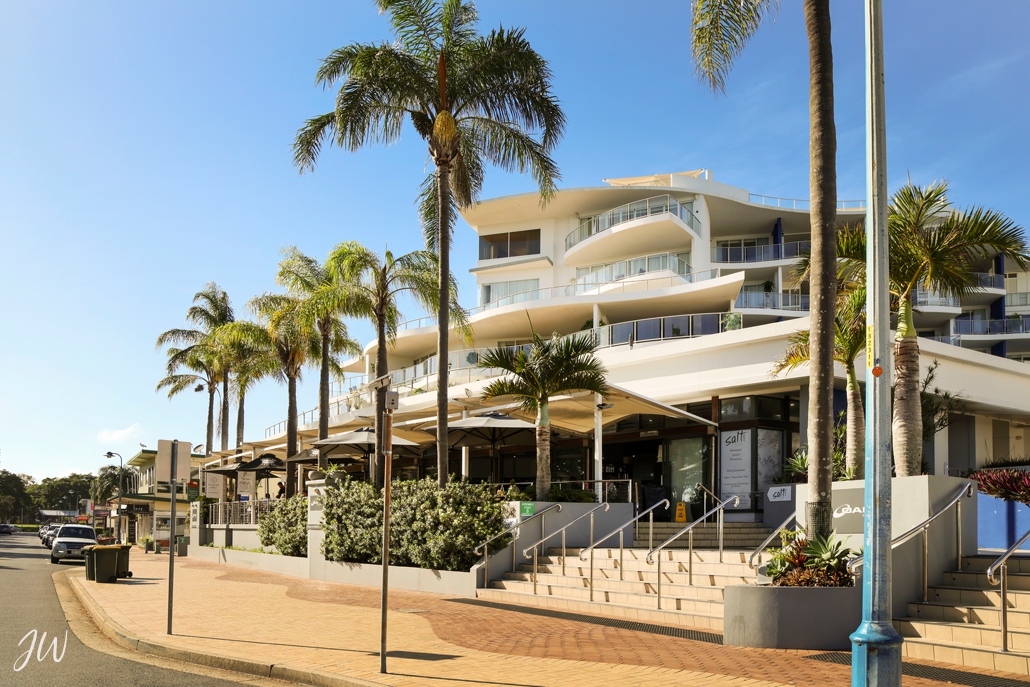
The early morning waft of sizzling bacon from Salt Café Urangan has a habit of slowing your stride.
Art where you don’t expect it
Staying at the Oaks Hervey Bay also stirred up a memory from years ago, long before it was the Oaks.
Back when I was working as a photographer, I’d hired a function room in this very building to set up two mobile studios and photograph senior students before their formal. Walking the corridors again, now at leisure rather than in work mode, was oddly grounding.
What stood out this time was the artwork. Along the corridor leading to the function rooms, local pieces line the walls, a confident nod to the region’s creative life.
Among them are works by Ashleigh at Ashleigh Manley Gallery, a short two-minute walk from the Oaks resort and a rewarding stop for anyone interested in local art.
If you’re inclined to explore further, there’s plenty nearby:
-
Hervey Bay Regional Gallery, with rotating exhibitions
-
Gallery 5, hosting monthly member shows
It’s easy to underestimate your own backyard — until you give yourself time to notice it properly.
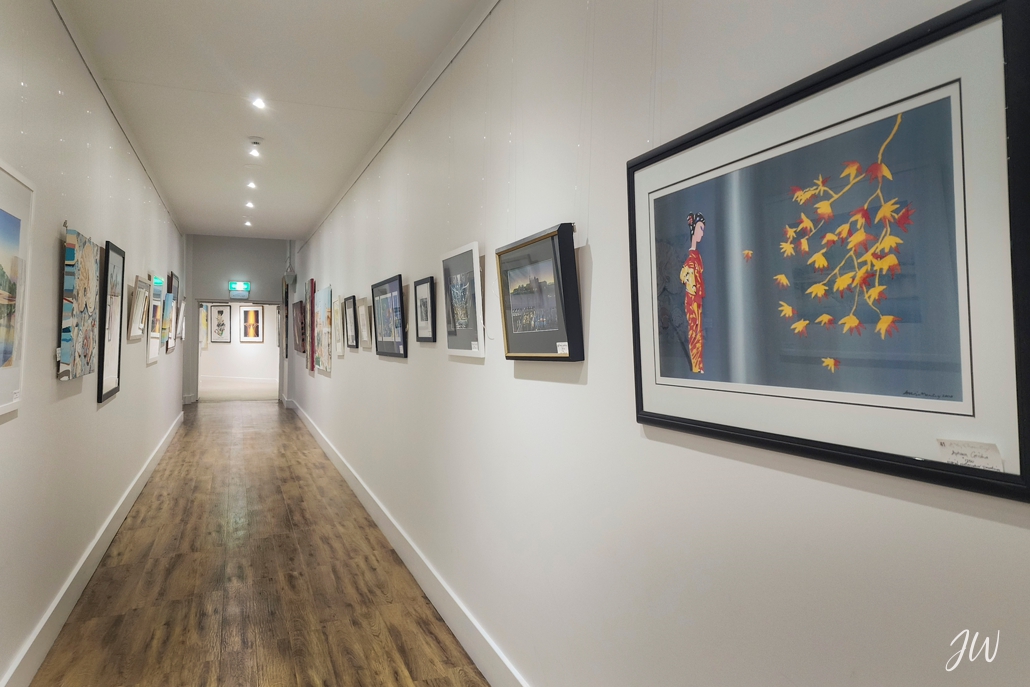
Local artworks line a passageway at Oaks Hervey Bay, turning a simple walk between rooms into a cultural pause.
The spa you don’t have to book (but might)
Adding to the relaxed atmosphere is Mineral Earth Wellness Spa, located within the complex.
I didn’t book any treatments on this particular stay. That, in itself, felt like a small luxury. Knowing it was there without feeling obliged to indulge in a spa treatment was oddly freeing.
That said, I’ve visited before for a special event and treated myself to a facial, makeup, manicure and pedicure. The experience was unhurried and genuinely restorative, the sort of place that understands the difference between pampering and care.
For those who want to lean into full holiday mode, it’s an easy way to deepen the sense of escape. For those who don’t, it’s simply another reminder that this kind of stay can flex to suit your mood.
Why this kind of break matters
By the end of my Oaks Hervey Bay staycation, what struck me most wasn’t any single feature — not the pool, the food, or even the location — but the absence of strain.
This was a holiday that didn’t ask for endurance. It didn’t require navigating timetables or adapting to unfamiliar logistics. It allowed rest to arrive gently, without fanfare or fuss.
Sometimes the most restorative breaks aren’t about leaving your life behind, but stepping sideways out of it, far enough to breathe, close enough to feel safe.
For anyone feeling overdue for a pause, a local staycation like this can be surprisingly powerful. Especially when it’s done well.
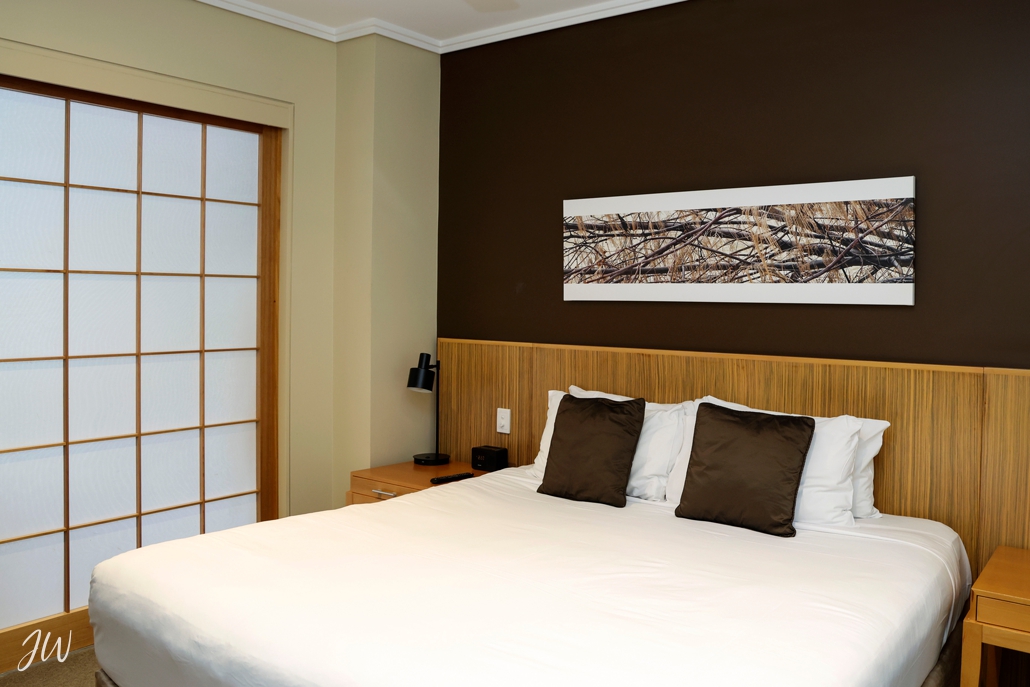
A calm, uncluttered bedroom at Oaks Hervey Bay, designed for proper rest.
Planning your own Oaks Hervey Bay Staycation
For current availability and offers, it’s worth checking the Oaks Hotels & Resorts website to see what’s on at the moment.
Oaks Hervey Bay
569–571 Charlton Esplanade, Urangan QLD 4655
Reservations: 1300 161 624
Reception: 07 4194 9700
Reception hours: 6:30 am–9:00 pm daily
(Public Holidays 7 am–7 pm)
Email: herveybay@theoaksgroup.com.au
Travel Essentials
Packing well makes travel smoother — but so does thinking ahead.
If you’re travelling with pre-existing conditions or simply prefer specialist cover, AllClear Travel Insurance offers policies designed for real-life travellers.
And when it comes to keeping everything organised — from documents to chargers to medications — I like the practical travel pieces from Bagsmart.
→ Explore travel insurance with AllClear
→ View travel organisers from Bagsmart
(These are affiliate links, which means I may receive a small commission at no extra cost to you.)
About the author
Jocelyn Watts is a Fraser Coast–based writer and photographer, and the editor of Jocelyn Magazine, where she writes about food, travel, place and the subtle details of everyday life.
This Oaks Hervey Bay Staycation was self-funded and not provided as part of an influencer or media arrangement.
Love Italian? Adore Mexican? Barrel n Vine Nails the Fusion!
I WASN’T sure what to expect for my first Fusion event at Barrel n Vine in Hervey Bay, but I quickly learned to expect the unexpected!
After thoroughly enjoying their Taste of Italy wine tasting last month, I was curious to see what their Italy Meets Mexico Fusion night had in store. Apparently, this dining style—where cuisines from different cultures are combined—is becoming quite popular across south-east Queensland. One guest even mentioned spotting a similar event advertised in Maroochydore.
The evening promised a three-course meal blending Italian and Mexican flavours, with two options for each course. I kicked things off with the Italian herb-battered gamberi (prawns) served with a Mexican chipotle aioli (feature photo above). Light, crispy, and perfectly seasoned—it was the best of both worlds. For my main, I couldn’t resist the chorizo and gamberi pizza tostada. It was nothing like the pizzas I’m used to. This version featured a delicious mix of chorizo, prawns, and green salsa
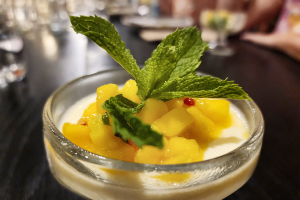
Patron tequila panna cotta with a mango chilli fresh fruit salsa.
encased in a crunchy tostada instead of the usual dough. Delicious.
Dessert was the star of the evening for me. I went for the Patron tequila panna cotta with a mango chilli fresh fruit salsa. I’ve always been a fan of panna cotta, but this one was next-level. The hint of chilli in the salsa added an unexpected but delightful kick. Who knew chilli and panna cotta could pair so well?
For drinks, I started with their lime and jalapeño soft drink—zesty, refreshing, and with just enough of a spicy twist. Later, I tried the 2024 Our Mums Love Barossa Rosé, recommended by co-owner Rachael Nocera. It was crisp, light, and a perfect complement to the meal. I also noticed other guests enjoying vibrant cocktails, with the Mediterranean Margarita being especially popular.
Affiliate Disclosure: Some links in this article are affiliate links. If you purchase through them, I may receive a small commission. It doesn’t cost you anything extra, and it helps support the ongoing work behind Jocelyn Magazine.

Chorizo and gamberi pizza tostada.
A Warm and Welcoming Vibe at Italy Meets Mexico Fusion
Walking into Barrel n Vine that evening, I was reminded of why this place is so special. Rachael and her husband, Joe, the talented duo behind the restaurant, have created something irresistibly charming. With a wealth of experience from their previous successful ventures at Sandstone Point near Bribie Island and Sydney, they bring passion and precision to every detail.
The modern, elegant interior adds to the charm. Black dining tables and chairs create a sleek backdrop, while the vintage black-and-white photographs on the walls whisk you away to Europe. My favourites were a striking image of a Venetian canal and another capturing the homely bustle of an Italian kitchen.
As the night unfolded, the atmosphere was simply perfect. Happy conversations, the clinking of glasses, and the soft glow of candlelight created a welcoming vibe.
What stands out at Barrel n Vine is their attention to detail. From the beautifully plated dishes to the warm and attentive service, it’s clear that Joe and Rachael are dedicated to creating memorable dining experiences. Their family’s Italian heritage shines through, and their openness to fusion flavours adds an exciting twist. The Italy Meets Mexico Fusion event perfectly showcased this, with each dish seamlessly blending the best of both worlds.
By the end of the night, I was already thinking about my next visit. Barrel n Vine has quickly become one of my favourite spots in Hervey Bay—not just for the food, but for the welcoming atmosphere that makes every meal feel like a celebration. If you’re looking for unique dining experiences that bring two cuisines together, I highly recommend Barrel n Vine’s Fusion events. These, along with more wine-tasting events, are on the agenda for next year (2025).
To find out more or to join their VIP mailing list, just follow this link to their website at www.barrelnvine.com.au
If you haven’t visited Barrel n Vine yet, do yourself a favour and make a booking. Trust me, it’s an experience worth savouring. Huge thanks to Rachael, Joe (the co-owner and head chef), and the entire Barrel n Vine team for another unforgettable evening.
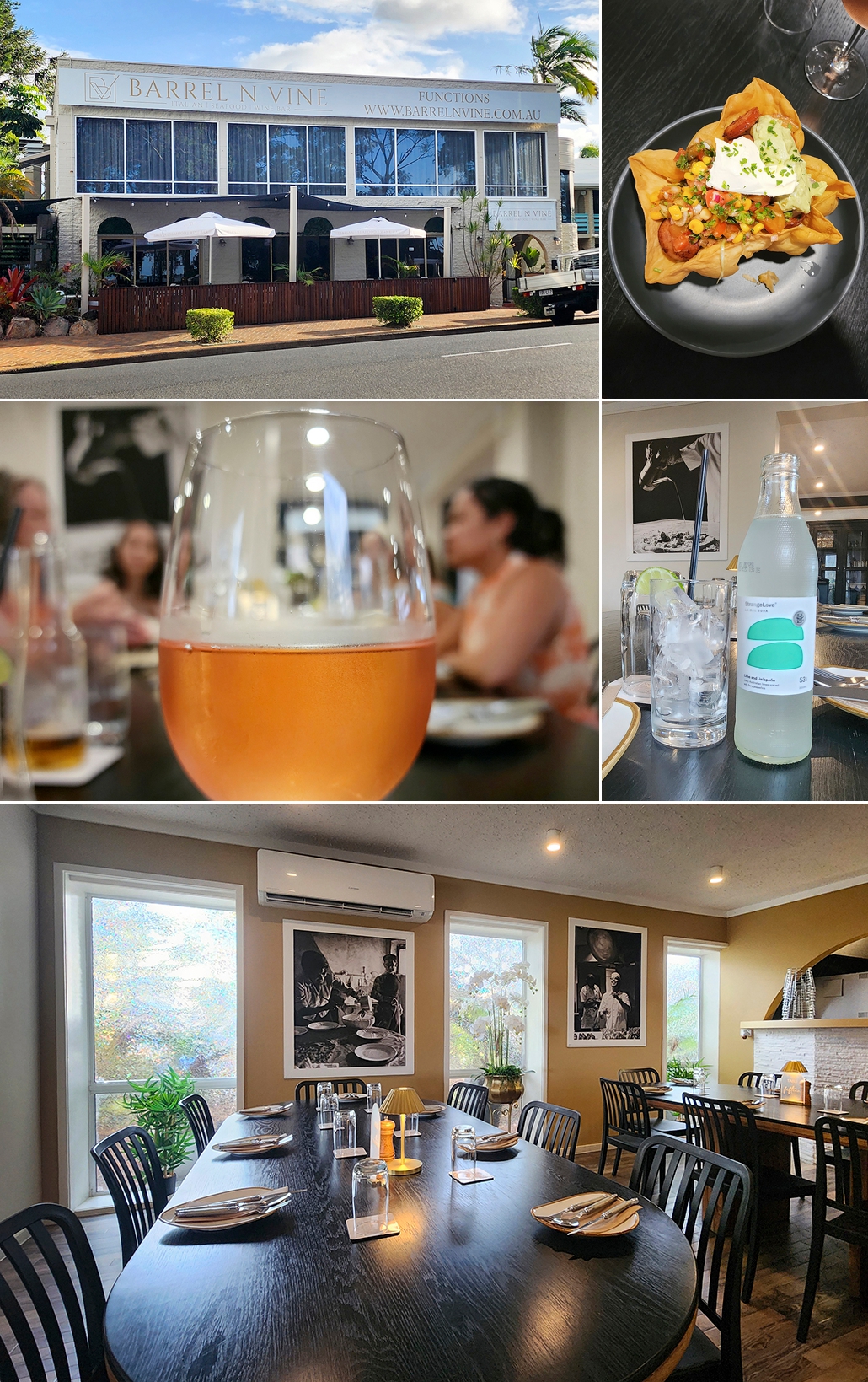
Barrel n Vine Fusion Italian & Mexican event at Hervey Bay, Queensland.
Want somewhere to stay in Hervey Bay?
If you’re travelling to Hervey Bay and looking for a place to stay, consider the Oaks Hervey Bay Resort, located just 4.2km from Barrel n Vine. This modern waterfront resort boasts spacious apartments, a heated pool, a spa, and easy access to the beach—ideal for a relaxing getaway.
If you’d love to recreate these flavours at home, check out:
Amazon Australia
– cookbooks (Italian, Mexican and fusion cooking)
– kitchen gadgets (tortilla presses, pasta makers, spice sets)
Join the Conversation: Share Your Wine-Tasting Tales
We’d love to hear about your own wine-tasting experiences. Share your stories in the comments section below.
For more details on how to book a table at Barrel n Vine or to learn about upcoming wine-tasting events, check out their website at https://www.barrelnvine.com.au.
And don’t forget to like Jocelyn Magazine’s Facebook page at www.facebook.com/jocelynmagazine for more foodie reviews and great content about lifestyle and travel.
If you go:
Barrel n Vine
Italian | Seafood | Wine Bar
473 Charlton Esplanade
Hervey Bay, QLD,
Australia.
P: +61 (07) 4334 0892
W: barrelnvine.com.au
About the Author
Jocelyn Watts is a writer, photographer and editor of Jocelyn Magazine. Based on Queensland’s Fraser Coast, she explores food not just as nourishment, but as memory, culture and connection.