Tag Archive for: Queensland

Hervey Bay Resort Approval Tests Growth vs Nature

FOR YEARS, coastal communities across Australia have walked a fine line between promise and pressure.

Growth brings jobs, investment, and the kind of amenity that keeps towns alive. It also places strain on fragile ecosystems, reshapes local character, and raises a simple but confronting question. Who benefits, and who carries the cost?

That tension sits at the heart of the newly approved Esplanade resort at Torquay in Hervey Bay.

Following a lengthy appeal process, the Planning and Environment Court has finalised its decision, approving the development subject to conditions negotiated between the Fraser Coast Regional Council, the developer, and the Wildlife Preservation Society of Queensland, Fraser Coast Branch.

It is not often that a development of this scale reaches a point of agreement after legal challenge. In that sense alone, this outcome stands apart.

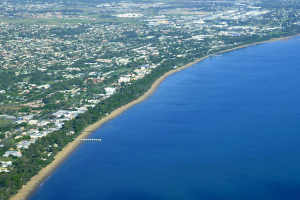
Aerial view Hervey Bay coastline Fraser Coast Queensland Esplanade and shoreline

A broader view of the Hervey Bay coastline, where development and natural landscape meet.

What Changed After the Court Appeal

The Fraser Coast development itself remains substantial. A five-star hotel, residential apartments, and supporting retail and dining will still take shape along the Esplanade. Yet the version that has emerged from mediation is not the one first proposed.

Building heights have been reduced. The residential tower drops from 18 to 16 storeys, while the hotel tower has been cut more sharply, from 18 to 12. Design changes have been made. Lighting conditions have been tightened to reduce impact on the surrounding environment.

These adjustments matter. They reflect a process that has tested assumptions rather than simply endorsed them.

And that is where the broader significance lies.

Why This Outcome Matters Beyond Hervey Bay

Across Queensland and beyond, coastal development debates often fall into familiar patterns. One side argues for economic growth and regional opportunity. The other calls for protection of natural systems and community character. Both positions carry weight. Both can also become entrenched.

What we have seen in this case is something more constructive.

Under Queensland planning laws, community groups have the right to seek a review of decisions. That mechanism can be seen as an obstacle, particularly when projects are delayed or costs rise. Yet it also provides a pathway for scrutiny and improvement.

Here, that pathway led to change.

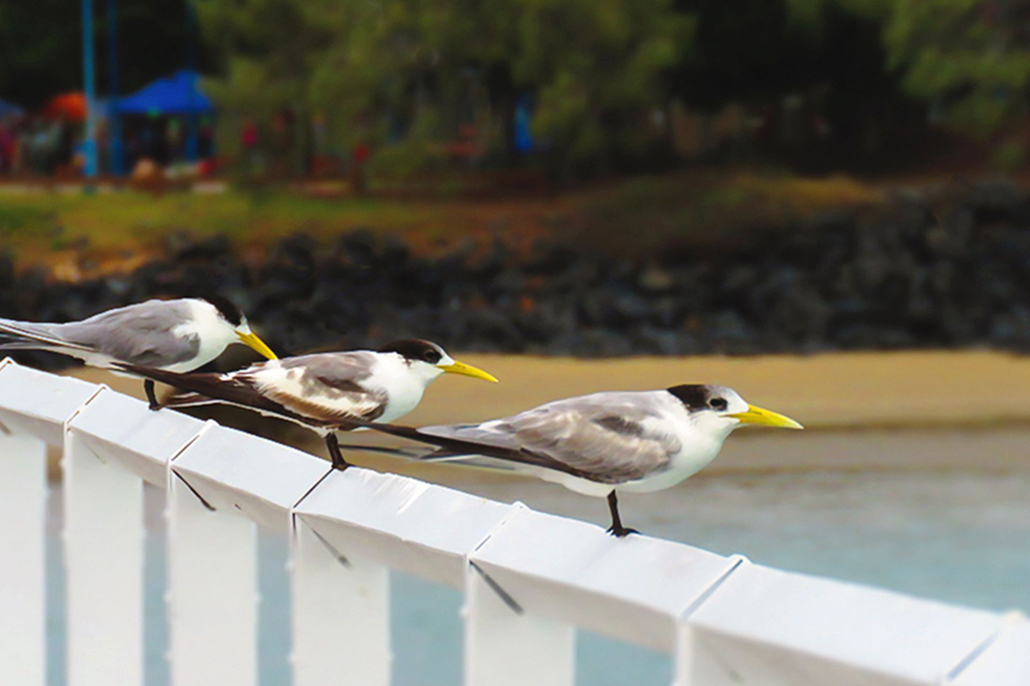
Coastal birds perched on railing Hervey Bay foreshore Queensland

Birdlife is part of daily life on the Fraser Coast and a key consideration in coastal development decisions.

Development, Environment, and the Role of Mediation

The Wildlife Preservation Society of Queensland raised concerns that were taken seriously enough to reshape the proposal. Expert review and mediation followed. The final approval reflects those discussions.

It is worth acknowledging that outcome. Not as a victory for one side, but as evidence that the system can produce a more balanced result when all parties engage.

There is also a deeper layer to consider.

Sir David Attenborough has long argued that the natural world is not separate from human progress, but central to it. He has often described it as one of the greatest sources of beauty and inspiration. It is a perspective that resonates strongly in places like Hervey Bay, where the environment is not just a backdrop but a defining feature.

That makes decisions like this more than planning exercises. They shape how a region evolves and how its identity is preserved or altered over time.

What Happens Next Will Shape the Outcome

A development of this scale will inevitably change the Esplanade. It will bring new visitors, new energy, and new expectations. It may also alter how the coastline feels for those who live there and for the wildlife that depends on it.

The revised conditions, particularly around height and lighting, are intended to soften that impact. Whether they succeed will not be determined in a single moment. It will be measured over years, in how the development sits within its surroundings and how well its effects are managed.

That responsibility now shifts to the next stage.

Detailed design, construction approvals, and operational planning will determine how closely the finished project aligns with the intent of the Court’s conditions. This is where good intentions are either realised or diluted.

So where does that leave the community?

First, there is reason to recognise the effort involved. The Council, the developer, and the Wildlife Preservation Society of Queensland have each contributed to a process that has reached agreement rather than stalemate. That is no small achievement.

Second, there is a cautious sense of balance. The core of the development remains, but it has been shaped by environmental considerations that might otherwise have been overlooked or underplayed.

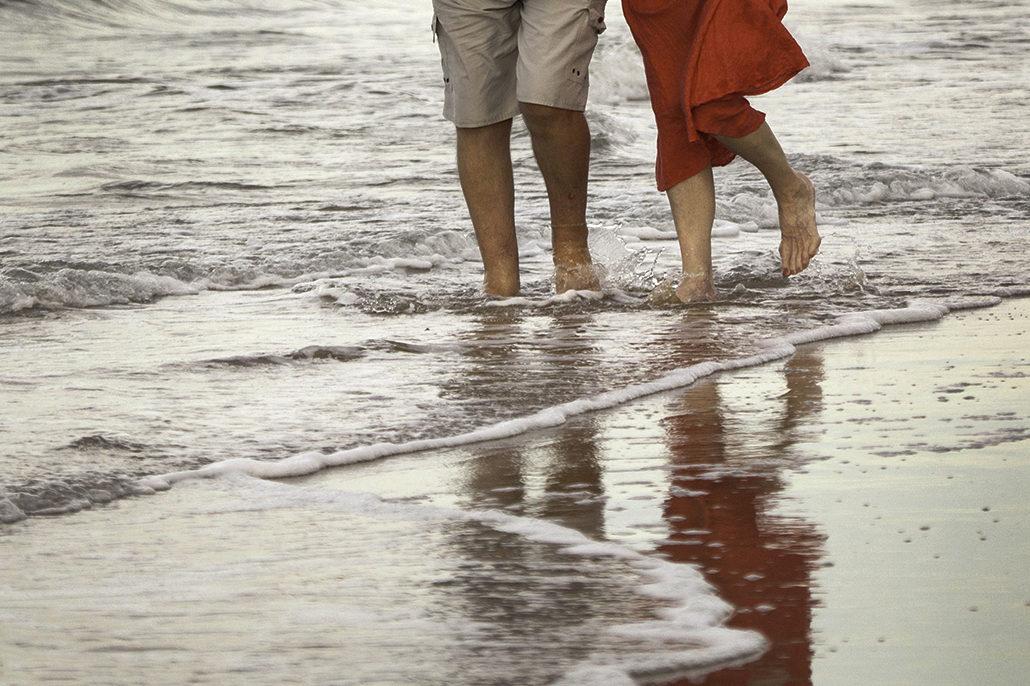
People walking along Hervey Bay beach shoreline Queensland coastal lifestyle

The lifestyle that draws people to places like Hervey Bay remains at the heart of the growth conversation.

Can Growth and Nature Truly Co-Exist?

Finally, there is a shared stake in what comes next.

Hervey Bay’s appeal has always rested on more than infrastructure. It lies in its open spaces, its wildlife, and the slower pace that draws people in the first place. Any new development must work within that context if it is to enhance rather than erode what makes the area distinctive.

The hope now is that this project can do just that.

That a five-star resort and the natural environment can exist side by side. That visitors can arrive for the amenity and stay for the landscape. That economic growth and environmental care do not have to be opposing forces, but can, with careful planning, support one another.

It is an outcome built on compromise. Whether it becomes a success story will depend on how that compromise is honoured in the years ahead.

Journey Along the Queensland Dinosaur Trail Through Winton

Looking to explore the Queensland Dinosaur Trail beyond the brochures? From Charleville’s clear night skies to Winton’s world-class fossil discoveries, this outback road trip reveals prehistoric Australia at its most compelling.

WHERE to from Lightning Ridge? North! We’re heading to Winton, but there are a few interesting stops on the way.

I’d head north from Lightning Ridge through Hebel, Dirranbandi and Ballon on the A2 highway.

The most direct and shortest route to Longreach and Winton is the A2 and it will take you through historic Barcaldine, home of the 1893 Shearers Strike and the birth of the Australian Labor Party.

However, let’s not rush. Just north of Boatman, I’d take a left turn to Charleville.


*This article contains affiliate links. If you click through and make a purchase, we may earn a commission, at no extra cost to you. It’s how we keep creating helpful stories and guides for you.

Charleville: Cosmos Centre and Bilby Experience

Queensland Dinosaur Trail: Bilby Experience Charleville railway station

Bilby. Photo: Creative Commons

I’d do that because there are a couple of attractions in Charleville that I think are worth a look, and we’re not in a hurry, are we?

Charlieville boasts the Cosmos Centre. It is an open-air astronomical observatory that is a treat for young and old.

We nomads know the night sky is an unfathomable wonder, way out there, but the Cosmos Centre will take you even closer.

There are other observatories around Australia, but I don’t know of one with as consistently clear skies as Charleville.

The next morning, you can visit the Charleville Bilby Experience at the local railway station.

These little critters are adorable and surprisingly little known.

If, however, Australia is serious about guarding and preserving this wide brown land we are fortunate to be custodians of, we could start with the bilby.

Clear your mind of the Easter Bunny; take the legend of the Easter Bilby home to your families and grandchildren.

Barcaldine and Longreach: Historic Outback Stops

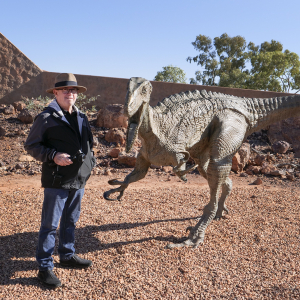
Peter Woodland at the Australian Age of Dinosaurs Museum in Winton, Queensland on the Queensland Dinosaur Trail.

Author Peter Woodland at the Australian Age of Dinosaurs, Winton — standing where Queensland’s prehistoric giants once roamed.

Heading north again, we return to the A2 and will eventually arrive in Barcaldine.

It’s only a short trip to Longreach and then Winton.

There are attractions in both of these centres worth dallying for, but we’re interested in dinosaurs and they are tantalisingly close.

Winton: Heart of the Queensland Dinosaur Trail

In Winton, apart from the tourist parks, there are several hotels and motels from which to choose. Of note is the historic North Gregory Hotel.

Banjo Patterson wrote Waltzing Matilda while staying nearby at Dagworth Station, and it is reliably reported that it was first recited at the North Gregory on April 6, 1895.

On the subject, the Waltzing Matilda Centre, in Winton’s main street, is a trove of detail about the era and the human faces behind this quintessential Australian piece.

Queensland Dinosaur Trail: North Gregory Hotel at night.

Neon lights and warm verandahs at the North Gregory Hotel, Winton — a classic outback stay on the Queensland Dinosaur Trail.

Savour the Outback at Home

Before setting out on Queensland Dinosaur Trail — or after you’ve returned from Winton — savour a true taste of Australia. Kakadu plum grows wild in Australia’s remote regions and has long been valued for its natural properties. It’s a way to stay connected to the landscapes that shape our prehistoric story.

DISCOVER KAKADU PLUM

Australian Age of Dinosaurs Museum and Lark Quarry

Now, as to the Dinosaurs, I hear you ask.

The area around Winton was, again, on the edge of that erstwhile sea, mentioned previously, during the early to mid-Cretaceous, 145 mya to 110 mya.

It abounds in dinosaurs and other prehistoric reptile fossils.

The district boasts the Australian Age of Dinosaurs Museum of Natural History and Lark Quarry.

These attractions are spectacular, world-class facilities, and both are an easy drive from the centre of Winton.

Queensland Dinosaur Trail: Two model dinosaurs outside the Australian Age of Dinosaurs Museum, Winton, Queensland

Dinosaurs at the Australian Age of Dinosaurs Museum of Natural History near Winton. Photo: Jocelyn Watts

Queensland Dinosaur Trail: Lark Quarry dinosaur trackways Queensland

Lark Quarry, Winton. Photo: Jocelyn Watts

WINTON PHOTO GALLERY

Extend Your Journey: Boulia and Eromanga Fossil Discoveries

Together, Lightning Ridge and Winton form one of Australia’s most compelling prehistoric road trips — a journey linking opalised fossils in New South Wales to the vast dinosaur landscapes of Outback Queensland.

If you wish to venture further afield while based in Winton, discoveries and a comprehensive display of some of the denizens of the Eromanga Sea can be found in Boulia.

Alternatively, head to Eromanga and the Eromanga Natural History Museum to meet Cooper, the largest dinosaur found in Australia to date.

Travel Insurance for Regional Australia

For rail journeys and extended road trips, comprehensive cover provides peace of mind — especially for mature travellers.

COMPARE TRAVEL INSURANCE OPTIONS

If you go: Queensland Dinosaur Trail

Base: Winton, Outback Queensland
Distance from Longreach: Approx. 180 km (2 hours)
Distance from Brisbane: Approx. 1,350 km (15–16 hours by road)

Best time to visit: May–September for milder temperatures. Summer heat can exceed 40°C.

Allow: 3–5 days to explore Winton, Lark Quarry and surrounding fossil sites at a relaxed pace.

Don’t miss:

  • Australian Age of Dinosaurs Museum

  • Lark Quarry Dinosaur Trackways

  • Waltzing Matilda Centre

  • Optional side trips to Eromanga and Boulia

Map: View Winton on Google Maps:
https://www.google.com/maps/place/Winton+QLD

Continue your journey from Part One at Dinosaur Trails Australia in Lightning Ridge.

About the author

Peter Woodland is a contributor to Jocelyn Magazine. A former teacher and school librarian, his interests include computing, geography, palaeontology and good food.

*This piece was first published in Jocelyn Magazine in 2022. It has been lightly edited to update travel information.


Maryborough, Qld, To Host 2025 National Citroën Cit-In!

GET revved up! Maryborough, Queensland, has been announced as the backdrop for the much-anticipated 2025 national Citroën club gathering, affectionately dubbed Cit-In.

In a grand unveiling at the 2024 national gathering in Devonport, Tasmania, last night (24 March 2024), the President of the Citroën Car Club of Queensland, Adrian Chatterton, revealed plans that are bound to set automotive lovers, the city of Maryborough, and the wider Fraser Coast region abuzz.

“In May 2025, Citroën club members from across the nation will converge upon Maryborough, Queensland, bringing at least 70 Citroën cars from every corner of Australia for their annual celebration,” Mr Chatterton said.

“This gathering is more than just a congregation of cars; it’s a celebration of heritage, innovation, and the enduring legacy of Citroën in Australia.”

“Maryborough’s Brolga Theatre and Convention Centre will serve as the backdrop for this spectacular event, offering ample space and facilities to accommodate enthusiasts and spectators.”

  • This article may contain affiliate links and advertisements. If you click on these links, make a purchase, or share this content, we may earn a small commission at no extra cost to you. This helps us continue creating valuable content for you. Thank you for your support.
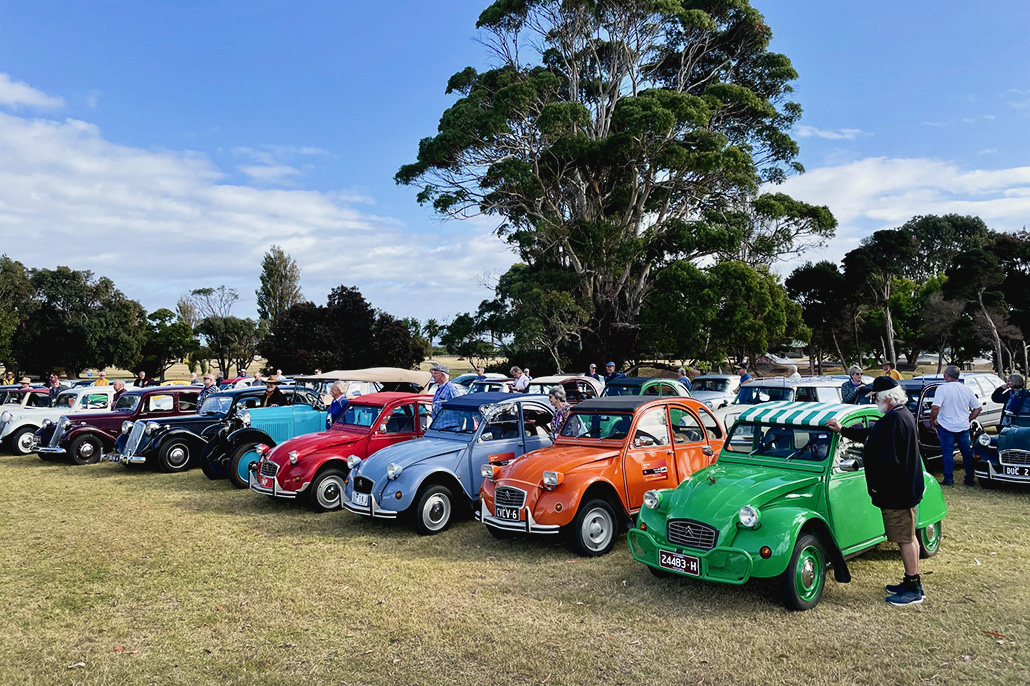
Citroen cars lined up.

Citroën aficionados show their vehicles ahead of the 2024 national Cit-in gathering in Devonport, Tasmania.

2025 Cit-in to Showcase Citroën’s Legacy

Citroëns from throughout Australia will be in Maryborough from Friday, May 2, to Monday, May 5, 2025, with cars that span the breadth of the brand’s illustrious history.

From classic models like the DS, marking its 70th anniversary, to iconic vehicles such as the 2CV, each car tells a story—a testament to Citroën’s revolutionary impact on the automotive industry.

On Saturday, May 3, 2025, admirers will have the opportunity to immerse themselves in the world of Citroën at a Show and Shine event—a dazzling showcase of craftsmanship, innovation, and the rich heritage synonymous with the brand.

Adding a touch of elegance and nostalgia to the proceedings, the Cit-In formal dinner on Sunday evening will transport club members back to the glamour of Paris 1955, commemorating the 70th anniversary of the legendary DS. It’s an evening of fine dining, entertainment, and camaraderie—a fitting tribute to the timeless allure of Citroën.

However, the significance of this event extends beyond the confines of Citroën owners.

Next year, 2025, marks the 100th anniversary of the Australian circumnavigation by a car—an achievement made possible by none other than a Citroën 5CV. This historic milestone emphasises the pioneering spirit and enduring legacy of Citroën vehicles, a legacy that continues to inspire generations of automotive enthusiasts to this day.

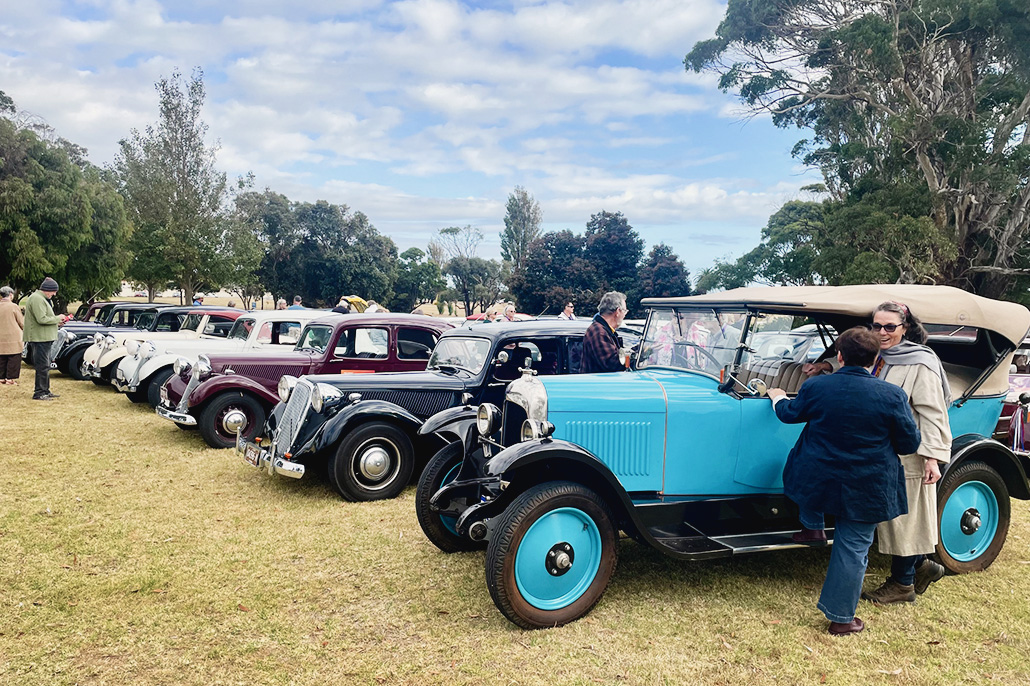
Citroen

Citroen lovers, check out the range of cars as members of the Citroen Car Club of Queensland make their way to Tasmania for the 2024 Cit-In.

Fraser Coast Set to Shine with 2025 Cit-in

As anticipation builds for the 2025 national Cit-In gathering in Maryborough, I can’t help but reflect on the impact this event will have, not only on Maryborough itself, but also on the wider Fraser Coast community.

Beyond the gleaming cars, this gathering promises to breathe excitement into Maryborough, inviting visitors to explore its historic streets, charming cafes, and vibrant culture.

The event also serves as a gateway to the wonders of the Fraser Coast, beckoning travellers to discover the breathtaking beauty of Hervey Bay’s picturesque beaches and historic piers where they can relax and soak up the sun.

Just a short ferry ride away lies K’gari (Fraser Island), a UNESCO World Heritage site renowned for its stunning natural landscapes and unique wildlife. From ancient rainforests to crystal-clear lakes, K’gari offers an unforgettable wilderness experience for nature enthusiasts and adventurers.

So, as we eagerly anticipate the Cit-In gathering in 2025, let us celebrate the opportunity it brings to showcase the unparalleled beauty and diverse attractions of the Fraser Coast to visitors from near and far.

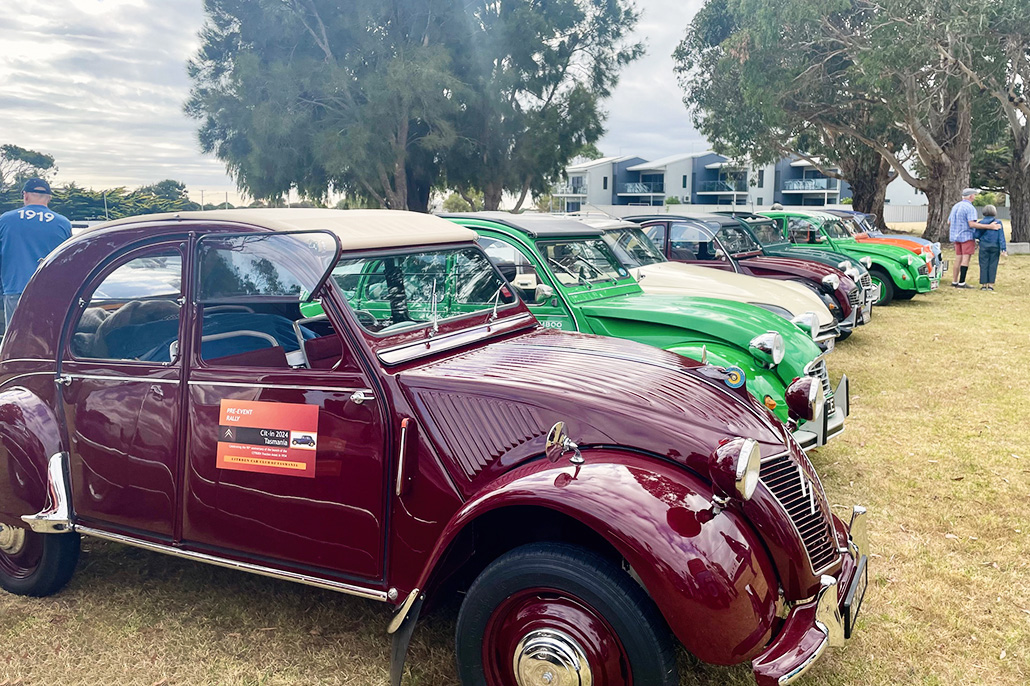
Citroen cars lined up.

As they journey to Tasmania for the 2024 Cit-in, Citroën Car Club of Queensland members showcase their love for the brand.

Countdown to 2025 Cit-in: Mark Your Calendar Now

For Citroën enthusiasts and automotive fans, the 2025 national Cit-in gathering is an event not to be missed.

It’s a celebration of heritage, innovation, and camaraderie—a chance to come together and pay homage to a brand that has captured the hearts and imaginations of millions around the world.

As we eagerly await the arrival of May 2025, I invite you to start counting down the days until Citroën lovers gather in Maryborough, Qld, where memories will be made, friendships forged, and a legacy celebrated for generations to come.

For more information and updates on the event, please visit the official Cit-in website here. This site will be live following the announcement evening on March 24, 2024.

– Jocelyn Watts, Editor.

About Citroën Car Club of Queensland

The Citroën Car Club of Queensland is dedicated to preserving and promoting the heritage of Citroën vehicles in Australia. With a passionate community of enthusiasts, the club hosts events, gatherings, and activities to celebrate the unique charm and innovation of Citroën automobiles.

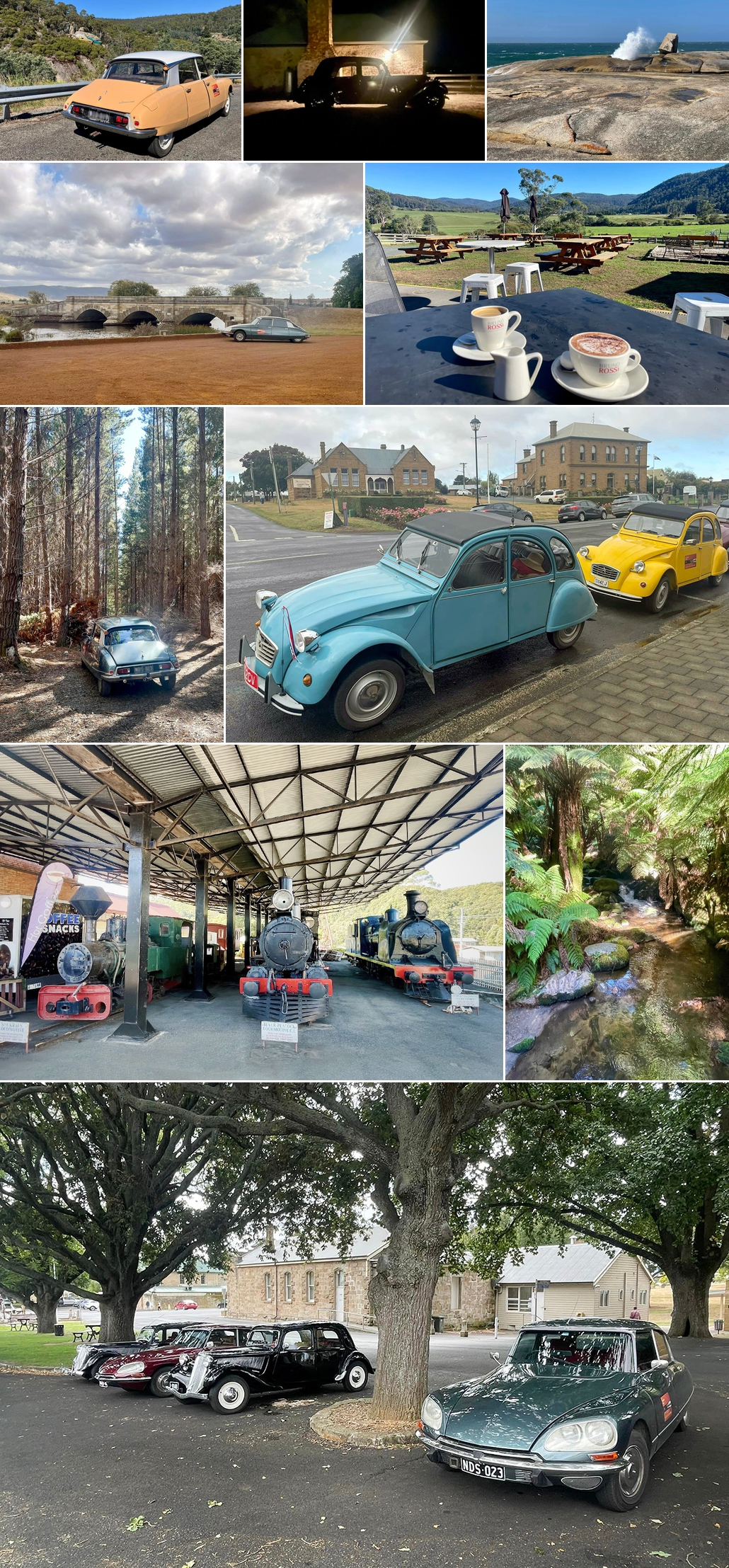
Citroen owners on their way to Cit-In 2024.

Citroën enthusiasts take in the sights en route to the 2024 Cit-in gathering in Tasmania. In 2025, their journey will lead them to Maryborough, Queensland.

***

If you enjoyed this story, you might also enjoy reading:

A Croquet-lover’s Guide to Exploring the Wide Bay


Discover North Queensland on a railway adventure

AH, THE peace and tranquillity that comes with travelling by train.

Kicking back in my high-back leather-look seat, letting time pass me by as the scenery rushes past outside – it was an experience I hadn’t had for several years until I embarked on a long-haul journey from Maryborough to North Queensland in July 2023.

Instead of dealing with the usual stress of airports and traffic, this year my annual trip north took me on a slow yet mesmerizing voyage of discovery from Maryborough to Townsville and Tully on the Spirit of Queensland.

What unfolded over the next 10 days was not just stunning vistas and family fun, but also interesting conversations with fellow passengers, making this an unforgettable adventure.

Let me tell you about my recent rail journey to North Queensland.

  • This article may contain affiliate links and advertisements. If you click on these links, make a purchase, or share this content, we may earn a small commission at no extra cost to you. This helps us continue creating valuable content for you. Thank you for your support.


Rail Journey - Spirit of Queensland at Tully

The Spirit of Queensland pulls into Tully Railway Station.

A slow yet mesmerising rail journey

Picture this – a long-haul rail journey from Maryborough to Townsville and Tully, surrounded by breathtaking scenery and wildlife. It was a peaceful escape from the daily grind, allowing me to truly relax and take in the beauty around me.

At Townsville, I had something truly exciting waiting for me. My youngest son and his partner had just welcomed the newest addition to our family, little Bryson. The joy of meeting my grandchild was indescribable.

After enjoying lots of baby cuddles and exploring the stunning sights of Townsville, such as the breathtaking vistas from Castle Hill to Magnetic Island, and strolling along the vibrant Strand, it was time for my next adventure.

My other son whisked me off for a 2.5-hour drive north to the charming town of Tully, known for being one of Queensland’s major sugar hotspots and arguably the rainiest spot in Australia.

Life with his wife and kiddies, Riley and Rhys, in the coastal village that’s a half-hour drive from Mission Beach is nothing short of idyllic. Palm-fringed beaches, tropical rainforests, and the magnificent Great Barrier Reef are just a stone’s throw away. It’s paradise.

But, before I take you further, let us go back to the beginning of this epic journey.

Rail Journey - Overlooking Townsville from the top of Castle Hill

Overlooking Townsville from the top of Castle Hill.

Don’t miss out next winter – book your railbed early!

I caught the Queensland Rail bus from Stocklands Shopping Centre in Hervey Bay for a smooth half-hour ride to the Maryborough Transit Centre, where fellow travellers joined us for the next leg of the adventure.

Maryborough, with all its heritage buildings, cultural significance, and industrial history, was my home for 27 years before moving to Hervey Bay in 2019. The city holds a special place in my heart.

Fun fact: Maryborough is the birthplace of P.L. Travers, the author of the classic children’s book and movie Mary Poppins. There’s a touch of magic in the air!

Rail journey - train interior

Economy class is comfortable with high-back leather-look seats and plenty of legroom.

As I waited for the train at Maryborough West Railway Station, the chilly winds were relentless, but the friendly Queensland Rail staff made me feel welcome and guided me to my designated and sheltered spot. At 7.30 pm, the train departed, and I settled into my economy-class seat.

Now, I had grand plans of booking one of those luxurious Railbeds, but alas, they were all booked out. Winter months in Queensland are prime travel time, so you have to plan well ahead.

Instead, I treated myself to a Trtl Travel Pillow. Compact, lightweight, and endorsed by Lonely Planet Magazine, it made the journey feel like first class.

And so, my adventure began. A 14-hour journey lay ahead of me, with the promise of arriving in Townsville at 9.38 am the next day. Well, if you count the Rail Bus leg from Hervey Bay to Maryborough, it’s more like 15.5 hours. But who’s counting when you’re having the time of your life?

Be comfortable in economy with a Trtl Travel Pillow

You’ve probably heard horror stories of being stuck beside an annoying traveller on long-haul journeys. But lucky for me, I have yet to experience such an ordeal, and this trip was no exception.

I was lucky enough to be seated next to an absolute gem of a guy, John Corbett, whom I’ll affectionately call Mr Cyclist. He’s a retired essential service officer who now spends much of his time exploring the world on his bike.

Mr Cyclist was on his way to Townsville with his trusty road bike in the luggage carriage, and planned to pedal back down south along the National Trail, a grand adventure akin to Bill Bryson’s famous A Walk in the Woods.

The National Trail is Australia’s ultimate quest for independent explorers, spanning 5330 kilometres from Cooktown to Healesville. This incredible trail takes adventurers through stock routes, bush tracks, fire trails, and scenic roads along the Great Dividing Range.

For over three decades, the iconic R.M. Williams has lent his name to this extraordinary expedition. Teaming up with the Australian Trail Horse Riders Association, they have brought to life a trail that immerses hikers, horse riders, cyclists, and packers in the rich history of Australia’s stock routes.

Overnight, however, Mr Cyclist attempted to catch some much-needed shut-eye, but his quest for comfort came up short. Like me, a fellow survivor of missed opportunities, he had missed out on a coveted luxurious Railbed booking and settled for economy class.

Little did he know, a Trtl Travel Pillow could have been his saving grace. Instead, he resorted to stretching out on a dining car seat, only to be chipped by a rail staff member for his audacity. Turns out that sleeping in the dining car is against QR’s rules. Oops!

rail travel - man collecting his bike from a train.

John Corbett, aka Mr Cyclist, collects his bike from the baggage area on the Townsville Railway Station platform.

Rise and shine!

As we opened our eyes the next morning, the sun greeted us with a breathtaking show over the mountains near Mackay. We couldn’t help but soak in the beauty while savouring a breakfast of raisin toast and tea in the dining car.

Here’s the plot twist: our train had a bit of a hiccup with the signals during the night, causing it to run behind schedule. But hey, that only added to the adventure! Finally, we arrived in Townsville around 11 am, ready to continue our epic journeys.

All aboard! Family fun on the Innisfail Mini Rail

In Tully, I had a blast with my family. Our adventure started with a quick jaunt to Innisfail, 53 kilometres to the north, where we all took rides on the Innisfail Mini Rail.

This delightful miniature train chugs along every second Sunday of the month at the beautiful 50-ha Warrina Lakes Park. We soaked up the scenery as we zipped past the serene lily-covered lake and ventured through lush pockets of rainforest.

The Innisfail Mini Rail Club, a squad of awesome volunteers, is the brains behind this fantastic train ride that has been entertaining folks since 2017.

Oh, and there was a terrific kids’ playground nearby too!

rail journey - Innisfail Mini Rail

Families enjoy a ride on the Innisfail Mini Rail.

Roll on down to Murdering Point Winery

Despite the ominous name, Murdering Point Winery was anything but scary.

As we adults sipped on top-notch wines, the little ones, Riley and Thomas-the-Tank-Engine-fanatic Rhys, were in awe as a cane train hauling sugar cane rolled right by the entrance.

Founded in 2001 by the Berryman family, Murdering Point Winery has gained a reputation for its exceptional wines and innovative use of exotic tropical fruits.

The winery offers an array of uniquely Australian red and white fruit wines, ports, liqueurs, and creams that transport your taste buds to a tropical paradise.

rail journey - Jodie pours a sample of delicious tropical fruit wine at Murdering Point Winery.

Jody pours a sample of delicious tropical fruit wine at Murdering Point Winery.

Fish & Chips on the Beach with Tully Coast Guard

What’s better than white sand and kids’ playgrounds at Mission Beach? How about enjoying Fish & Chips on the Beach at the Tully Coast Guard’s annual fundraising event with the stunning sunset as the backdrop? It was the perfect finale for my time in Tully for 2023.

rail journey - sunset at Tully

The brilliant finale to my North Queensland visit was the Tully Coast Guard’s Fish & Chips on the Beach with this stunning sunset as the backdrop.

Discover a lush oasis at Tully Railway Station

rail journey - Tully railway station platform

Potted ferns dot the Tully Railway Station.

Too soon, it was time to bid farewell to the family escapade and make my way back to Hervey Bay. At about 11.30 am, I hopped aboard the Spirit of Queensland once more at the charming Tully Railway Station, nestled near the heart of town.

This station had quite the eventful past – it endured some serious water damage thanks to the notorious Cyclone Yasi back in February 2011, but it’s since undergone a refurbishment. You can still spot the remnants of the old station building on the south side, with visible battle scars.

With potted palms and lush hanging ferns dotting the platform, it exudes an enchanting tropical atmosphere. It’s the perfect spot to kick back and wait for the next leg of my adventure. Time flies when you’re surrounded by this blissful oasis.


Find a travel buddy on the Spirit of Queensland

On my return journey from Tully to Maryborough, first I had the pleasure of sitting next to Mr Garden Guru, a fascinating chap with long hair, a beard, and a love for faded jeans.

Not only was he a successful garden business owner in Cairns, but he was also a marketing guru who spilt the beans on using artificial intelligence for blogging.

But wait, there’s more! He was also a vegan on the hunt for some fruit in the train’s galley, only to be disappointed. Luckily, he had a stash of lychees in his backpack, which he happily devoured.

When Mr Garden Guru hopped off in Townsville to pick up his new ute and return to Cairns, I was accompanied by my new travel buddy – Mr Entrepreneur.

This former tobacco farmer turned restaurant owner turned garden maintenance enthusiast knew how to make some serious money by mowing grass and trimming shrubs in North Queensland.

He was headed to Brisbane to reunite with his wife, who had arrived a few days earlier.

Together, they were going on a shopping adventure looking for a motorhome, eager to join the ranks of the “grey nomads.”

As for me, my time on the Spirit of Queensland came to an end at Maryborough West at about 7.30 am, and I boarded the Queensland Rail Bus bound for Hervey Bay.

After a total of about 37 hours of rail time (including delays), I left with cherished memories and a renewed appreciation for the magic of rail travel.

North or south? The choice is yours!

Looking for a relaxing way to tour Queensland’s breathtaking coast? Meet the Spirit of Queensland, your ticket to adventure!

rail journey - train at a platform

With regular weekly services, this fabulous train will take you to see friends and family, or let you explore some of Queensland’s most stunning destinations.

Think Whitsundays, Townsville, Cairns, Bundaberg, Fraser Coast, Sunshine Coast, and Brisbane – the list goes on. And if you’re feeling extra adventurous, you can even connect to the glamorous Gold Coast.

Whether you crave the natural wonders of the north or the dazzling lights of Brisbane, the Spirit of Queensland has got you covered.

It’s a convenient way to travel between Brisbane and Cairns. So why wait? Hop aboard and let the journey begin!


Jocelyn travelled on the Spirit of Queensland at her own cost.

Published 20 July 2023

***

If you enjoyed this train-inspired post, you might also enjoy these:

A Croquet-lover’s Guide to Exploring the Wide Bay
All Aboard the Mary Valley Rattler


Hervey Bay is one of the world’s best places to see humpback whales up close. If you’re ready to plan your trip, these whale tours will float you into the best viewing zones and often get inquisitive, close encounters.

How to Optimise Your Voyage to see Humpback Whales

ARE YOU looking to go whale-watching? You’re not alone! Every year, more and more tourists flock to Australia’s east coast to see the annual humpback whale migration.

But, before you make the trip down to your desired destination, it’s important to understand the migration system of these creatures first.

Knowing when they are most likely to be around will help ensure that your experience is memorable; after all, who wouldn’t want to witness something so awe-inspiring?

In this blog post, we’ll take a deep dive into humpback migrations, what they mean, where they go, and why choosing the right time is so important for getting the most out of your next whale-watching voyage.

  • This article may contain affiliate links and advertisements. If you click on these links, make a purchase, or share this content, we may earn a small commission at no extra cost to you. This helps us continue creating valuable content for you. Thank you for your support.
Humpbacks - whale watching

Humpback whale in Hervey Bay, Qld.

Meet Humpback Whale Researcher Dr Wally Franklin

Humpback whales are fascinating creatures, and renowned marine scientist and Oceania Project co-founder Dr Wally Franklin can attest to that.

Dr Wally and his late wife, Dr Trish Franklin, dedicated more than three decades to studying humpbacks. While Dr Trish focused on their behaviour, Dr Wally delved into the statistics and scientific data behind their lives.

humpbacks - Dr Wally Franklin

Dr Wally Franklin. Contributed photo.

Humpbacks evolved into their present form millions of years ago and belong to the baleen whale group. Unlike land animals, they experience neutral buoyancy in the ocean, Dr Wally explained, only feeling the weight of their enormous bodies when they breach.

Their lives are largely governed by two things: breeding and feeding.

Female humpbacks generally give birth every two years and don’t experience menopause. Some, including Hervey Bay favourite Nala, have continued producing calves for decades.

Humpbacks breed in tropical waters around the Great Barrier Reef before migrating south to their Antarctic feeding grounds, where nutrient-rich waters support phytoplankton and Antarctic krill.

Eastern Australian humpbacks usually migrate alone or in small groups. In Hervey Bay, however, larger groups form as whales congregate to rest, socialise and care for calves and younger whales.

Understanding this annual journey between breeding and feeding grounds is key to understanding humpback behaviour.

Humpbacks - whale watching

Humpback whale in Hervey Bay, Qld.

How Humpback Whale Society Differs from Ours

There is a significant difference between the social organisation of humpback whales and humans, Dr Wally said.

Dr Trish completed a piece of work based on 361 whales, in which she documented sighting histories ranging from two to 25 years, that showed the migration was dominated by two groups of mature females.

First, there’s a group of mature females who lead the migration early. These females are either pregnant or taking a break from caring for their calves. They leave the breeding area first, usually in August and September, and they are accompanied by a young cohort of whales. These young whales are between one and six years old.

So, during the early part of the migration, these mature females travel and socialise with the immature whales. They all leave Hervey Bay by the end of August.

The next group to arrive in Hervey Bay was the mature females with new calves. They don’t start coming into the Bay until early September because it’s the peak breeding month up in the Barrier Reef and the mothers keep the calves up there until they are strong enough and developed enough to begin the migration south. By the time the females bring their calves into Hervey Bay, they are already a few months old. So, these mature females are at the back end of the migration.

There are also three groups of mature males mixed in with the females. There are mature males without lactating females, mature males with lactating females, and males of unknown maturity without lactating females.

The calves are sighted in Hervey Bay in September and October.

Dr Trish discovered these calves return as yearlings in August of the following year. As they grow older, they begin to join the migration later each year until they reach the age of six, when they become socially and sexually mature. By the age of seven, they start mirroring what the adult whales do.

Isn’t that incredible? Humpback whales have such an interesting social structure, and it’s so different from what we experience as humans.

Humpbacks - whale watching

Humpback whale in Hervey Bay, Qld.

The Matriarchal World of Humpback Whales

There is a significant difference between the social organisation of humpback whales and humans, Dr Wally said.

Research by Dr Trish, based on the sighting histories of 361 whales tracked over periods ranging from two to 25 years, revealed a migration largely shaped by two groups of mature females.

The first are females that are pregnant or taking a break from caring for calves. They lead the southern migration, arriving in Hervey Bay during August accompanied by younger whales aged between one and six. Here, the mature females travel and socialise with the immature whales before leaving the Bay by the end of August.

Next come the mothers with new calves. They generally arrive from early September, after spending the peak breeding period farther north near the Great Barrier Reef while their calves grow strong enough for the journey south. Mature males are also present throughout the migration, mixing with the female groups.

Dr Trish found another intriguing pattern. Calves seen in Hervey Bay during September and October return as yearlings the following August. As they grow older, they progressively join the migration later each year.

By six, they are socially and sexually mature; by seven, their migration patterns begin to mirror those of adult whales.

Isn’t that incredible? Humpback whales have a fascinating social structure, and one remarkably different from our own.

Humpbacks - whale watching

Humpback whale in Hervey Bay, Qld.

Why Female Humpbacks Remain Unmarked

Another discovery made by Dr Trish is the behaviour of humpback whales in groups.

There is a particular group known as the competitive group, believed to be a group of males vying for a single female. Dr Trish noticed something fascinating: the males in these groups exhibited strong agonistic behavior towards each other, which resulted in horizontal and lateral marks on the males’ bodies, but the female participating in the group remained unmarked.

This led Trish to identify non-agonistic social groups consisting mostly of young whales. These groups interacted with each other as they developed socially and also interacted with mature females. In Hervey Bay, these non-agonistic groups are present before the arrival of mature females with calves, who primarily interact with mature males who are seeking mating opportunities.

Dr Wally said the social organisation of humpback whales was comparable to nomadic indigenous groups in Australia. It lacks the traditional family structure found in our modern societies.

There is no evidence to suggest that humpback whales form family groupings, as do dolphins, orca whales, and humans. However, the bond between mother and calf humpbacks is well-documented.

Calves stay with their mothers for a full year, learning important skills such as how to feed on the Krill in Antarctica, and bringing them back to the point of origin so they complete a cycle of migration in their early life.

By the time the mothers get back with the calves towards Hervey Bay again, the calves are separated from their mothers and join the young cohort. Then it appears all the females are involved in looking after the whole of that young cohort.

It’s truly remarkable how humpback whales navigate their annual migration cycle, ensuring their calves thrive in their early life.

Unforgettable Encounters with the Humpback Whales

Whale-watching is an incredible experience that allows you to become enveloped in the fascinating world of these majestic creatures.

Specific steps can be taken to make your voyage even more memorable, from picking the perfect tour and time of day to properly preparing yourself beforehand so that you can make the most out of your experience.

Through strategic planning and some luck, you will be rewarded with a thrilling and unique encounter with humpback whales. Who knows? Maybe you’ll have one of those once-in-a-lifetime moments when a whale swims by only a few metres away from you.

Now, if that doesn’t sound like an unforgettable experience worth having, we just don’t know what does.

Be sure to check out The Oceania Project website at https://www.oceania.org.au/ for more fascinating information on humpback whales before embarking on your journey.


Humpbacks - whale watching

Whale watching in Hervey Bay, Qld.

Photos by Jocelyn Watts, Hervey Bay, 2014.

Humpback Whale Migration Questions & Answers

Q: Where’s the best spot for whale watching in Queensland?
A: Hervey Bay is the ultimate place to witness whales in Queensland. It’s even considered the world’s first official Whale Heritage site, setting the standard for whale watching everywhere. However, humpback whales can be seen right along the Australian east coast from Antarctica to the Great Barrier Reef.

Q: When is the perfect time for whale watching?
A: Humpback whales migrate to Queensland between June and November. In the early part of the season, they travel north to the shallow waters of the Great Barrier Reef to give birth to their calves. Towards the end of the season, they bring their calves back to Antarctica. So, their return journey is when you’re most likely to see the calves.

Q: Do whales breach in the shallow waters of Hervey Bay?
A: Absolutely! Mothers use the shallow waters of Hervey Bay to teach their calves essential skills they’ll need in the deep and cold waters of Antarctica, so, in the latter part of the season, you’re likely to see mothers teaching their calves to breach.

Q: When is the best time of day to see humpback whales?
A: Humpback whales are most active in the morning and late afternoon, so those are the ideal times to catch them in action.

Q: What can I expect to see on a whale watch tour?
A: Whether from the coast or a whale-watching boat, you’ll be amazed by their impressive displays, like blowing, breaching, and tail-slapping. Sometimes, the whales may even come close to the boats and swim around them. While the boats maintain a safe distance, the whales might just come by to say hello!

See Vimeo film for examples of tail-slapping at  https://vimeo.com/106634103  and breaching in Hervey Bay at  https://vimeo.com/59781809

Whale season is short: July–October 2026, with peak sightings in August–September. Book your tour now to secure your date and avoid the rush.

Plan Your Whale-Watching Getaway

If you’re heading to Hervey Bay or another whale-watching destination, these trusted travel partners may help you plan your trip.

Stay Close to the Action

Oaks Hotels & Resorts offers comfortable accommodation in popular coastal destinations, including Hervey Bay, making it easy to enjoy whale-watching tours, waterfront dining and local attractions.

OAKS HOTEL

Explore at Your Own Pace

Whether you’re flying in or planning a regional road trip, Hertz Car Rental can help you discover more of the Fraser Coast and beyond.

HERTZ CAR RENTALS

Travel with Confidence

Unexpected disruptions can happen when travelling. AllClear Travel Insurance offers cover options, including for many travellers with pre-existing medical conditions.

ALLCLEAR TRAVEL INSURNCE


Disclosure: Jocelyn Magazine may earn a commission if you purchase through affiliate links on this page, at no additional cost to you. This helps support the creation of independent travel and lifestyle content.


The 2026 humpback whales are heading for Queensland again. Season runs July–October, with the best encounters in August–September. If you’re ready to go in Hervey Bay, choose a tour and book early.

‘Tis the season to see humpback whales in the wild

WHAT could be more idyllic than a perfect day in paradise, watching majestic humpback whales breaching and blowing?

The moment we stepped onboard Whale One with Sunreef Mooloolaba at The Wharf, it was obvious we were in for an exceptional whale-watching tour.

The blue sky stretched endlessly above us, and the glittering ocean below was (almost) smooth as glass.

The excited chatter of fellow travellers filled the air; some had seen whales before, but for many, it was their whale-watching debut.

Dolphins frolicking and humpbacks breaching gave us an amazing tour filled with new experiences.

Whether you’re an experienced ocean explorer or just looking to try something new, this is certainly a day trip not to be missed.

Our tour went like this…

  • This article may contain affiliate links and advertisements. If you click on these links, make a purchase, or share this content, we may earn a small commission at no extra cost to you. This helps us continue creating valuable content for you. Thank you for your support.
Sunreef Mooloolaba - Whale One

Sunreef Mooloolaba’s Whale One is set for another day of whale-watching adventure.

Experience the thrill of whale watching in paradise

Welcome aboard, mates! Captain Paul here, with our trusty crew – Heidi, Savannah and Rebecca, and our assistant Dan (aka Salty)… although none of us really knows what he does!

Now, Heidi gave us a great rundown on the boat’s safety features and what to do if you’re feeling seasick.

If you are, head downstairs where the boat is more stable and where you can get some fresh air. The top deck can get a bit rocky!

And hey, let’s not forget the open bar with delicious cocktails, chips, and snacks on offer.

Sunreef Mooloolaba - humpback whale breaching

A humpback whale breaching.

But all that doesn’t compare to the sight we’re hoping to see – the majestic humpback whales! These creatures have been around for millions of years, and they’ve got some awesome skills to show off.

Keep your eyes peeled for breaches, where they jump out of the water and land with a tremendous splash, or the blow that comes from a hole on top of their head; you’ll see a huge puff of air for about five seconds, shooting up to four to five metres in height.

We’ve got everyone on whale patrol, so if you spot anything, call it out, loud and proud, like we’re a clock – 12 o’clock for anything on the bow, 6 o’clock on the stern, 3 o’clock on the starboard side, and 9 o’clock on the port side – and estimate the distance, if you can.

It could be whales, dolphins, or any other sea creatures surfacing.

Today’s a calm day, which should make it easier to spot whales… unless they decide to hold their breath for up to 45 minutes! But they usually only hold it for 5 to 15 minutes on their migration, as they are now, on their way from the Antarctic, through Sunshine Coast waters to Hervey Bay & K’gari.

As we leave Mooloolaba for our four-hour tour, be sure to take in the beautiful scenery.

Sunreef Mooloolaba

One of the many stunning houses seen along the shore of Mooloolaba bay as we headed out to see on Whale One.

Get your binoculars ready for a whale adventure

As soon as the music started playing, a group of young adults started dancing on the top deck. The playlist included hits such as Notion by Kings of Leon, Wagon Wheel by Old Crow Medicine Show, and No Ceiling by Eddie Vedder.

Australia has a whopping 45 species of whales, but on this trip, we were on the lookout for the humpbacks. They’re usually easy to spot thanks to their unique features–a sleek dark grey or black body with white patches along the belly, and pectoral fins.

Sunreef Mooloolaba

Kaye Browne from Food Wine Pets Travel.

Sunreef Mooloolaba - Jocelyn & Brian

The writer of this article, Jocelyn Watts, and Brian Pickering from Food Wine Pets Travel.

Heidi, one of the knowledgeable crew members, said to watch for blows in the distance. If you spot a whale’s tail popping up and diving, it’s a good sign they’re preparing to breach. After about 15 minutes, the colossal creature emerges from the water.

At around 9 o’clock (port side), we had our first sighting of a humpback’s body near the surface.

Later, about two and a half hours into the trip, we experienced what we had all been waiting for–a stunning double breach at around 3 o’clock (stern side), some 100 to 200 meters away from us.

The crowd erupted into a chorus of “oohs” and “ahs.”

Some of us were lucky enough to witness these majestic creatures for the first time, while others were back for another round.

“A sublime day in paradise!” – Marie Walton-Mahon.

Marie Walton-Mahon OAM, from PBT (Progressing Ballet Technique) Dance, had booked her third cruise with Sunreef Mooloolaba.

The company offers a 100% guarantee that you’ll see a whale or the next trip is on them. Marie noted that on her two previous trips, the most exciting animals she saw were pelicans.

On this trip, a very excited Marie exclaimed, “Those two that were jumping up and down, synchronised, were absolutely spectacular! Happy days! It was a sublime day in paradise!”

“A sublime day in paradise!” – Whale watcher Marie Walton-Mahon OAM.

Sail away to encounter whales with Sunreef Mooloolaba

All things considered, this day of whale watching was an incredible one. We could not have asked for a better experience; the crew was incredibly friendly and helpful, and they kept the amenities immaculate.

We’d highly suggest to anyone looking for a similar activity that they join a Sunreef whale-watching tour. The scenery and wildlife around us were breathtaking; it truly felt like paradise.

I’d like to end this write-up by saying a big thank you to everyone at Sunreef Mooloolaba –they made our cruise as perfect as possible – and Visit Sunshine Coast for their assistance.

For an unforgettable experience filled with fun and excitement, head over to the Sunreef website (https://Sunreef Mooloolaba.com.au/whales/) and book your tickets.

Humpback whales generally come to the Queensland coast from late Autumn to late Spring. During this time, they migrate through Sunshine Coast waters to Hervey Bay & K’gari where you can catch mothers with their newborn calves, and on to the Great Barrier Reef before returning south again.

Spectacular views, chance encounters with some lovely ocean life, and a friendly, knowledgeable crew are all worth it. Happy sailing!

Sunreef Mooloolaba

A humpback whale blow! Photo: Shutterstock

Check out this amazing video from FoodWinePetsTravel!

Jocelyn Magazine and FoodWinePetsTravel were guests of Sunreef Mooloolaba and Visit Sunshine Coast.

If you enjoyed this article, you might also like…

FIND OUT WHEN AND WHERE TO SPOT HUMPBACK WHALES

11 THINGS TO KNOW BEFORE WHALE WATCHING


Planning a Whale Watching Trip?

Whale-watch season offers a chance to witness one of Australia’s most remarkable natural spectacles.

Bring a camera, pack a light jacket, and don’t forget to look up from the viewfinder occasionally. Sometimes the most memorable moments are the ones you simply experience.

Make the most of your getaway with these travel essentials:

Stay Near the Marina

In Hervey Bay, many whale watching tours depart from Urangan Marina, making nearby accommodation a convenient choice.

Oaks Hotels & Resorts offers a range of accommodation options within easy reach of Hervey Bay’s waterfront, restaurants and tour departure points.

OAKS HOTEL

Explore Beyond the Whales

Planning to discover more of the Fraser or Sunshine coasts before or after your cruise? A hire car makes it easy to visit the hinterland and other local attractions.

Avis Car Rental offers vehicle hire options for travellers arriving by air, rail or road.

AVIS CAR RENTAL

Travel With Confidence

Travel plans don’t always go exactly as expected. Travel insurance may help protect against unexpected disruptions, cancellations and medical expenses.

AllClear Travel Insurance specialises in cover for travellers, including many pre-existing medical conditions.

ALLCLEAR TRAVEL INSURNCE


Disclosure: This article contains affiliate links. If you purchase through these links, Jocelyn Magazine may earn a small commission at no extra cost to you. Thank you for supporting independent publishing.


Unearth new adventures in these amazing national parks

WITH more than 1,000 protected areas across the state, Queensland is bursting with enchanting and soul-nourishing national parks.

But while travellers are familiar with famous favourites like Noosa National Park and Lamington National Park, there’s a treasure trove of hidden gems that are sure to surprise and delight.

Discover these 15 lesser-known and under-the-radar Queensland national parks that are guaranteed to knock your socks (and hiking boots) off!

  • This article may contain affiliate links and advertisements. If you click on these links, make a purchase, or share this content, we may earn a small commission at no extra cost to you. This helps us continue creating valuable content for you. Thank you for your support.

1. Blackdown Tableland National Park, Capricorn

A relatively undiscovered sanctuary tucked among the sprawling plains of Central Queensland, Blackdown Tableland National Park has some seriously Instagrammable scenery that’s worth a brag and a tag.

Think sloping sandstone escarpments, echoing gorges, plunging rockpools, and picturesque walking trails.

Visitors to the national park will also find Indigenous rock art on the Mimosa Creek Cultural Trail, sharing stories of the Ghungalu People.

Blackdown Tableland. Photo: Tourism and Events Queensland.

2. St Helena Island National Park, Brisbane

Sitting just 5 km off the coast of Queensland’s capital, St Helena Island was once a colonial penal settlement.

From 1867 until 1932 St Helena Island adopted the role of high-security prison and farm, where inmates helped plant crops, took on trades, and constructed buildings, the ruins of which can still be seen today.

Fast forward to 2023 and the island, now a national park, can be explored by day trippers from Brisbane on a River to Bay ‘Best of Moreton Bay’ cruise or a St Helena Island ‘Prison Life’ experience, led by St Helena Theatre Troupe performers.

Aerial view of St Helena Island. Photo: Tourism and Events Queensland.

3. Mount Walsh National Park, Bundaberg

Mount Walsh National Park, an 80-minute drive southwest of Bundaberg and Hervey Bay, is a beacon for seasoned bushwalkers and adventurers.

The park is characterised by imposing granite rock formations, creeks that drop into rockpools, and Mount Walsh itself protruding from the bedrock.

For experienced hikers, the 703m Mount Walsh Summit takes four hours to ascend and offers views from the peak across the countryside.

Meanwhile, the grade four Rockpool Walk winds through hoop pine forest before following the creek sprinkled with rockpools.

Rock pools at Mt Walsh Waterfall Creek (Utopia Falls). Photo: Tourism and Events Queensland.

4. Wooroonooran National Park, Cairns & Great Barrier Reef

Coooeee! If the summit hike of Mount Walsh isn’t challenging enough, a climb to the ‘top of Queensland’ is sure to get the legs pushing and the heart pumping.

Perched 1,622m above sea level, Mount Bartle Frere in Wooroonooran National Park, just south of Cairns, is Queensland’s highest peak.

It takes around six to eight hours to conquer, but the views across the Wet Tropics Rainforest and out to the coast are worth the grind.

Also making this national park a must-visit is the lineup of tumbling waterfalls, freshwater rivers, and lush rainforests that intertwine around the mountain.

National Parks - dawn view from a mountain top

Sunrise from the summit of Queensland’s highest mountain, Mount Bartle Frere. Photo: Tourism and Events Queensland.

5. Bunya Mountains National Park, Southern Queensland Country

The Bunya Mountains National Park, just over a three-hour drive from Brisbane, provides an alpine escape perfect for families and romantic getaways.

The mountains are lined with towering bunya pines and the area was once a ceremonial gathering place for a significant Aboriginal festival called the Bonye Bonye festival.

The Bunya Mountains feature more than 100 individual holiday cabins and cottages for rent, ranging from studios to multi-bedroom chalets.

The National Park is home to a large population of wallabies and offers a patchwork of walking trails through the bunya pine forest, including easy waterfall circuits and more intense hikes across the mountainside.

national parks - family on a hike

Walking past a waterfall in the Bunya Mountains National Park. Photo: Tourism and Events Queensland.

6. Porcupine Gorge National Park, Outback Queensland

Winding through the arid savannah terrain, Porcupine Gorge National Park is an outback oasis.

Just over an hour’s drive from Hughenden, the waters of Porcupine Creek, surrounded by a green outline of rich vegetation that lines the gorge, pop against the orange and yellow of the Outback plains.

The most spectacular way to appreciate the vast canyon is with Fox Helicopters on a scenic flight to the upper section of the national park not accessible from the ground.

Camping is available at the Pyramid campsite, and there are three marked walking tracks leading hikers to lookouts or down into the gorge.

national parks - outback gorge

Swimming at the Porcupine Gorge National Park. Photo: Tourism and Events Queensland.

7. Conway National Park, Whitsundays

Leafy rainforest canopies, secret beaches, and sparkling views across the Whitsunday Islands and Great Barrier Reef are all packaged up into 75km of refreshing rainforest coastline in Conway National Park.

Lining the peninsula beyond the hustle and bustle of Airlie Beach, Conway National Park packs a punch with waterfalls and swimming holes, uncrowded beaches, stunning lookouts, and a network of hiking and mountain biking trails.

Hit the dirt with Bike & Hike Whitsunday and experience the ancient rainforest in a guided mountain bike tour.

The national park is also home to six rare and threatened species, like the endangered Proserpine Rock Wallaby.

national parks - cycling through a creek bed

Riding through a creek in the rainforest, while on a tour through Conway National Park. Photo: Tourism and Events Queensland.

8. Mount Hypipamee National Park, Cairns & Great Barrier Reef

Mount Hypipamee National Park in Tropical North Queensland has other national parks green with envy thanks to an impressive crater that plunges 58m into the ground.

At the bottom of the volcanic pipe lies a 70m deep lake, coated by an eye-catching lime green blanket of native waterweed.

The crater is thought to have formed after a massive gas explosion ruptured through a crack in the Earth’s surface and looks as if nature dropped a huge bowling ball into molten rock.

The best vantage point to take in this geological wonder is from the viewing platform on the Crater Track walk.

national parks - aerial view of a rock pool

Mt Hypipamee National Park. Photo: Tourism and Events Queensland.

9. Girringun National Park, Townsville / Cairns & Great Barrier Reef

Home to Australia’s highest single-drop waterfall, Wallaman Falls, Girringun National Park in the Wet Tropics World Heritage Area is a heavy hitter when it comes to wondrous waterfalls.

While many flock to watch the waterfall and then dissipate into mist at the bottom of the 268m Wallaman Falls, the dramatic Blencoe Falls in the upper section of the national park are just as remarkable , with two levels of waterfall cascading down the gorge.

Closer to the coast, Attie Creek Falls and the Cardwell Spa Pools offer two superb swimming holes.

national parks - waterfall

Wallaman Falls is the highest, permanent, single-drop waterfall in Australia. Photo: Tourism and Events Queensland.

10. Eungella National Park, Mackay

The rainforest refuge that is Eungella National Park is one of the most ecologically diverse pockets of rainforest in Australia, with both tropical and sub-tropical species flourishing under the canopy.

Ever wanted to spot an elusive platypus in the wild? Stay quiet long enough and chances are one will pop its head from the surface of Broken River.

A fan of waterfalls? Check out Araluen Waterfall and the Wheel of Fire Cascades in the Finch Hatton Gorge section of Eungella National Park – both popular with locals.

national parks - lady swimming in a rook pool

Lady swimming in a rock pool at Finch Hatton Gorge. Photo: Tourism and Events Queensland.

11. Kroombit Tops National Park, Gladstone

For history buffs, the little-known Kroombit Tops National Park, southwest of Gladstone, is a destination with a hint of history mixed with a little bit of mystery.

It is the final resting place of the American Liberator WWII bomber, Beautiful Betsy, which vanished over Queensland in 1945 during a flight from Darwin to Brisbane.

The wreckage lay undiscovered for 49 years until a park ranger stumbled on it in 1994, where it remains as a monument to the servicemen onboard who passed away. Kroombit Tops National Park is also home to the critically endangered Kroombit Tinkerfrog of which there are thought to be fewer than 150 in existence.

B-24D Liberator Bomer, Beautiful Betsy, Kroombit Tops National Park, Gladstone. Photo: Wikimedia Commons.

12. Main Range National Park, Brisbane

Main Range National Park stands high and mighty, just a 90-minute drive from Brisbane and lies within the World Heritage Gondwana Rainforest.

While many national parks boast outstanding walking tracks, Main Range National Park takes the cake thanks to the luxe Scenic Rim Trail experience.

The six-day all-inclusive guided trek winds through the Scenic Rim and parts of Main Range National Park. For those wanting to tackle just a section of the trail, shorter walks are available.

national parks - aerial view of mountain range and accommodation

Aerial view of Spicers Peak Lodge, Main Range National Park, Scenic Rim Trail. Photo: Tourism and Events Queensland.

13. Chillagoe-Mungo National Park, Cairns & Great Barrier Reef

Created more than 400 million years ago, the extraordinary limestone rock formations and caves of Chillagoe-Mungo National Park hold important natural and cultural significance.

Ranger-guided tours inside the caves showcase the magnificent hanging stalactites, stalagmites, and flowstones that have formed due to dissolving limestone.

The National Park is also home to Aboriginal rock art galleries that can be accessed on various walking trails.

The site was visited by Hollywood heartthrob Zac Efron during the filming of the Netflix series, Down to Earth with Zac Efron.

national parks - family exploring a cave

Family exploring a cave on a ranger-guided Trezkinn Cave Tour at Chillagoe. Photo: Tourism and Events Queensland.

14. Conondale National Park, Sunshine Coast

Take a drive over the hinterland range of the Sunshine Coast to find an effervescent swimming hole the locals have been keeping secret for years.

Booloumba Creek in the Conondale National Park takes natural colour palettes to a whole new level as the freshwater creek blends bright turquoise with deep emerald.

There are several camping spots throughout the national park (permit required) and a network of walking trails, of which the Booloumba Falls walk leads to a cascading waterfall and swimming spot.

National parks - huge tree trunk

Figtree Walk, Conondale National Park, Sunshine Coast. Photo: Janelle Lugge/Shutterstock.

15. Paluma Range National Park, Townsville

Paluma Range National Park sits in the mountain range north of Townsville and is considered the southern entrance to the Wet Tropics World Heritage Area.

The traditional owners of the Paluma Ranges are the Nywaigi Aboriginal People, and the Indigenous name for the area is Munan Gumburu, meaning ‘misty mountain’, an appropriate name given the area is often blanketed in a soft cloud of mist.

Take some time to explore this national park by staying overnight at Hidden Valley Cabins.

Walkers and hikers can hit various hiking trails through the rainforest to streams and waterfalls, while peddlers looking to push the limits can enter the Paluma Push, an action-packed event combining the thrill of mountain bike racing with a vibrant festival atmosphere.

national parks - woman sitting beside a waterfall

Small Crystal Creek, Paluma Range National Park. Photo: Tourism and Events Queensland.

Other notable lesser-known national parks:

Log onto queensland.com and start planning your next Queensland national park adventure today.

Content submitted by Tourism and Events Queensland.

***

If you enjoyed this story, you might also like:


Discover the magic of Mary Poppins at The Story Bank

TO VISIT the Story Bank in Maryborough, Qld, is like discovering a secret realm steeped in magic, mystery, and nostalgia.

Here you’ll find a unique selection of stories unlike anywhere else—the story of Mary Poppins being the most enchanting among them.

The characters, stirring messages, and timeless themes woven throughout the Mary Poppins books and movies have captivated families for generations.

Whether you’ve visited The Story Bank before or are just now hearing about it for the first time, one thing is certain: You won’t forget what you discover there!

  • This article may contain affiliate links and advertisements. If you click on these links, make a purchase, or share this content, we may earn a small commission at no extra cost to you. This helps us continue creating valuable content for you. Thank you for your support.
The Story Bank - statue of Mary Poppins

A statue of the famous nanny Mary Poppins stands outside The Story Bank in Maryborough, Queensland.

Step inside The Story Bank

The Mary Poppins tale began at the former Australian Joint Stock Bank on the corner of Richmond and Kent Richmond streets in Maryborough, Qld.

This heritage-listed building is where Helen Lyndon Goff was born; better known to us as P.L. Travers, author of the classic Mary Poppins storybooks.

Fraser Coast Regional Council bought and restored the heritage-listed building to create The Story Bank, which showcases the story of P.L. Travers’ life, her family, and the influences on her writings.

Today, you can step inside The Story Bank for a world that invites you to take part in stories, trade tales over tea, or spin yarns fit only for legends.

An enchanting experience is sure to captivate anyone who enters its doors.

Visitors to The Story Bank can interact with displays of P.L. Travers’ life and her magical Mary Poppins stories, as well as:

  • View images and documents from the P.L. Travers estate,
  • Delve into the Cabinet of Curiosities and the Library of Inspiration,
  • Open an account and discover the art of storytelling by depositing your creations.
  • Share in stories crafted by Artisans of Story Telling in the Theatrette and Gallery, and,
  • Find unique gifts and books in the retail cottage.
The Story Bank - two men and two statues of children

Fraser Coast Mayor George Seymour (back) and Councillor Paul Truscott unveil the statue of Mary Poppins children Jane and Michael Banks in 2018.

Visitors flood into The Story Bank in 2022

Fraser Coast Mayor George Seymour said COVID restrictions and floods were not enough to keep visitors away from The Story Bank in 2022, with over 15,000

The Story Bank - man and statue of the bird lady

Artist Willie Paes sits with a statue of the Bird Woman in front of the mural of St Paul’s Cathedral that he painted.

people going through the interactive museum.

“Visitor numbers were down at the start of 2022 when Maryborough experienced multiple floods, but numbers rebounded in the latter half of the year with over 2000 visitors in July – the most visitors in a single month since The Story Bank opened.

“Each year, visitor numbers have grown from just over 11,000 in 2019 to 15,236 visitors in 2022.

“Most of the visitors, at least 80%, come from outside the region.

“The figures not only point to the facility’s popularity, but also reinforce our belief that the Story Bank would attract people to the region, especially the Maryborough CBD.

“There is no doubt that visitors to The Story Bank contribute significantly to tourism and the local economy.”

During 2022, The Story Bank also hosted 15 school groups with 677 students and 20 special interest groups with 319 attendees.

New programs to further boost visitor numbers

Cr Seymour said new programs would be introduced in 2023 to boost visitor numbers even more.

“The Story Bank staff are constantly innovating and introducing initiatives – such as Story Time for preschool-aged children, Lawn Games in the garden during school holidays and Yarning Circle activities – to attract visitors,” he said.

“The Story Bank team has also worked hard aligning educational programs with curriculum content to better support our region’s educators.

“There is a focus on small group activities and play-based learning so that students have an engaging and enjoyable visit whilst still taking on board key concepts about storytelling.”

Fraser Coast Mayor George Seymoure at The Story Bank, Maryborough, Queensland. PHOTO: Fraser Coast Regional Council.

The Story Bank - heritage building

The $1.5 million project to restore the former Australian Joint Stock Bank in Maryborough, Qld, to create The Story Bank was undertaken with $395,000 funding from the Queensland Government and $395,000 funding from the Australian Government.

The Story Bank - Mary Poppins statue silhouette.

A Mary Poppins statue silhouette on the corner of Richmond and Kent Street, Maryborough, Qld. PHOTOS: Jocelyn Watts.

If you go

Maryborough is about 255 kilometres north of the Queensland capital, Brisbane.

For information on opening hours, admission prices, and programs at The Story Bank, visit:

For further details, visit:

***

If you enjoyed this story, you might also enjoy reading:

A Croquet-lover’s Guide to Exploring the Wide Bay


Home of Australia’s vital loggerhead turtle rookery

WANT to experience a destination dedicated to sustainable practices and environmental conservation?

Then look no further than the Bundaberg Region, Australia, the southern-most destination on the Great Barrier Reef and the home of the nation’s most significant endangered loggerhead turtle rookery.

Recently awarded the fifth EECO Destination Certification from Ecotourism Australia (25/2/2034), the Bundaberg Region is teeming with vibrant wildlife and crystal clear coastal waters.

Perfect for ecotourists looking to learn more about sustainability while enjoying the breathtaking sights of nature, this region offers something truly unique.

From idyllic parks preserving centuries-old trees and fauna to sweeping coastlines bordered by wild flora, you won’t want to miss out on all the Bundaberg Region has to offer.

  • This article may contain affiliate links and advertisements. If you click on these links, make a purchase, or share this content, we may earn a small commission at no extra cost to you. This helps us continue creating valuable content for you. Thank you for your support.
Bundaberg region - turtle swimming amongst coral

A Green Sea Turtle swims over a reef next to a coral bommie at Lady Eliot Island. PHOTO: Shutterstock.

Australia’s fifth locale with CEO Destination Certification

The globally recognised ECO Destination Certification process through Ecotourism Australia is complex and recognises the efforts of the tourism industry, local government, and the entire community towards all aspects of regional sustainability, and the Bundaberg Region is the second destination in Queensland and fifth in Australia to achieve the prestigious credential.

Following an independent assessment across 91 criteria, the region achieved the certification at the Ecotourism level, which is defined as a nature-based tourism destination with a strong commitment to ecotourism principles.

This involves cultural and natural interpretation and education for visitors, and local business engagement in sustainability.

Located about a 4.5-hour drive north of Brisbane, the Bundaberg Region is home to some of the most lauded eco-certified experiences on the Great Barrier Reef including Lady Elliot Island Eco Resort, Lady Musgrave Experience, Mon Repos Turtle Centre, and Kellys Beach Resort.

Mayor Jack Dempsey said Bundaberg Regional Council had led the certification process with support from a range of stakeholders, including Bundaberg Tourism, PCCC, and local operators and organisations.

“It is a massive coup for the Bundaberg Region to achieve ECO Destination Certification and sees our community become one of only a small number in the country to do so,” Mayor Dempsey said.

“This achievement demonstrates our community’s respect and care for the natural environment and will ensure we continue to grow sustainably into the future.

“Ecotourism Australia’s independent auditor had some wonderful feedback for our region in making their decision and commended Council for its proactive approach to sustainability.

“This achievement has obvious benefits for our economy, but it will also benefit our environment by providing a framework to constantly maintain and improve sustainability practices.

“It is also wonderful for our community members who can be proud of the role they play in preserving and protecting this place we are lucky enough to call home.”

Of the top five Bundaberg Region attractions and traveller favourites on TripAdvisor in 2022, three were nature-based and included Mon Repos Turtle Centre, Bundaberg Botanic Gardens, and Alexandra Park Zoo.

Bundaberg region - Turtle on a beach

A female Loggerhead Turtle flicks sand over her eggs to bury them after laying over 100 eggs above the high tide level at Mon Repos beach. PHOTO: Shutterstock.

Get up close and personal with nature in the Bundaberg region

Fulfilling global best standard sustainability requirements was no small feat, Ecotourism Australia CEO Elissa Keenan said.

“Since beginning its sustainability journey in 2020, the Bundaberg region has made significant strides to achieve ECO Destination Certification at the Ecotourism level,” Ms Keenan said.

“Bundaberg’s application demonstrated a passion for and dedication to holistic sustainability within the region, championing initiatives such as the One Million Trees Project and the popular Milbi Festival.

“Achieving ECO Destination Certification not only supports local Ecotourism Australia-certified operators but inspires local tourism businesses to implement sustainability and achieve certification.”

Bundaberg Tourism played a key role in supporting the ECO Destination Certification process.

CEO Katherine Reid said, “The tourism industry of the region has long believed that experiencing our internationally significant but fragile natural assets is the greatest way to educate people about the need for conservation.

“The community and our tourism industry take great pride in our role as custodians of the Great Barrier Reef and the precious land, water, and sea country of the Traditional Owners on which we live, and ECO Destination Certification is a formal acknowledgement of this.

“The Bundaberg region continues to shine as one of Australia’s most exciting emerging tourism destinations, with people flocking from around the nation and the globe to experience our unique offerings, and the knowledge that their holidays are underpinned by respectful, sustainable, and in some cases regenerative business practices will only strengthen our desirability as a destination.”

What is an ECO Certified Destination?

The ECO Destination Certification program assures travellers that certified destinations are backed by a strong, well-managed commitment to sustainable practices and provide high-quality nature-based tourism experiences within the region.

Becoming a certified ECO Destination means regions will be demonstrating internationally recognised ecotourism credentials to visitors, stakeholders, and the community in a manner that is credible and authenticated.

In other words, it’s not just regions saying they’re sustainable; it’s independently assessed, verified, and audited.

Bundaberg region - Lady Musgrave Island

Aerial viewpoint over tropical waters at Lady Musgrave Island, Great Barrier Reef, Australia. PHOTO: Shutterstock.

About the Bundaberg Region’s Ecotourism Experiences

World-famous Lady Elliot Island Eco Resort is considered the home of the manta ray and holds multiple Ecotourism Australia certifications, including Advanced Ecotourism, Climate Action Leader, and Green Travel Leader.

The Resort is located on the southernmost island of the Great Barrier Reef and has received multiple international accolades, including being placed in the Queensland Tourism Awards Hall of Fame in 2022 for successive wins in the Ecotourism category.

Lady Musgrave Experience offers full-day eco-tours and pontoon glamping experiences at the second coral cay of the Reef and holds three Ecotourism Australia certifications – Advanced Ecotourism, Climate Action Certified Business, and Respecting Our Culture.

In 2022, the Experience was awarded bronze in the Ecotourism category of the Queensland Tourism Awards.

The Mon Repos Turtle Centre’s ranger-led encounters with nesting and hatching sea turtles and its long history of marine turtle research, protection, and education have earned it three Ecotourism Australia certifications – Advanced Ecotourism, Climate Action Certified Business and Respecting Our Culture.

The region is also home to the Southern Great Barrier Reef’s first mainland eco-certified accommodation, Kelly’s Beach Resort, which holds Nature Tourism and Green Travel Leader Eco Certification.

About Eco Tourism Australia

Ecotourism Australia is a non-government, not-for-profit organisation, established in 1991, that promotes and supports the ecotourism industry in Australia through building capacity and actively promoting sustainable tourism operations and systems.

Ecotourism Australia is acknowledged globally for its industry standards and recognised by the Global Sustainable Tourism Council (GSTC).

Recognised as the credible, national peak body for sustainable and nature-based tourism, their key program–ECO Certification–was the world’s first national ecotourism certification program.

Bundaberg: The perfect destination for eco-conscious travellers

The Bundaberg Region has something for everyone, whether you’re looking to relax on the beach, explore cultural attractions, or get active.

And with so many eco-friendly accommodations and activities available, it’s the perfect destination for the environmentally conscious traveller.

So what are you waiting for? Start planning your trip to the Bundaberg Region today!

***

If you enjoyed this story, you might also enjoy reading:

A Croquet-lover’s Guide to Exploring the Wide Bay


Muttaburrasaurus langdoni has been voted as Queensland’s state fossil emblem. The plant-eating dinosaur was discovered in 1963 and named after the Central Queensland town of Muttaburra, the hometown of Jocelyn’s father, William C. Scott. Read on to find out why “Mutt” has been declared Queensland’s official state fossil, and what you can see in Muttaburra.

  • This article may contain affiliate links and advertisements. If you click on these links, make a purchase, or share this content, we may earn a small commission at no extra cost to you. This helps us continue creating valuable content for you. Thank you for your support.

Muttaburrasaurus was voted the most popular fossil emblem

THE Muttaburrasaurus langdoni will now become part of Queensland’s official identity after it topped a popular public poll to select the State’s fossil emblem.

The 12 shortlisted fossils featured dinosaurs from both land and sea, early mammals, and flora, all discovered across Queensland.

Of the nearly 9000 votes cast by Queenslanders, the ornithopod emerged as the clear popular choice.

Premier Annastacia Palaszczuk said the Muttaburrasaurus will join the nine other unique Queensland emblems.

“The 100-million-year-old, plant-eating dinosaur was discovered in 1963 and named after the Central Queensland town of Muttaburra,” the Premier said.

‘The seven-metre-long dinosaur makes a very big statement indeed.

“I’m sure it will be an enduring emblem Queensland can be very proud of.

“Along with our official coat of arms, flag and badge, our emblems highlight the many wonders and beauty of our state.

“The Cooktown Orchid, koala, Great Barrier Reef Anemone fish, brolga, the sapphire, and our official colour – the mighty maroon, are all iconic symbols.”

Travel back in time with Muttaburrasaurus

The Premier said the popularity of Muttaburrasaurus as the State’s official fossil emblem highlights the importance of dinosaur tourism in Outback Queensland.

“I encourage Queenslanders to get acquainted with our new fossil emblem by planning a visit to Outback dinosaur destinations,” the Premier said.

Queensland’s rich palaeontology discoveries have generated worldwide interest among experts and have attracted thousands of tourists to the Outback to see the fossils found firsthand.

Tourism Minister Stirling Hinchliffe said thousands of visitors travel to Outback Queensland every year to walk in the footsteps of dinosaurs and discover our rich palaeontological history.

“Everybody loves dinosaurs, they generate millions of dollars for the visitor economy, and we want to see Outback Queensland continue to grow as Australia’s paleo capital.”


Muttaburrasaurus - building

Muttaburrasaurus Interpretation Centre, Central Queensland, Australia.Muttaburrasaurus Interpretation Centre

The replica of the Muttaburrasaurus langdoni can be found at an interpretive centre at Muttaburra in Central Queensland. The displays include replicas, models and histories for guests to learn more about how this ancient creature was discovered, as well as what life was like back then when they roamed our world 100 million years ago. PHOTOS: Jocelyn Watts, July 2022.

Mutt, one of the most complete dinosaur skeletons in Australia

Queensland Museum Network CEO Dr Jim Thompson said while there was an outstanding lineup of nominees for the State’s Fossil Emblem, he couldn’t think of a more worthy winner.

Muttaburrasaurus has been synonymous with Queensland Museum since it was described by our palaeontologists in 1981, and thanks to the iconic replica skeleton that stands proud within the museum, Queenslanders have come to know and love this home-grown dinosaur over the decades,” Dr Thompson said.

“Mutt, as people affectionately call it, is one of the most complete skeletons of an Australian Dinosaur and is a great ambassador for palaeontology and dinosaur history.”

Queensland’s Muttaburrasaurus is a national icon and global treasure

Queensland Museum palaeontologist Dr Scott Hocknull said Queensland’s Muttaburrasaurus was a national icon and global treasure.

“I started volunteering at the Queensland Museum as a kid 30 years ago and Muttaburrasaurus was the first dinosaur fossil I got to work on,” Dr Hocknull said.

“It inspired me then, as it will do for countless budding palaeontologists in the future.

“I used to dig dinosaurs as a kid, but now I do it for real, and I can thank Muttaburrasaurus for this.”

The next step in making Muttaburrasaurus the state’s fossil emblem includes amending the Emblems of Queensland Act 2005 to confirm ‘Mutt’s’ official status.

To learn more about Queensland’s emblems, flags, and icons, visit:  https://www.qld.gov.au/about/how-government-works/flags-emblems-icons

Where is Muttaburra?

Muttaburra is located 152 kilometres from Barcaldine in Outback Queensland via State Route 19.

What else is there to see in Muttaburra?

While on an Outback trek in July 2022, I visited Muttaburra, the geographical centre of Queensland, to see the Muttaburrasaurus Interpretation Centre and the Dr Arratta Memorial Museum where my father was the first baby born after Dr Arratta’s arrival in 1925.

Here I’m pointing to where my father, William C. Scott, is recognised as the first baby born in Muttaburra after the arrival of Dr Arratta in 1925. With me is Margaretha Siebert from the Dr Arratta Memorial Museum.

Muttaburra has the distinction of being the town closest to the geographic centre of Queensland. A monument, erected in recognition of this significance is located on Nev Bullen Drive near the Dr Arratta Memorial Museum. PHOTO: Selfie!

***