Whale season is coming: Hervey Bay’s 2026 season runs July–October, with peak sightings in August–September. If you’re ready to plan, jump straight into Whale Watching Hervey Bay to compare tour operators, departure times and package options. Book early to secure your spot.
Whale Watching in Hervey Bay: A First-Time Visitor’s Guide
TO STAND on the deck of a boat while a 40-tonne humpback whale surfaces nearby has a way of putting everyday worries into perspective. You arrive hoping to see whales. You often leave with a renewed appreciation for the natural world.
Every winter, thousands of humpback whales visit the calm waters of Hervey Bay during their annual migration along Australia’s east coast. For many visitors, it’s a bucket-list experience. For locals, it’s one of the highlights of the year.
If you’re planning your first whale-watching cruise, here are 11 things worth knowing before you go.
- This article contains affiliate links. If you purchase through these links, Jocelyn Magazine may earn a small commission at no extra cost to you.
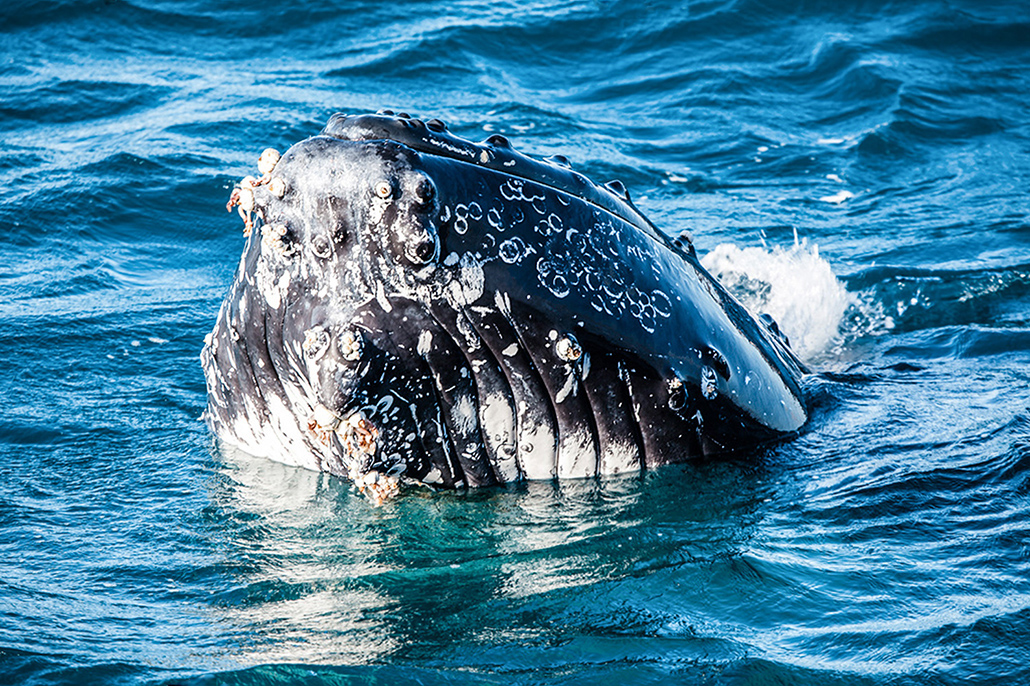
Close-up of a humpback whale surfacing near a whale watching vessel in Hervey Bay, showing barnacles and distinctive markings.
1. Hervey Bay is one of the world’s best whale watching destinations
Whale watching is available in many parts of Australia, but Hervey Bay is unique.
The bay’s sheltered waters provide a resting place for humpback whales during their migration. Unlike many locations where whales simply pass by, whales often spend days or even weeks in the bay, giving visitors exceptional viewing opportunities.
It’s one of the reasons Hervey Bay has earned an international reputation as a premier whale-watching destination.
2. The season runs from July to October
Whales can begin arriving from mid-July, with numbers generally increasing through August and September.
October often brings excellent opportunities to see mothers travelling south with young calves.
While sightings are possible throughout the season, August and September are usually considered peak whale-watching months.
3. Thousands of humpback whales visit each year
The annual migration is one of nature’s great journeys.
Humpback whales travel thousands of kilometres between their Antarctic feeding grounds and the warmer breeding waters of Queensland and further north.
Many pause in Hervey Bay waters along the way, creating one of Australia’s most spectacular wildlife experiences.
4. The whales aren’t just passing through
One of the most fascinating things about Hervey Bay is that whales often stop here rather than simply continuing their migration.
Researchers have observed whales resting, socialising and caring for calves in the protected waters between the Fraser Coast and K’gari.
That means encounters can be longer and more interactive than in destinations where whales remain constantly on the move.
5. Mothers and calves are often the stars of the show
By late season, many visitors are lucky enough to see mothers travelling with young calves.
Watching a calf surface beside its mother or practise breaching for the first time is something few people forget.
These gentle interactions are among the reasons photographers and wildlife enthusiasts return year after year.
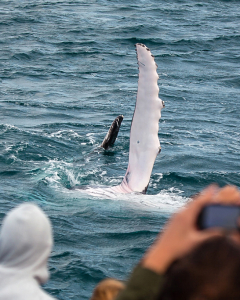
Passengers onboard a whale watching cruise witness a humpback whale surfacing close to the vessel in Hervey Bay.
6. Every whale-watching trip is different
No two cruises are ever quite the same.
One day you might see whales breaching repeatedly. Another day they may approach the vessel, circle beneath the boat or spend time resting near the surface.
Part of the excitement is never knowing exactly what behaviour you’ll witness.
7. Winter is actually the best time to visit
For travellers from southern Australia, this may come as a pleasant surprise.
While much of the country is experiencing cold weather, Hervey Bay often enjoys mild winter days, clear skies and comfortable temperatures.
Whale season coincides with some of the most pleasant weather of the year on the Fraser Coast.
8. You don’t need expensive camera gear
Professional cameras can certainly help, but they’re not essential.
Visitors often capture wonderful memories using smartphones or compact cameras.
In fact, some of the best whale watching experiences happen when you put the camera down for a moment and simply enjoy the encounter.
9. Most tours have excellent sighting success
One of the questions visitors ask most often is whether they’ll actually see whales.
While nature can never offer guarantees, Hervey Bay’s whale-watching operators enjoy very high sighting rates during the season.
Operators often have policies in place should sightings unexpectedly not occur.
10. You may see more than whales
Keep your eyes open throughout the cruise.
Depending on conditions, you may also encounter dolphins, turtles, seabirds and other marine life.
For wildlife lovers, the journey itself can be just as rewarding as the whale encounters.
11. Whale watching has a way of staying with you
Most people book a whale-watching cruise expecting a memorable day on the water.
What often surprises them is the emotional impact.
Seeing a humpback whale in its natural environment creates a sense of scale that’s difficult to describe. Standing beside an animal larger than a bus yet moving with remarkable grace can leave you feeling both humbled and inspired.
It’s one of the reasons so many visitors return to Hervey Bay for whale season year after year.
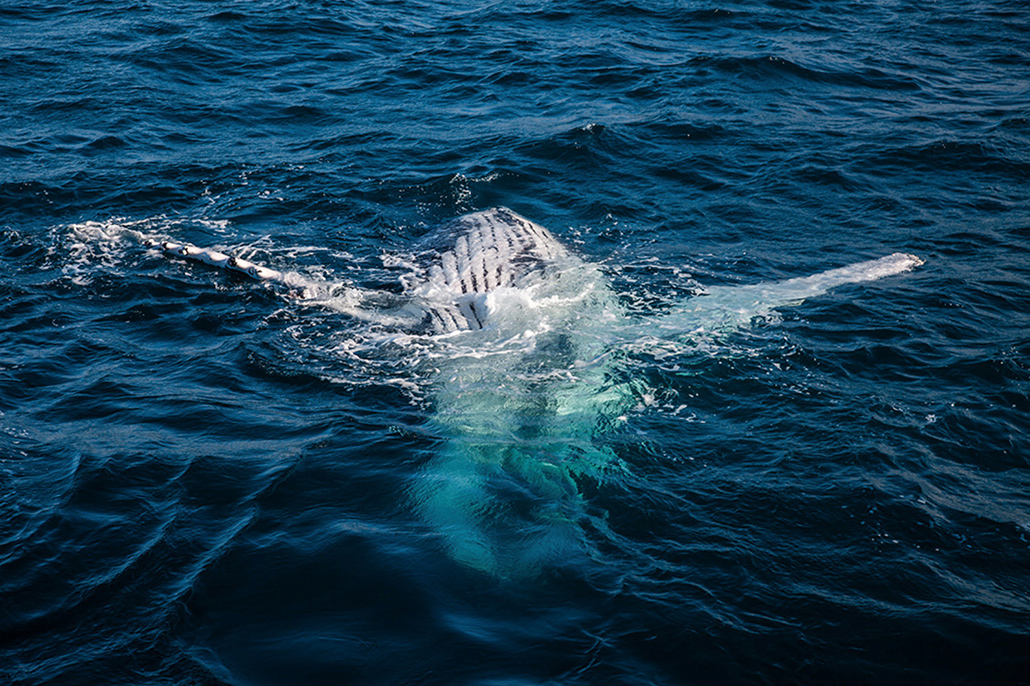
A humpback whale moves just below the waterline in Hervey Bay, offering a glimpse of its striped underside.
Don’t wait until peak season: many tours start filling in August. Visit Whale Watching Hervey Bay to choose your tour below and book now to get the best spot and price.
Planning a Whale Watching Trip to Hervey Bay?
Whether you’re visiting the Fraser Coast for a weekend or a longer Queensland road trip, whale season offers a chance to witness one of Australia’s most remarkable natural spectacles.
Bring a camera, pack a light jacket, and don’t forget to look up from the viewfinder occasionally. Sometimes the most memorable moments are the ones you simply experience.
Make the most of your Fraser Coast getaway with these travel essentials:
Stay Near the Marina
Many whale watching tours depart from Urangan Marina, making nearby accommodation a convenient choice.
Oaks Hotels & Resorts offers a range of accommodation options within easy reach of Hervey Bay’s waterfront, restaurants and tour departure points.
Explore Beyond the Whales
Planning to discover more of the Fraser Coast before or after your cruise? A hire car makes it easy to visit Maryborough, Toogoom, Burrum Heads and other local attractions.
Avis Car Rental offers vehicle hire options for travellers arriving by air, rail or road.
Travel With Confidence
Travel plans don’t always go exactly as expected. Travel insurance may help protect against unexpected disruptions, cancellations and medical expenses.
AllClear Travel Insurance specialises in cover for travellers, including many pre-existing medical conditions.
Disclosure: This article contains affiliate links. If you purchase through these links, Jocelyn Magazine may earn a small commission at no extra cost to you. Thank you for supporting independent publishing.
Photos: Jocelyn Watts