
Whale Watching in Hervey Bay: The Complete Seasonal Guide
From lively juveniles in July and August to mothers teaching their calves the ways of the whale in spring, every stage of Hervey Bay’s whale-watching season has something different to offer. Here’s how to choose when to go, find the right cruise and make the most of your day on the water.
- This article contains affiliate links. If you make a booking or purchase an item through one of these links, Jocelyn Magazine may receive a commission at no extra cost to you.
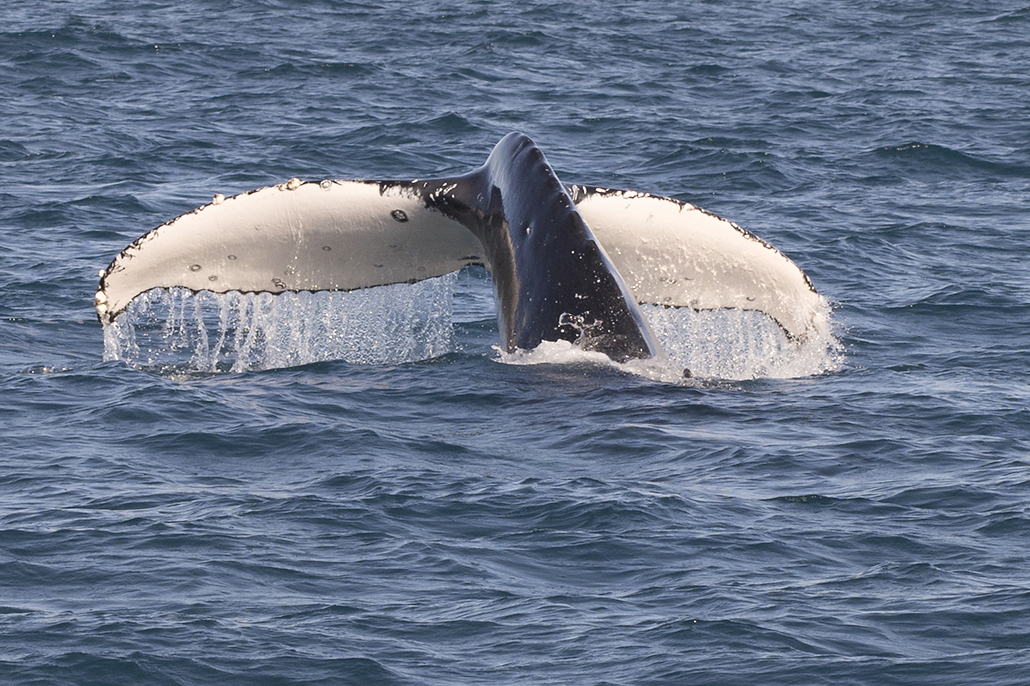
A humpback whale slips beneath the surface during the annual whale-watching season in Hervey Bay.
THE FIRST sign may be little more than a puff of white on the horizon, or it may appear right behind you.
On a recent tour with Whalesong Cruises, many of the other passengers had gathered at what is often considered the best vantage point: the bow. It offers exciting, unobstructed views of whales surfacing ahead, although it can also be the bumpiest part of the boat.
As someone prone to seasickness, I played it safe. Even though I’d taken medication beforehand, I found a seat at the stern, where the ride tends to be smoother. It was closer to the engines and a little louder, but I was in for a lovely surprise.
With my Canon EOS R5 and 100–400mm lens poised, I was scanning the side horizon when I heard a sudden blow behind my seat and saw spray shoot into the air. I turned to find a humpback had approached us from behind.
Whale-watching boats must follow laws governing how closely they can approach the whales. The whales, however, are curious creatures and sometimes decide to come closer to investigate us.
At that distance, my 100–400mm lens was far too long to capture the whole whale. Fortunately, my Samsung Galaxy S22 Ultra was dangling from my wrist, ready to catch what remained of the moment.
It was also a timely reminder that there is no single “best” place to stand on a whale-watching boat. While everyone is scanning the water ahead, a whale may surface beside you, or sneak up from behind.
Sometimes, the first sign is that fleeting puff of spray. Then comes the curve of a dark back, a fin raised above the water or, if luck and a lively whale are on your side, 40 tonnes of humpback launching into the air before landing in an explosion of white water.
Whale watching is always unpredictable. That is part of its magic. Yet in Hervey Bay, the experience is different from watching whales hurry past a headland on their annual migration.
The humpbacks that enter the bay often stay for days rather than merely passing through. In the comparatively calm, sheltered waters between the mainland and K’gari (Fraser Island), they rest, socialise and investigate their surroundings. Later in the season, mothers bring their calves into the bay to nurse and gather strength for the long journey south.
This special relationship between the whales and the local community helped Hervey Bay become the world’s first designated Whale Heritage Site in 2019. It remains one of Australia’s most rewarding places to see humpback whales in the wild; not simply because they visit in considerable numbers, but because they often appear to be in no great hurry to leave.
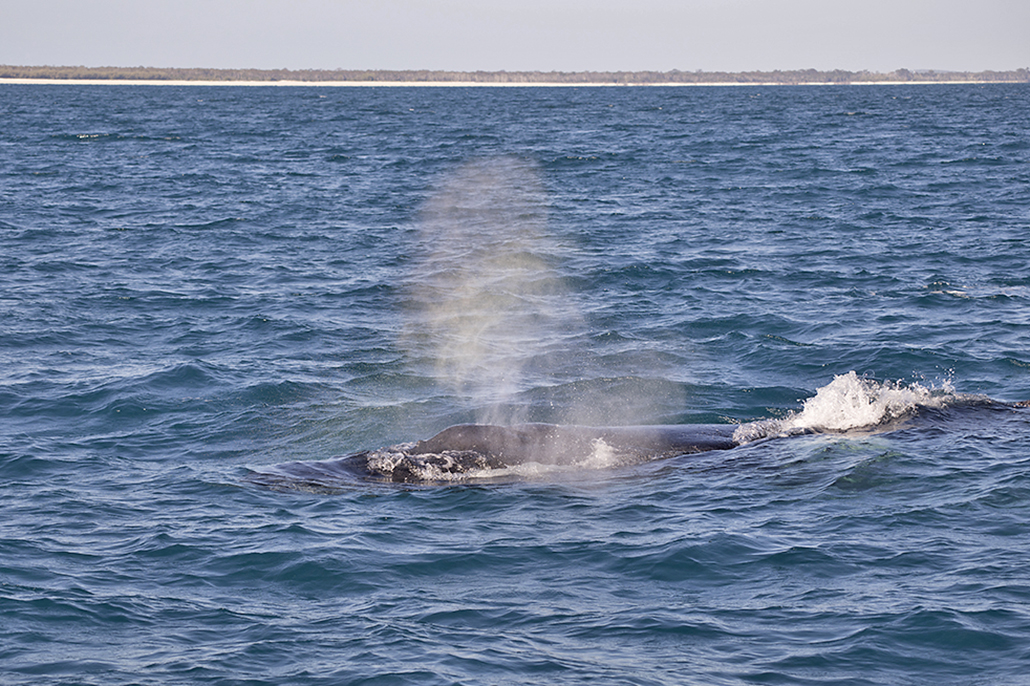
A puff of white spray is often the first sign that a humpback whale has surfaced nearby.
When is whale-watching season in Hervey Bay?
Hervey Bay’s whale-watching season generally runs from mid-July until late October, although whales are wild travellers and do not consult a calendar before setting off.
The timing and behaviour of the whales vary throughout the season. Early arrivals tend to include younger whales and lively social groups. As winter gives way to spring, mothers and calves become the main attraction on their southern migration.
There is no single “wrong” month to go. The best time depends on what you most hope to see.
July: the first arrivals
The first humpbacks usually begin entering Hervey Bay in July, with numbers building as the month progresses.
These early visitors are often juveniles, sub-adults and adults making their way south from the breeding grounds. They may form social groups, practise surface behaviours or show a healthy curiosity about the boats around them.
July has a pleasing sense of anticipation. The season is gathering momentum, crews are back on the water and every new arrival feels like a small announcement that the whales have returned.
It can also be a good time for energetic displays such as:
- breaching;
- tail slapping;
- pectoral-fin slapping;
- spy-hopping, when a whale raises its head vertically above the surface; and
- close approaches to vessels.
Not every operator begins on the same date, and early-season sighting guarantees may not yet apply, so check the details before booking.
August: peak numbers and social activity
By August, the season is in full swing. Whale numbers are generally high, cruise choices are plentiful, and the bay can be alive with social activity.
Young humpbacks are among the most entertaining visitors. Curious sub-adults sometimes approach a stationary boat and remain nearby, occasionally circling or swimming beneath it. This is commonly called mugging, although, unlike its city namesake, it generally leaves passengers delighted and still in possession of their valuables.
August is an excellent choice for first-time whale watchers and photographers hoping to see a variety of behaviours. It is also popular, particularly during weekends and major events, so it pays to book cruises and accommodation ahead.
September: mothers and calves take centre stage
If July is the overture and August the lively middle act, September brings a change in mood.
Mothers and their calves arrive in greater numbers as they migrate south. Hervey Bay’s protected waters provide a valuable place to rest, nurse and prepare for the journey towards the Southern Ocean.
For whale watchers, this can be one of the most endearing stages of the season. Calves must learn the physical and social skills they will need as adult whales, and their early efforts can be exuberant. You may see a young whale practising breaches, tail slaps and pectoral-fin slaps while its mother rests nearby.
The smaller whale is still an impressive animal, of course. ‘Baby’ is a relative term when the baby in question is several metres long and capable of drenching half a viewing deck.
September often offers the most dependable combination of strong whale numbers, mothers and calves, comfortable spring weather and a full choice of tours. It is also one of the most popular times to visit.
October: the final journey south
During October, mothers and their increasingly strong calves continue south. The season gradually winds down, but that does not make its final weeks an afterthought.
Early October can still produce beautiful encounters with family pairs lingering in the bay. There may be fewer boats on the water, too, giving the day a quieter feel.
As the month progresses, whale numbers and cruise choices generally decline. Operators finish their seasons on different dates, and sighting guarantees may end before the final scheduled tour. Confirm that your chosen cruise is operating and read its current terms before arranging the rest of your visit.
The short answer: August is hard to beat for high numbers and energetic social whales, while September is the spring sweet spot for mothers and calves. Early October can reward travellers seeking a quieter experience, provided tours are still running.
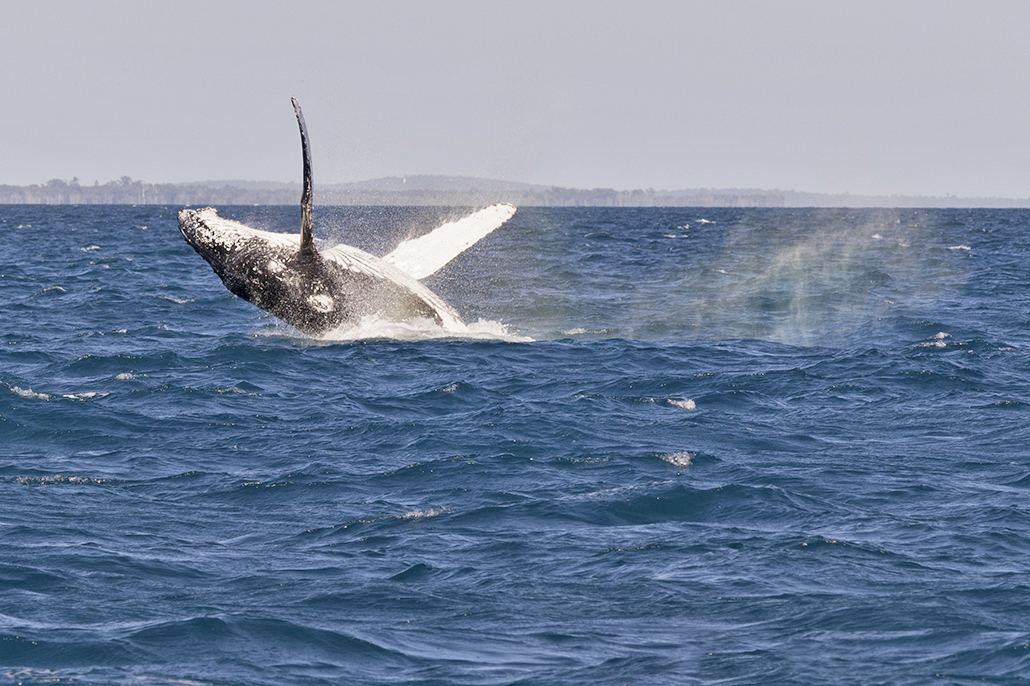
A lively humpback launches from the water, one of the whale season’s most exhilarating sights.
Why do humpback whales stop in Hervey Bay?
Humpback whales migrate along Australia’s east coast each year between the cold, food-rich waters of Antarctica and their warmer breeding grounds to the north.
Hervey Bay sits beside this migratory route, but its importance goes beyond geography. K’gari helps shelter the bay from the open ocean, creating comparatively calm, shallow waters where whales can pause.
The stopover serves different purposes throughout the season. Younger whales socialise and appear to practise adult behaviours. Mature animals rest and interact. Mothers later use the bay as a nursery, nursing their calves and allowing them time to develop before continuing south.
Research cited by Fraser Coast Tourism & Events indicates that mature females may remain for just over a week, while mothers with calves can stay for up to two weeks. For visitors, that means the possibility of longer, more relaxed encounters than those experienced at locations where whales are mainly travelling past.
It is important, though, to allow the whales to set the terms. Responsible operators must follow approach rules, reduce speed and maintain required distances. If a whale chooses to come closer, the vessel may need to remain stationary until it moves away.
That is when a scheduled cruise can suddenly become wonderfully unscheduled.
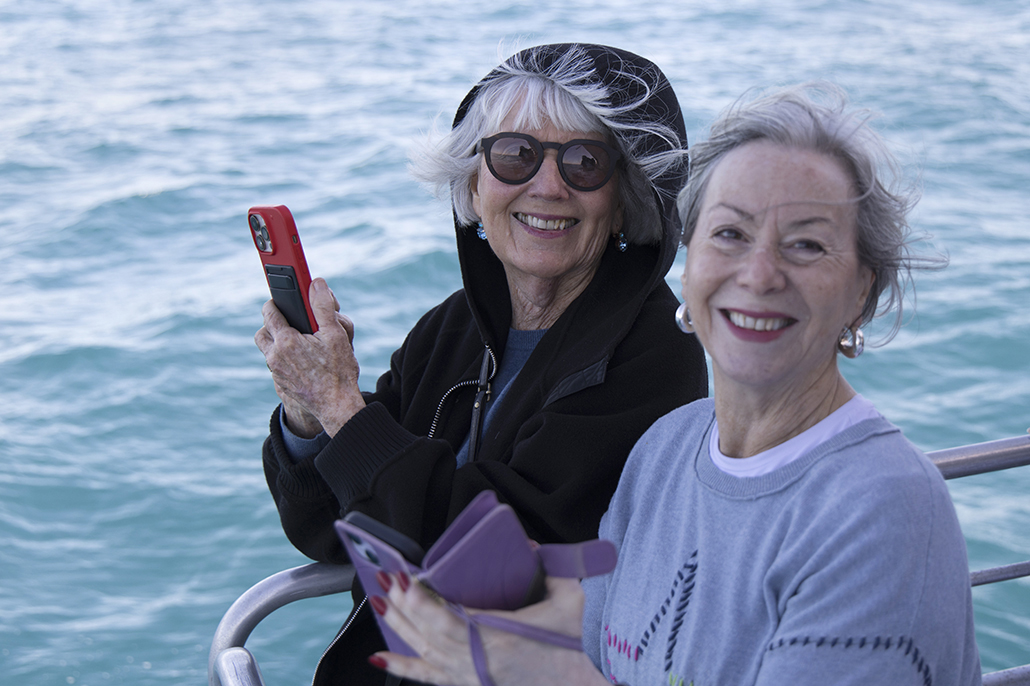
Paris Ink co-authors Penelope Jools and Julia Audova enjoy some time on the water during CWIP Publishing’s Hervey Bay writers’ retreat.
What might you see on a whale-watching cruise?
No two trips are the same, and no ethical operator can promise a breach on cue. Depending on the day and the stage of the season, you may see:
- a blow as the whale exhales at the surface;
- the arched back and dorsal fin as it swims;
- a tail fluke lifted before a deeper dive;
- breaching;
- tail and pectoral-fin slapping;
- spy-hopping;
- mothers resting or travelling with calves;
- calves nursing or practising surface behaviours;
- social groups interacting; or
- curious whales approaching and lingering near the boat.
Keep an eye out for other wildlife as well. Dolphins, turtles, seabirds and, with a little luck, dugongs may also be seen in the Great Sandy Strait and surrounding waters.
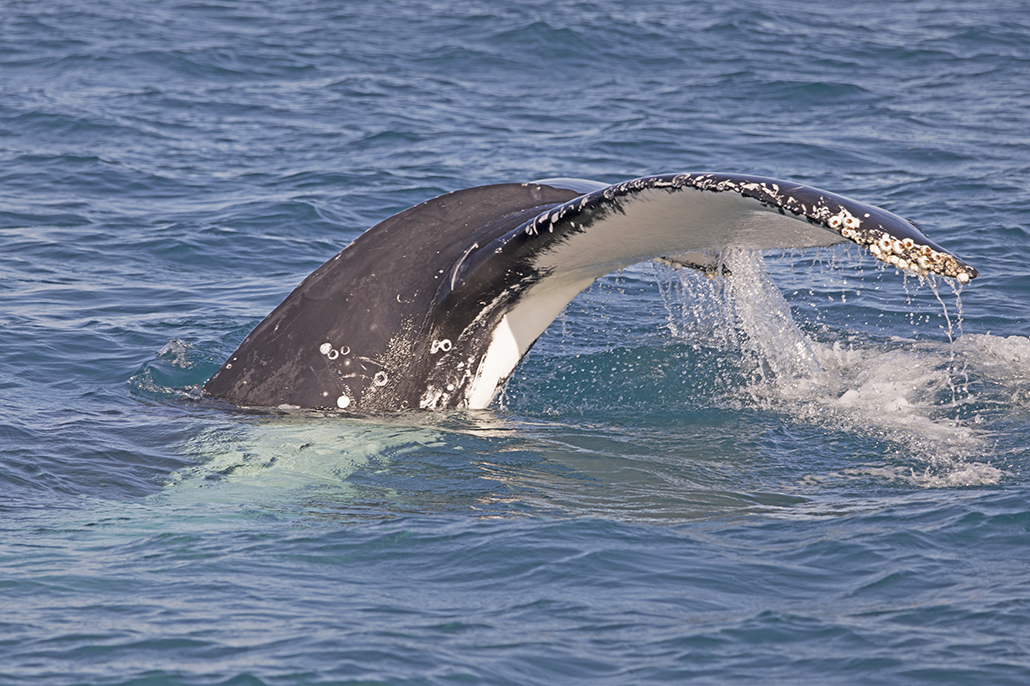
A close encounter reveals the markings and barnacles on the underside of a humpback whale’s tail.
How to choose the best Hervey Bay whale-watching cruise
There is no single cruise that will be “best” for everybody. A keen photographer, a family with young children and a traveller using a wheelchair may each need something quite different.
Hervey Bay’s fleet ranges from smaller vessels and sailing catamarans to larger boats with several viewing levels. Tours can run for around three hours, a half-day or a full day, and some combine whale watching with time on or around K’gari.
Before booking, compare:
- cruise duration;
- passenger capacity;
- viewing areas and rail height;
- indoor seating, shade and protection from wind;
- food and drinks included;
- toilets and accessibility;
- minimum ages;
- transfers from local accommodation;
- conservation or research programs;
- sighting-guarantee dates and conditions; and
- cancellation arrangements if weather intervenes.
Which style of cruise may suit you?
| If you are… | Look for… |
| A first-time whale-watcher | A half-day cruise with good commentary, several viewing areas and shelter |
| A keen photographer | Clear sightlines, space to move, a lower viewing deck and manageable passenger numbers |
| Travelling with children | Shade, toilets, food, a suitable duration and an operator that accepts children of their age |
| Short on time | A three-hour or half-day cruise |
| Seeking a leisurely outing | A longer cruise with meals or refreshments included |
| Interested in conservation | Marine-naturalist commentary, research links or recognised ecotourism credentials |
| Visiting K’gari as well | A combined whale-and-island experience |
| Travelling with limited mobility | Step-free or ramp access, suitable gangways, accessible toilets and seating on the accessible deck |
Current Hervey Bay operators include Whalesong Cruises, Hervey Bay Whale Watch aboard Quick Cat II, Pacific Whale Foundation Eco-Adventures, Tasman Venture, Spirit of Hervey Bay, Blue Dolphin Marine Tours and Hervey Bay Dive Centre.
Tour offerings change, so treat the names as a starting point rather than a ranking. Check each operator’s current schedule and choose the boat and experience that best match your priorities.
Morning or afternoon: which is better?
Whales do not become more cooperative simply because you booked the 7 am departure. Their behaviour can change from hour to hour, but it is not reliably better at one particular time of day.
Choose according to the weather forecast, your comfort and the rhythm of your visit.
A morning cruise may suit you if:
- you prefer cooler conditions;
- the forecast suggests lighter winds early;
- you like softer morning light;
- you want the afternoon free to explore; or
- you are comfortable with an early check-in.
An afternoon cruise may suit you if:
- you prefer a slower start;
- you are arriving in Hervey Bay that morning;
- you enjoy warmer conditions; or
- the cruise offers late-afternoon light or a sunset return.
Sea breezes can strengthen later in the day, although local conditions vary. If you are prone to seasickness, check the marine forecast and ask the operator for advice rather than relying on a blanket rule.
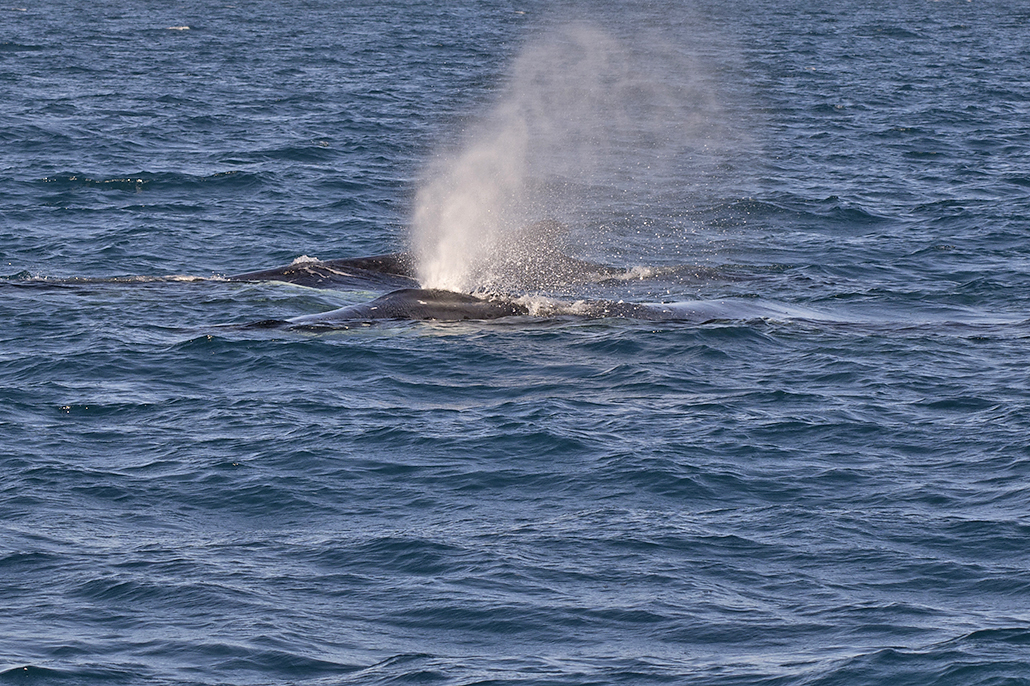
Hervey Bay provides sheltered waters where humpbacks can rest, socialise and investigate their surroundings.
Whale photography tips that help
Photographing a whale from a moving boat is a useful lesson in humility. The whale surfaces where it chooses, the deck moves beneath you and another passenger’s hat can develop an uncanny instinct for entering the frame at precisely the wrong moment.
A few simple settings and habits improve the odds.
Use a fast shutter speed
For breaches and other energetic behaviour, begin around 1/1000 second or faster if the light allows. A slower speed may be sufficient for a resting whale or a tail fluke, but boat movement can introduce blur even when the animal seems still.
Use continuous autofocus and burst mode
Continuous autofocus helps track a moving whale, while a controlled burst gives you several frames through the peak of an action. Avoid holding the shutter down indiscriminately unless you fancy sorting through 700 nearly identical photographs of splash.
Do not zoom in too tightly
Start with a little more room around the whale than you think you need. A breach can rise well beyond the frame, and it is easier to crop later than reconstruct a missing tail.
A flexible telephoto zoom is particularly useful. On a full-frame camera, a lens in the 100–400mm range offers reach while still allowing you to pull back quickly when a whale approaches. A phone or wider lens is valuable for whales close to the boat and for showing the scale of the encounter.
Watch the whale, not the screen
Look for patterns. A whale may surface several times before diving, and the direction of travel can help you anticipate where it will reappear. Listen to the crew, who are skilled at reading behaviour and spotting activity.
Reviewing every image immediately is a fine way to miss what happens next.
Brace yourself safely
Keep your stance wide and stable, use the railing for balance when appropriate and follow crew directions. A neck or cross-body strap adds security, but make sure it cannot snag as you move around other passengers.
Protect your equipment
Carry a lens cloth and a small waterproof bag or cover. Sea spray leaves marks that become surprisingly obvious against dark water or a clean blue sky. Pack a spare battery and memory card, and check both before departure.
Most importantly, take time to look without the camera. A sharp photograph is satisfying; seeing a humpback rise beside the boat with your own eyes is the part you are likely to remember.
Whale-watching vessels must maintain regulated approach distances, but curious humpbacks sometimes choose to come closer.
What to wear and pack
A calm, sunny morning at the marina can become cool once the boat gathers speed. Dress for conditions on the water, not merely those beside your parked car.
Pack:
- layered clothing;
- a wind-resistant jacket;
- a securely fitted hat;
- sunglasses;
- sunscreen;
- comfortable shoes with non-slip soles;
- a reusable water bottle;
- a camera or phone;
- a spare battery or power bank;
- binoculars, if you enjoy using them;
- a lens cloth;
- a small waterproof bag; and
- any medication you may need.
If you are susceptible to motion sickness, speak with a pharmacist or health professional before the trip and take any recommended medication at the correct time. Waiting until you feel unwell is generally too late.
Some cruises include meals, snacks and drinks; others offer them for sale or expect passengers to bring their own. Check before you pack half the pantry.
Accessibility and comfort
“Accessible” can mean different things on different vessels, so it is worth discussing your particular needs with the operator before booking.
Ask about:
- accessible parking and drop-off points;
- the distance from parking to check-in;
- ramps, steps and gangway gradients;
- whether a wheelchair or walker can remain in use during boarding;
- which decks are accessible;
- accessible toilet facilities;
- seating with back support;
- shade and enclosed areas;
- assistance for hearing, vision or sensory needs;
- dietary requirements; and
- room for a carer or companion.
Whalesong advertises wheelchair ramps, an accessible toilet, communication boards and audio guides. Quick Cat II promotes wheelchair and pram access around its main deck. These features may make either vessel worth investigating, but tide levels, gangway angles and individual mobility can affect boarding on the day.
Explain your requirements clearly when booking rather than assuming the word “accessible” covers them. The operator is best placed to advise what is practical and safe.
Travellers who tire easily may also prefer a shorter cruise, a sheltered seat and accommodation close to the marina. Accessibility is not only about whether wheels can cross a gangway; it is about whether the entire experience is comfortable and enjoyable.
Stay close to the whales
Turn your whale-watching cruise into a relaxing coastal break at Oaks Hervey Bay Resort and Spa. Its spacious apartment-style accommodation and location near the Great Sandy Straits Marina make it a convenient base for early departures—and a comfortable place to unwind afterwards.
Check rates and availability at Oaks Hervey Bay Resort and Spa
Affiliate link: JM may earn a commission if you book through this link, at no extra cost to you.
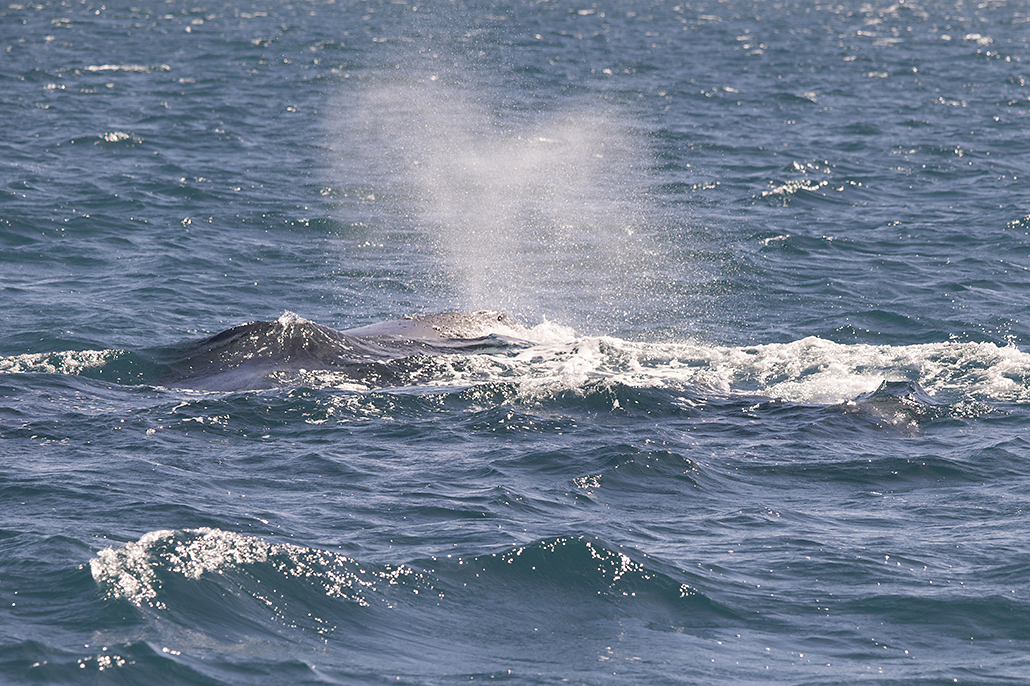
Splashes and sudden bursts of spray can signal energetic whale activity just beneath the surface.
Turn your whale-watching cruise into a coastal escape
Where to stay for a Hervey Bay whale-watching escape
Staying overnight removes the pressure of driving into Hervey Bay immediately before an early cruise and gives you time to enjoy the coast once you return.
The Great Sandy Straits Marina
Accommodation around The Great Sandy Straits Marina is convenient for early whale-watching departures. You will be close to the boats, marina restaurants and the Great Sandy Strait, with less distance to cover at the beginning of the day.
Urangan Esplanade
Stay near the Hervey Bay waterfront and leave time for Urangan Pier, the Esplanade and a leisurely meal after your day on the water.
The Urangan end of the Esplanade suits travellers who want waterfront walks, cafés and easy access to Urangan Pier.
Oaks Hervey Bay Resort and Spa, opposite the waterfront near Urangan Pier, offers self-contained one, two and three-bedroom apartments, two swimming pools and on-site facilities. Its apartment-style accommodation may be especially useful for couples planning a longer stay, families or friends sharing a whale-watching weekend.
Check availability at Oaks Hervey Bay Resort and Spa
Torquay or Scarness
Torquay and Scarness offer a more central Esplanade base, with casual dining, beaches and foreshore paths nearby. Allow extra time to drive to the marina and park before check-in.
Wherever you stay, confirm the cruise departure point. Most tours leave from the Great Sandy Straits Marina in Urangan, but arrangements can differ.
Make a weekend of it
Whale watching may be the reason for the visit, but it need not be the entire itinerary.
After your cruise, you might:
- walk part or all of Urangan Pier;
- visit the Hervey Bay Botanic Gardens;
- have lunch or dinner overlooking the marina;
- follow the Esplanade between Urangan, Torquay and Scarness;
- learn more about the region’s marine life at the Fraser Coast Discovery Sphere;
- add a day trip or longer stay on K’gari; or
- book another cruise and discover just how different two days on the same bay can be.
Allowing two or three nights also gives you some flexibility if strong winds or unsuitable conditions cause a tour to be rescheduled.
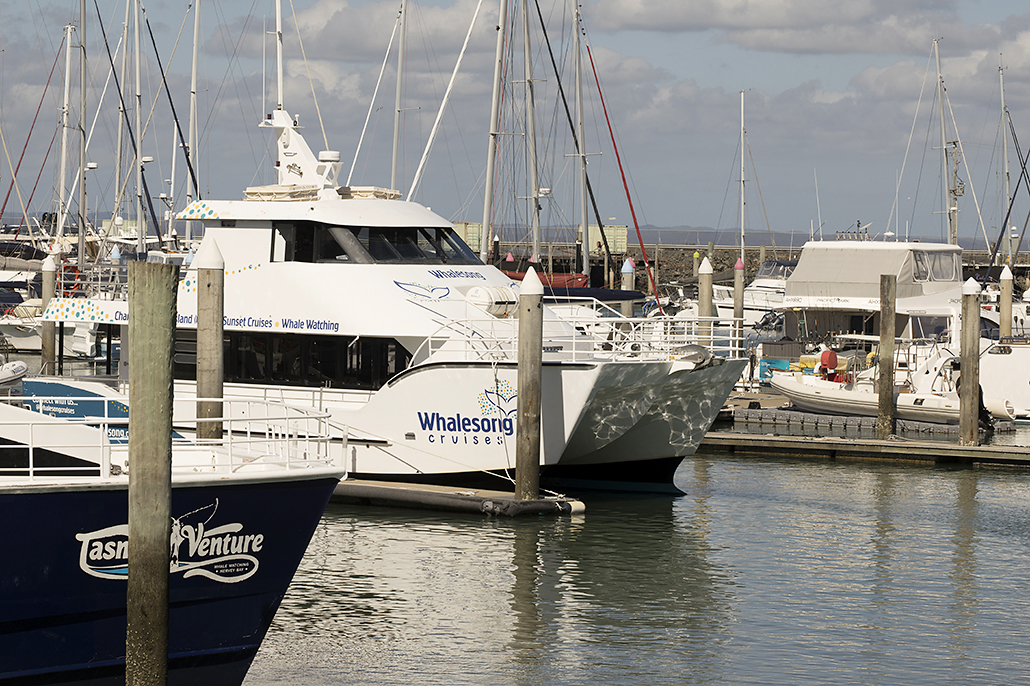
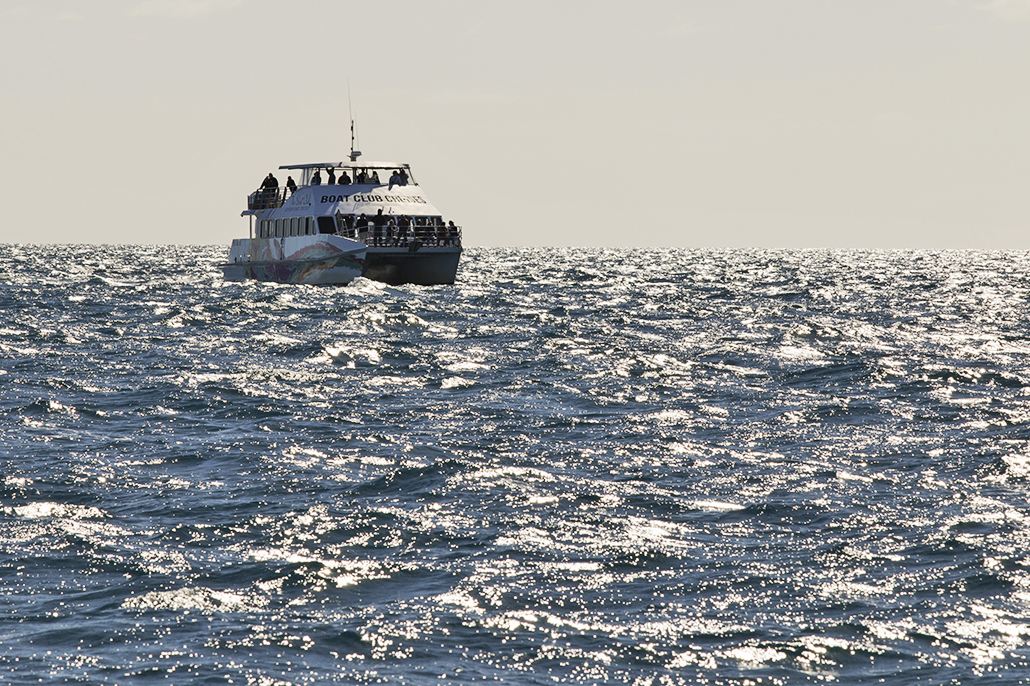
Whalesong Cruises and Tasman Venture at the Great Sandy Straits Marina, where several Hervey Bay whale-watching cruises depart.
Frequently asked questions
When is the best month for whale watching in Hervey Bay?
August generally offers high whale numbers and lively social activity. September is particularly rewarding for mothers and calves. The “best” month depends on the experience you prefer.
Is September a good time to see whales?
Yes. September is often considered the spring sweet spot, when mothers and calves become more prominent while a broad choice of cruises is still operating.
Can I see whales in October?
Yes, particularly in early October, when mothers and calves may still be resting in the bay before continuing south. Numbers and tour availability decline as the month progresses, so check current schedules.
Are whale sightings guaranteed?
Some operators offer a sighting guarantee during specified dates, usually in the core season. The remedy is commonly a complimentary return trip rather than a refund. Read the operator’s current terms, as guarantee periods may not cover the first or final weeks.
Are whales more active in the morning?
There is no reliable daily timetable for whale behaviour. Choose a departure that suits your schedule, comfort and the weather forecast.
Will I get seasick?
Hervey Bay is sheltered by K’gari, but it is still a marine environment and conditions can change. If you are prone to motion sickness, seek advice before the cruise, consider an earlier departure when lighter winds are forecast and choose a seat with fresh air and a view of the horizon.
Are Hervey Bay whale-watching boats wheelchair accessible?
Some vessels advertise wheelchair access and accessible toilets, but facilities and access to individual decks vary. Contact the operator before booking and explain your specific mobility and transfer needs.
How far ahead should I book?
Book as early as possible for weekends, school holidays and the popular mother-and-calf period in September. Early booking also gives you a better choice of vessels and departure times.
What happens if the weather is poor?
The operator may delay, reschedule or cancel a tour if conditions are unsafe. Check the cancellation policy and keep your contact details current. Travel insurance may be worth considering if the cruise is part of a larger trip.
A season of different stories
Hervey Bay’s whale season does not deliver the same performance for four months. It unfolds in chapters.
July announces the first arrivals. August fills the bay with youthful energy and social encounters. September welcomes mothers and calves into their sheltered nursery. October offers the final, sometimes quieter days before the whales continue south.
Whichever chapter you choose, go prepared, but leave room for the unexpected. The weather may change, the whales may ignore the script, and the photograph you planned may never materialise.
Then a calf may breach beside the boat, a curious humpback may rise close enough for you to hear it breathe, and the carefully planned day will become memorable for reasons no itinerary could promise.
In Hervey Bay, the whale-watching season is not merely something to observe. For a few hours on the water, it is something you feel part of.
Useful links and editorial sources
- Fraser Coast Tourism: Whale Watching in Hervey Bay
- Fraser Coast Tourism: Everything You Need to Know Before You Go
- World Cetacean Alliance: Hervey Bay Whale Heritage Area
- Whalesong accessibility information
- Quick Cat II vessel and accessibility information
- Oaks Hervey Bay Resort and Spa
Editorial note: Confirm operator names, operating dates, departure times, prices, inclusions, accessibility arrangements and sighting-guarantee terms before booking. The article was written using information current on 1 August 2026.
Plan your Hervey Bay whale-watching escape
A little forward planning can make your time on the Fraser Coast considerably smoother, leaving you free to concentrate on spotting blows, breaches and the occasional curious whale beside the boat.
Arrange travel insurance
Travel insurance may provide cover for selected unexpected events before or during your Australian holiday. Check the policy details, limits and exclusions carefully to ensure the cover suits your circumstances.
Explore travel insurance with AllClear
Hire a car for the Fraser Coast
A hire car gives you the flexibility to travel between your accommodation, the Great Sandy Straits Marina and other Fraser Coast attractions at your own pace.
Check Avis car hire options and rates
Keep your travel essentials organised
From packing cubes and toiletry bags to camera and tech organisers, Bagsmart offers practical accessories for keeping everything in its place—at least until you begin hunting for that spare camera battery.
Browse travel organisers and bags at Bagsmart
This block contains affiliate links. If you make a purchase or booking through one of these links, JM may earn a commission at no extra cost to you. Always check prices, terms, exclusions and product suitability directly with the provider.


