
Master Sauerkraut with This Simple Guide
IMAGINE turning cabbage into a tangy, crunchy superfood that’s both delicious and healthy. That’s the charm of sauerkraut—a fermented food enjoyed for centuries. For most of my life, though, it was just that odd jar on the supermarket shelf I ignored.
That changed when I attended a workshop by Elisabeth Fekonia, a permaculture teacher. Fermentation had always seemed complex, but Elisabeth’s simple steps—shredding cabbage, sprinkling salt—showed how easy and fun it is to make sauerkraut. By the end of the day, I was hooked. Now, I always have a jar of my homemade sauerkraut in the fridge.
What sealed it for me wasn’t just its simplicity, but its versatility and health benefits. Whether I pair it with a meal or snack on it straight from the jar, I know I’m supporting my gut health. Even better, it fits the CSIRO Total Wellbeing Diet perfectly.
In this blog, I’ll share what I’ve learned about fermented cabbage—from its history and benefits to tips for making it yourself. Trust me, once you start, you’ll wonder why you waited so long.
Affiliate Disclosure: Some links in this article are affiliate links. If you purchase through them — including selected books via Amazon Australia — I may receive a small commission. It doesn’t cost you anything extra, and it helps support the ongoing work behind Jocelyn Magazine.
What Is Sauerkraut?
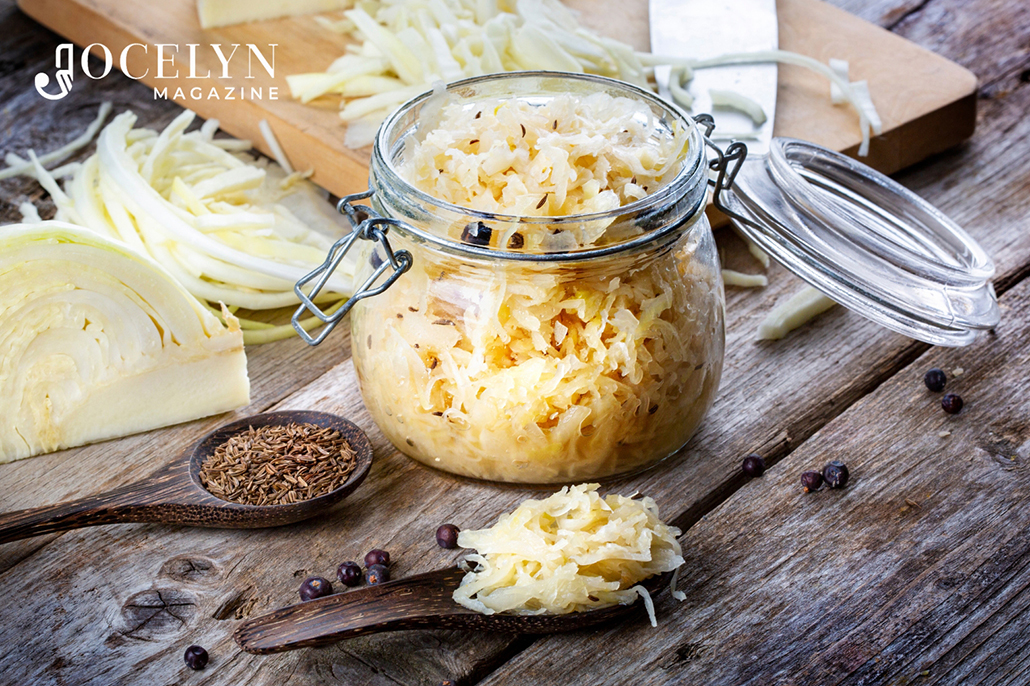
Sauerkraut is shredded cabbage fermented with salt. Simple as it sounds, it’s packed with probiotics, vitamins, and a tangy flavour that enhances meals.
I was surprised to learn during Elisabeth’s workshop that sauerkraut originated in ancient China over 2000 years ago, before spreading to Europe. Today, it’s a staple in German, Polish, and Eastern European cuisines.
What I love about making sauerkraut is its hands-on, sustainable process. All you need is cabbage, salt, and time—no fancy equipment or energy-consuming methods. It’s a low-waste, high-reward way to create something healthy and delicious.
Why Sauerkraut Is a Nutritional Powerhouse

Sauerkraut is rich in gut-friendly probiotics, vitamin C, vitamin K, and fibre, making it a great addition to any diet. These nutrients support digestion, immunity, bone health, and energy.
Its low-calorie, nutrient-dense profile makes it ideal for the CSIRO Total Wellbeing Diet, which promotes sustainable weight loss through wholesome foods. Adding sauerkraut to your meals is an easy way to eat better without overcomplicating your diet.
My Journey as a Sauerkraut Convert
I used to think sauerkraut was just for German sausage stalls. But after Elisabeth’s workshop, I discovered its potential. Making it at home—with just cabbage, salt, and effort—became a satisfying hobby.
Experimenting with spices like caraway or mustard seeds and adding shredded carrots has made each batch unique. Knowing exactly what’s in my food adds to the satisfaction.
Having the right tools, like sturdy knives and chopping boards, has made the process even smoother.
Common Questions About Sauerkraut
When I embarked on my sauerkraut journey, I had so many questions. I learned I wasn’t alone—there’s a lot of curiosity around this zesty, fermented favourite. Here are two common questions I’ve found, along with what I’ve discovered.
Does sauerkraut contain live probiotics?
Yes, but only fresh, unpasteurised sauerkraut retains probiotics. Pasteurisation destroys them, so look for fresh versions in the refrigerated section or make your own.
Is it easy to make at home?
Absolutely. All you need is cabbage, salt, and patience. For the best results, use fresh cabbage and consider a quality fermentation kit.
How to Make Sauerkraut
You’ll need:
- Fresh cabbage (with tight, crisp leaves)
- Salt (1 tablespoon per medium cabbage)
Optional additions: grated carrots, herbs like dill, or spices such as caraway seeds for extra flavour.
Steps:
- Shred the cabbage using a sharp knife or mandoline.
- Sprinkle with salt and massage it for a few minutes to release liquid.
- Pack the cabbage tightly into a jar, ensuring it’s completely submerged in its brine. Add a little water if needed to cover.
- If you’re adding extras like carrots or herbs, layer them in as you pack the jar.
- Cover the jar with a cloth or a loose lid to allow airflow.
- Leave the jar to ferment at room temperature for 3–7 days, depending on your taste preference. Check daily and skim off any surface scum.
- Once it’s reached your desired tanginess, transfer the jar to the fridge to halt the fermentation process.
Homemade sauerkraut can last for weeks in the fridge, but in my house, it rarely stays untouched for that long.
How to Enjoy Sauerkraut

Now that you’ve got your homemade sauerkraut ready, the fun part begins—enjoying it. There are so many delicious ways to incorporate this tangy, probiotic-rich dish into your meals. Here are a few ideas to get you started:
- Add a tangy crunch to salads.
- Top burgers or sandwiches.
- Pair with roasted vegetables.
- Include in a grazing board.
Sauerkraut is proof that healthy eating can be simple and satisfying.
Sustainability and Sauerkraut
Making sauerkraut is an eco-friendly process that aligns with sustainable living. Fermentation is low energy, requiring only cabbage, salt, and time, making it a resource-efficient method to preserve food.
It’s also a great way to reduce food waste. Instead of discarding unused cabbage, it can be transformed into a long-lasting, nutritious product.
Homemade sauerkraut eliminates unnecessary packaging and makes the most of seasonal produce. Fermentation extends the shelf life of fresh vegetables, allowing you to enjoy them for months.
Where to Buy Sauerkraut in Australia
If you prefer to buy sauerkraut, options are available at supermarkets, health food stores, and markets. Look for unpasteurised varieties in the refrigerated section for probiotic benefits. Artisanal sauerkraut is also available at gourmet shops and farmers’ markets.
Note on Safety
Sauerkraut is generally safe, but some individuals may need to take precautions. Those with histamine intolerance or pollen allergies may experience reactions. People taking monoamine oxidase inhibitors should consult a healthcare professional before including sauerkraut in their diet due to potential interactions.
From Cabbage to Superfood
Whether purchased or homemade, sauerkraut is a nutritious addition to the CSIRO Total Wellbeing Diet. It supports digestion, boosts immunity, and complements sustainable practices.
Making sauerkraut at home is simple and rewarding. It has improved my health and reduced waste in my kitchen. I encourage you to give it a try—it might do the same for you.

***
A Note on the CSIRO Total Wellbeing Diet
The CSIRO Total Wellbeing Diet affiliate program is closing on 23 February 2026, and as a result, I’ve removed direct program links from this article.
While I’m no longer linking to the online program itself, the principles behind the CSIRO approach — balanced eating, higher protein, practical science-backed nutrition — still inform much of what I share here on Jocelyn Magazine.
If you’d like to explore the CSIRO’s published work, their books remain available through Amazon here:
CSIRO Books on Amazon Australia
As always, I only share resources I’ve personally found useful — and I appreciate you being part of the journey as this space continues to evolve.