Tag Archive for: Natural History

Crocodiles were prehistoric — but they’re not dinosaurs.

CROCODILES tend to make the news only when something has gone terribly wrong. An attack. A close call. A reminder that in parts of Australia, we are not the top of the food chain.

Yet long before headlines and helicopters, crocodiles were already here.

They are reptiles — like lizards, turtles and snakes — and they possess one of the most ancient lineages of any living animal.

When we ask are crocodiles dinosaurs? we’re really asking a deeper question about how life on Earth evolved — and who survived when others did not.

This article contains affiliate links. If you click through and make a purchase, we may earn a commission, at no extra cost to you. It’s how we keep creating helpful stories and guides for you.

Crocodiles: A saltwater crocodile in Australia resting along a tropical riverbank

Wild places demand awareness and respect, particularly in regions where large crocodiles are known to inhabit the waterways.

Are Crocodiles Dinosaurs?

The short answer is no. Crocodiles belong to a group of animals known as archosaurs; a clade (or evolutionary branch) that also includes dinosaurs and pterosaurs. They share a common ancestor, which is why the confusion is understandable.

But crocodiles branched off the family tree long before what we recognise as dinosaurs emerged.

One of the key differences lies in body structure. Dinosaurs had hind legs positioned directly beneath their bodies; an upright stance. Modern birds, which are now considered living descendants of dinosaurs, share this trait.

Crocodiles do not. Their legs extend more to the side, giving them that distinctive low, sprawling posture. It may look primitive, but it has proven remarkably effective.

So, while crocodiles lived alongside dinosaurs, and while they share ancient ancestry, they are not dinosaurs themselves.

Survivors of Extinction

Around 66 million years ago, the mass extinction event that ended the age of dinosaurs wiped out roughly three-quarters of life on Earth.

Dinosaurs disappeared (with the exception of birds). Pterosaurs vanished. Marine reptiles such as ichthyosaurs and plesiosaurs were lost to history.

Crocodilians survived.

Why? Scientists suggest a combination of factors: adaptable diets, semi-aquatic lifestyles, and the ability to go long periods without food. In evolutionary terms, they were built for endurance.

The modern Saltwater Crocodile is a direct descendant of that resilience.

Where Are Crocodiles Found in Australia?

Crocodiles in Australia inhabit tropical northern waterways.

You can expect them in rivers, estuaries and coastal regions from K’gari (Fraser Island) across northern Queensland and the Northern Territory, through to Shark Bay in Western Australia.

In these regions, warnings are clear and consistent — and they should be heeded.

Crocodiles are intelligent. They learn patterns. If fish are cleaned at the same riverbank repeatedly, they notice. When scraps are thrown into the water, they associate humans with food.

They are not unpredictable monsters. They are highly efficient predators behaving exactly as nature designed them to behave. That is precisely why caution matters.

Crocodile Safety

  • Never swim in waterways where crocodiles are known to inhabit

  • Avoid cleaning fish or discarding scraps in the same location

  • Keep well back from riverbanks and boat ramps

  • Assume crocodiles may be present even if none are visible

In northern Australia, complacency is the real danger.

How Big Are Crocodiles?

The largest measured crocodile in modern times was Lolong, captured in the Philippines at 6.17 metres.

In Australia, there have been claims of even larger individuals. One specimen, known as Krys, was shot near Normanton in 1958 and claimed to measure 8.64 metres. That measurement, however, remains contested.

For context, a fully grown saltwater crocodile regularly reaches five metres; more than enough to ensure that a human encounter is unlikely to end well.

Looking further back in time, prehistoric crocodilians were even larger. The giant Sarcosuchus imperator is believed to have grown up to 12 metres in length — an animal that would have dwarfed most modern predators.

Compared to that, today’s crocodiles are modest.

Crocodiles and Dinosaurs: The Bigger Picture

So, no. Crocodiles are not dinosaurs. But they are something perhaps even more remarkable. They are survivors.

Across millions of years, crocodiles have endured asteroid strikes, continental drift, ice ages and the slow reshaping of oceans and river systems. All the while, they adapted as entire branches of life vanished.

In Australia’s tropical north, they remain a powerful reminder that wild places are not theme parks. They are ecosystems; balanced, ancient and deserving of respect.

As humans continue to expand into crocodile habitat, coexistence depends on knowledge, caution and a willingness to understand the natural world rather than dominate it.

Crocodiles may not be dinosaurs. But in evolutionary terms, they are living relics of a world far older than our own, and still very much in charge of their domain.


Recommended for the Tropical North

Exploring northern Australia means heat, humidity, sudden downpours and genuinely wild landscapes.

Pack light, pack smart

Breathable clothing, a wide-brim hat, insect protection, dry bags for electronics and a good pair of binoculars for wildlife spotting from a safe distance all make travel more comfortable. I visit Amazon Australia for travel essentials.

Don’t overlook travel insurance

Remote roads, river crossings and adventure experiences come with added variables. Comprehensive cover — particularly for regional and adventure travel — offers peace of mind. I recommend comparing policies through AllClear Travel Insurance before heading north.

Taste the landscape

Northern Australia isn’t only croc country. It’s also home to remarkable native ingredients. Kakadu plum, one of the world’s richest natural sources of vitamin C, grows in these same rugged regions. If you’re curious about authentic Australian flavours, explore products made with Kakadu plum and other native botanicals.

Wild places reward preparation, and a little curiosity.

This section contains carefully selected affiliate links. If you choose to purchase, I may earn a small commission at no extra cost to you.


About the author

Peter Woodland is a contributor to Jocelyn Magazine. A former teacher and school librarian, his interests include computing, geography, palaeontology and good food.

This piece was first published in Jocelyn Magazine in 2022. It has been lightly edited to update travel information.

Explore dinosaur trails less travelled

Looking for dinosaur trails in Australia that go beyond the usual tourist circuit? This Dinosaur Trails Australia road trip begins at Lightning Ridge in northern NSW, home to rare opalised dinosaur fossils from the Cretaceous period. From Lightning Ridge to Queensland’s dinosaur country, this is a prehistoric journey for curious travellers, grey nomads and lovers of regional Australia.

HAVE you ever wanted to take a journey in the footsteps of giants? One that few people travel, yet is full of prehistoric wonder.

Well, now’s your chance to explore Australia’s fascinating world of dinosaur trails.

But if you’re already a dedicated traveller, you may have ticked all the well-known trails off your list.

So why not invent one of your own? May I suggest a slightly different trail?

If you’re a grey nomad or any other southern self-contained gadabout and you’re heading north to sunny Queensland, start your trail at Lightning Ridge in far northern NSW.

This article contains affiliate links. If you click through and make a purchase, we may earn a commission, at no extra cost to you. It’s how we keep creating helpful stories and guides for you.

Lightning Ridge: Australia’s Opalised Dinosaur Fossils

Dinosaur Trails Australia: Opalised dinosaur fossils at Lightning Ridge NSW Australia. Cretaceous Australia illustration.

Cretaceous Australia. Photo: Creative Commons

Lightning Ridge is the source of some of Australia’s most spectacular dinosaur fossils; spectacular because they are opalised.

The district is also one of Australia’s productive opal-mining regions, adding another dimension to your visit.

Most dinosaur discoveries at Lightning Ridge date from the Early to Mid Cretaceous periods, between 145 and 110 million years ago.

At that time, a vast, relatively shallow inland sea covered central Australia, with Lightning Ridge lying near its south-eastern shore.

The opal fields have yielded several important dinosaur fossil finds. Most recently, palaeontologists announced the discovery of the small ornithopod dinosaur Weewarrasaurus pobeni in 2019.

About the size of a dog, this small dinosaur likely travelled in family groups or herds for protection. Two fragments of jawbone and several teeth provide the evidence we have of it today.

Savour the Outback at Home

Before setting out on Dinosaur Trails Australia — or after you’ve returned from Lightning Ridge — savour a true taste of Australia. Kakadu plum grows wild in Australia’s remote regions and has long been valued for its natural properties. It’s a small but meaningful way to stay connected to the landscapes that shape our prehistoric story.

Discover Kakadu Plum

Dinosaur fossils found in an opal mine

Before that discovery, miners unearthed fossils from what appears to have been a herd of larger ornithopod dinosaurs deep underground in an opal mine.

This dinosaur, Fostoria dhimbangunmal, is related to the well-known Muttaburrasaurus from north-western Queensland.

Researchers have identified more than 60 bones from four individuals of the species.

Its species name comes from a local Aboriginal word meaning ‘sheepyard’, a reference to the locality that yielded the fossils.

Numerous other dinosaur fragments and bones still await identification in the district. Perhaps the most tantalising is ‘Lightning Claw’.

Only a handful of fossils provide clues to this mysterious dinosaur, leaving scientists without enough evidence to reconstruct it fully or give it an official scientific name.

Researchers believe Lightning Claw was a large theropod — a megaraptor — and perhaps one of the largest examples of a dinosaur group that appears only rarely in Australia’s fossil record.

Dinosaur Trails Australia: Opalised dinosaur fossils at Lightning Ridge NSW Australia. Lightning claw.

Lightning Claw. Photo: Creative Commons

Things to Do in Lightning Ridge (Opals, Fossils & Outback Experiences)

Lightning Ridge has several caravan parks. Check out the fossicking heaps at the Tourist Information Centre.

The John Murray Gallery is a must, and a good meal can be had at the Lightning Ridge Bowls Club.

Try the Car Door Tours; an economical, quaint way to see the sights.

When you get to Lightning Ridge, ask about the new Australian Opal Centre.


Dinosaur Trails Australia: Opalised dinosaur fossils at Lightning Ridge NSW Australia. Car Door Tours.

The Car Door Tours at Lighting Ridge are a must-see attraction. Photo: Jocelyn Watts


Dinosaur Trails Australia: Opalised dinosaur fossils at Lightning Ridge NSW Australia. John Murray Gallery Mural.

John Murray Gallery mural at Lightning Ridge. Photo: Jocelyn Watts

Travel Gear That Travels Well

If you’re upgrading luggage or packing tools for your next rail or road journey, choose lightweight pieces designed for regional travel.

Browse Travel Essentials

Planning a Dinosaur Trail Road Trip in Australia

So, you’re looking for a destination that’s off the beaten path, why not explore some of Australia’s lesser-known dinosaur trails?

These areas are home to prehistoric creatures that once roamed the earth and offer an unforgettable experience for travellers of all ages.

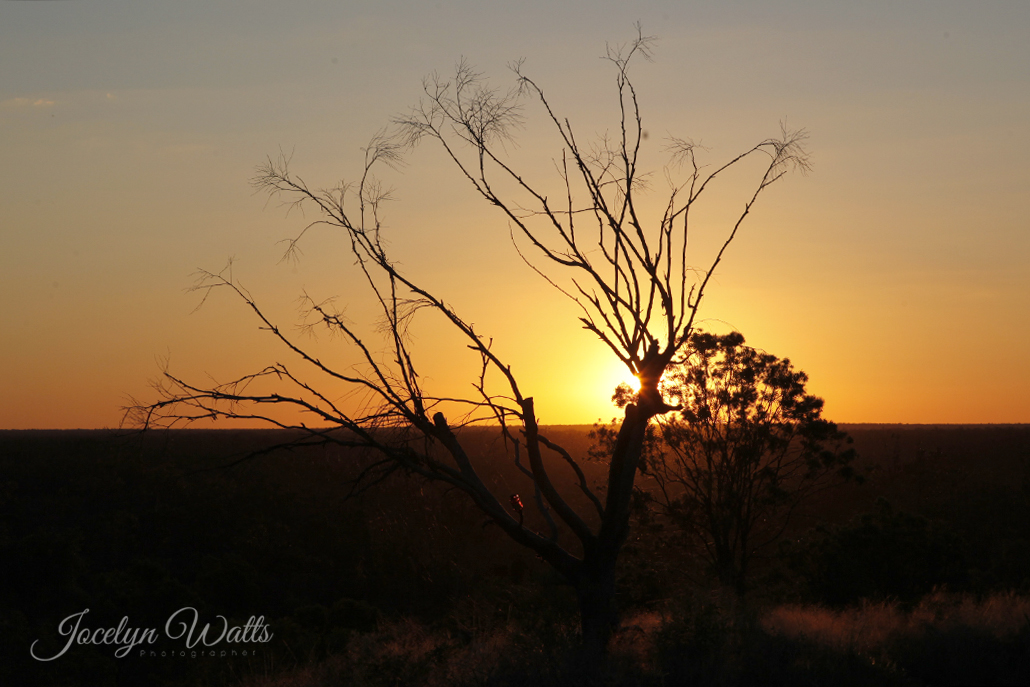
Dinosaur Trails Australia: Opalised dinosaur fossils at Lightning Ridge NSW Australia. Sunset at Lightning Ridge.

Dinosaur Trails Australia: Sunset at Lightning Ridge

Travel Insurance for Regional Australia

For rail journeys and extended road trips, comprehensive cover provides peace of mind — especially for mature travellers.

Compare Travel Insurance Options


If you go: Dinosaur Trails Australia – Lightning Ridge

Location: Lightning Ridge, northern New South Wales
Distance from Brisbane: Approx. 720 km (8–9 hours by car)
Distance from Sydney: Approx. 770 km (around 9 hours by car)

Best time to visit: Autumn and winter (April–September) offer cooler, more comfortable conditions. Summers can be intensely hot.

Road access: Sealed highways lead into town. Suitable for caravans, motorhomes and self-contained travellers. Always check local road conditions after heavy rain.

Allow: 2–3 days to explore fossil displays, opal fields and outback attractions at a relaxed pace.

Highlights:

  • Fossil displays at the Visitor Information Centre

  • Opal fossicking areas

  • The John Murray Gallery

  • Car Door Tours

  • Progress on the Australian Opal Centre

Map: View Lightning Ridge on Google Maps:
https://www.google.com/maps/place/Lightning+Ridge+NSW

From here, your journey along Dinosaur Trails Australia continues north into Queensland’s prehistoric heartland. In Part Two, explore Winton, Hughenden and Muttaburra along the Queensland Dinosaur Trail, where some of Australia’s most significant fossil discoveries await.

***

About the author

Peter Woodland is a contributor to Jocelyn Magazine. A former teacher and school librarian, his interests include computing, geography, palaeontology and good food.

This piece was first published in Jocelyn Magazine in 2022. It has been lightly edited to update travel information.