The Queensland Coastal Home: 7 Ideas Worth Stealing
You don’t need an ocean view, or a prize-home budget, to capture the easy, breezy feeling of a Queensland coastal home. From indoor-outdoor living to subtropical greenery, here are seven ideas worth borrowing for your own place.
FORGET rooms filled with shells, anchors and signs pointing to the beach.
The best Queensland coastal homes aren’t necessarily “coastal” in any obvious sense at all. Their appeal comes from the way they respond to our climate and the way we live: plenty of natural light, rooms that open to the outdoors, cooling breezes, relaxed materials, greenery and spaces designed for casual entertaining.
Spend any time browsing beautiful Queensland homes, including those rather tempting homes regularly offered through Mater Prize Homes, and certain ideas appear again and again.
The good news? You don’t need to win the house to steal some of its best ideas.
Here are seven worth trying.
- Jocelyn Magazine may receive a commission if you make an eligible purchase through links on this page, at no additional cost to you.
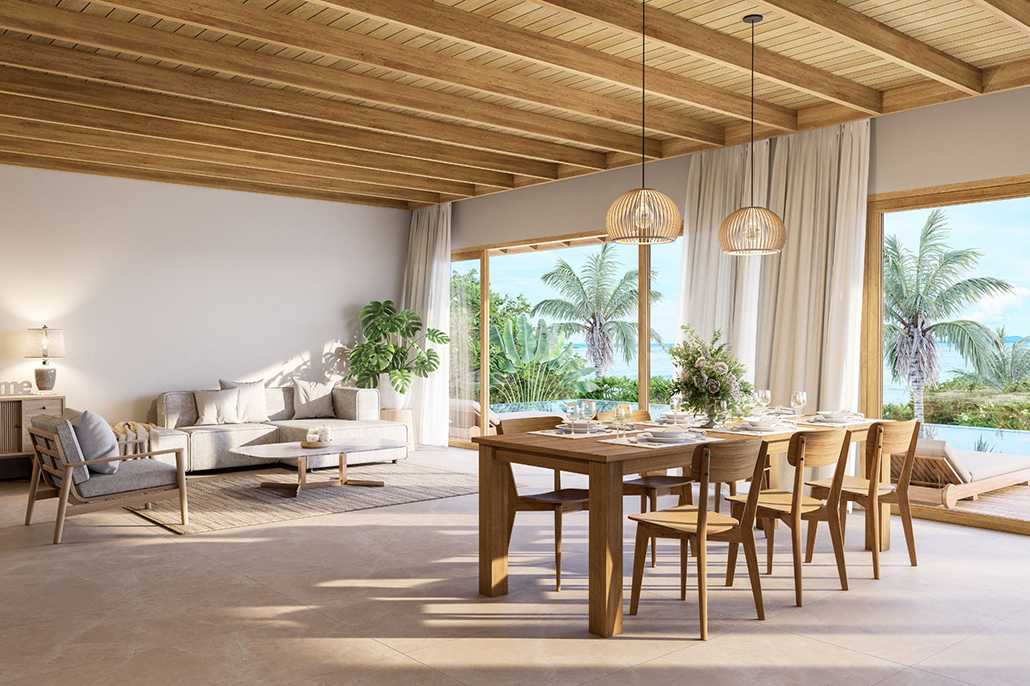
Opening living and dining spaces to the outdoors can make a home feel larger, lighter and more connected to its surroundings. Photos: Canva Pro.
1. Blur the line between indoors and out
One of the defining features of contemporary Queensland coastal living is that the outdoor area isn’t treated as somewhere you occasionally visit. It’s another room.
Large sliding or stacking doors, continuous or complementary flooring, covered patios and outdoor dining areas encourage people to move naturally between inside and outside.
It makes sense. Our climate allows us to use outdoor spaces for much of the year, whether that’s breakfast on the patio, an afternoon cuppa in the shade or dinner outside on a balmy evening.
There’s another advantage: a well-designed outdoor area can make the interior of a home feel considerably larger.
Even a relatively modest living room feels more expansive when the eye continues through open doors to a courtyard or garden beyond.
Steal this idea
You don’t need a huge deck or poolside pavilion.
In a townhouse, villa or smaller home, try using similar tones inside and out, keeping the view through the doorway uncluttered and creating one inviting destination outside; perhaps two comfortable chairs, a small table and some greenery.
The idea isn’t to make the outdoor space enormous. It’s to make it feel like somewhere you naturally want to go.
See also: How indoor-outdoor living adds to the relaxed feel at Oaks Hervey Bay.
2. Let natural light do some of the decorating
Natural light can become part of the decorating, bringing warmth, character and a sense of space to a room.
Beautiful coastal homes often feel luxurious before you’ve noticed a single piece of furniture. Much of that comes down to light.
Windows, glass doors, pale walls and uncluttered sightlines allow daylight to become part of the interior design. Colours appear fresher, rooms feel more spacious and the changing light throughout the day gives a home a character that can’t really be bought.
But there’s a distinctly Queensland qualification to all this.
More sunlight isn’t necessarily better.
The clever Queensland home balances natural light with shade. Orientation, blinds, awnings, verandahs and planting all have a role to play so that “light and airy” doesn’t turn into “blazing hot by two in the afternoon”.
Good orientation also takes local sun and prevailing breezes into account.
Steal this idea
Before buying another lamp or decorative object, look at what’s happening around your windows.
Are heavy window treatments swallowing daylight? Is furniture blocking part of a window? Has clutter gradually accumulated around the brightest part of the room?
Sometimes simply letting in more of the light you already have can change the whole feel of a space.
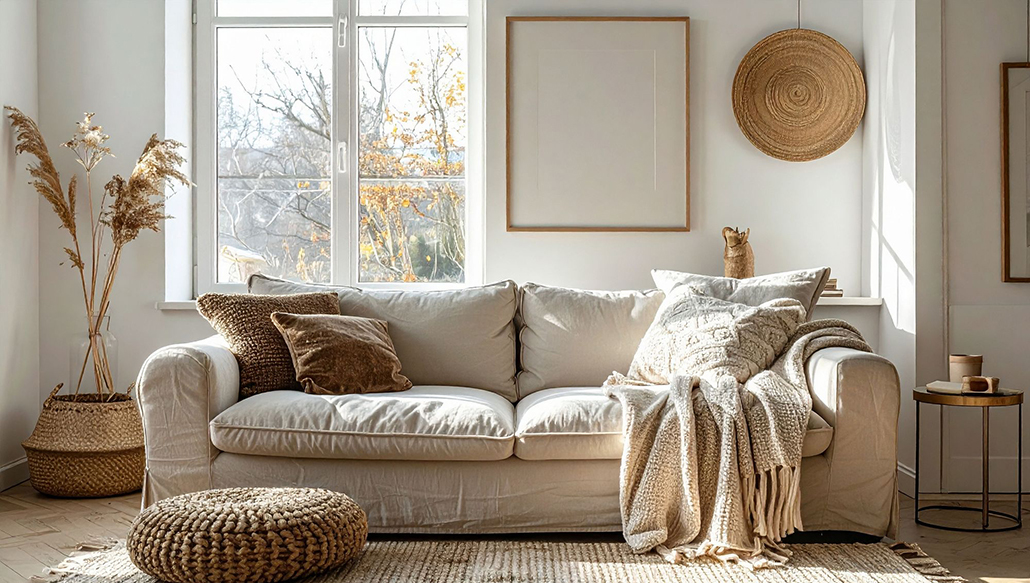
Modern coastal style borrows from nature (warm neutrals, tactile fabrics and woven textures) rather than relying on obvious seaside motifs.
3. Go coastal without going nautical
There was a time when decorating a coastal home apparently required an impressive collection of shells, blue-and-white stripes and possibly an anchor.
Thankfully, we’ve moved on.
Contemporary Queensland coastal style tends to borrow its colours and textures from the landscape rather than decorating literally around a beach theme.
Think warm whites rather than stark white. Sand, stone and pale timber. Muted eucalyptus and olive greens. Soft ocean blues. Natural textures. Perhaps a little charcoal or black to give all that softness some definition.
The result feels calm and connected to its surroundings without announcing BEACH HOUSE from every available cushion.
It’s also a look that’s likely to age much better than heavily themed decorating.
Steal this idea
Start with a neutral base and introduce coastal colour through the things that are easiest to change.
Cushions, throws, artwork, ceramics and plants can completely alter the mood of a room without requiring you to repaint the walls or replace major pieces of furniture every time tastes change.
And you don’t have to use blue at all. A room filled with warm neutrals, timber and leafy greens can feel every bit as coastal.
Bring the coastal look home
The right lighting can completely change the mood of a room. Explore Mica Lighting for lamps and lighting ideas to add warmth, texture and relaxed style to your own coastal-inspired space.
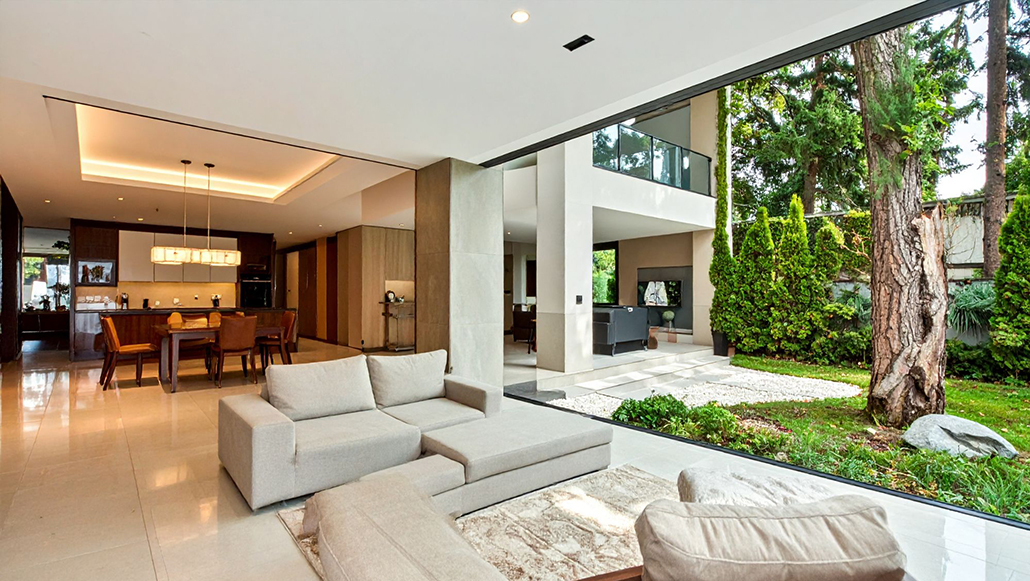
A well-positioned garden can become living artwork, bringing greenery, privacy and a sense of calm into the home.
4. Make greenery part of the architecture
One of the loveliest things about Queensland living is that the garden doesn’t necessarily stop at the back door.
A strategically positioned palm, flowering shrub or lush courtyard seen through a window can become almost like living artwork.
Well-designed coastal homes use landscaping particularly effectively — not simply around the perimeter of the property, but as part of what you see from inside.
Greenery can soften hard architectural lines, provide privacy and make even a relatively ordinary outlook feel more secluded. It also creates that subtle connection between indoors and outdoors that makes coastal homes feel so relaxed.
And sometimes the smallest garden can do it beautifully.
Steal this idea
Try looking at your garden from the opposite direction.
Instead of standing outside deciding where another plant should go, sit in the rooms you use most and look out.
What do you see from your favourite chair?
What catches your eye when you’re standing at the kitchen sink?
What’s outside the bedroom window?
Sometimes one beautifully positioned plant outside a window can have more impact on the way you experience your home than filling an entire garden bed.
See also: Tropical living and leafy outlooks at Oaks Port Douglas.
5. Create one irresistible outdoor room
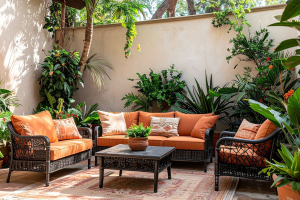
A small courtyard can be every bit as inviting as a sprawling backyard when comfort, greenery and shade come together.
A sprawling backyard isn’t essential to coastal living.
What matters more is having one outdoor spot that actually makes you want to sit down.
In a dream home, that might be a vast covered deck overlooking a swimming pool and landscaped gardens. In real life, it could be a compact balcony, a townhouse courtyard or a shady corner beside the back door.
Size matters far less than comfort.
Somewhere pleasant to sit is the starting point. Then think about shade, a table for a drink, greenery, privacy and perhaps a little lighting so the space remains inviting after dark.
Wind matters too; something Queensland coastal dwellers know only too well. The prettiest outdoor setting in the world won’t get much use if you’re perpetually chasing cushions across the yard.
Steal this idea
Rather than spreading your outdoor budget thinly across an entire garden or courtyard, concentrate on the place you’re most likely to use.
Make one small area wonderful.
Give it the most comfortable chair. Add the plant you’ve been admiring. Find somewhere for the morning coffee or evening glass of wine.
A small outdoor space that’s used every day is worth far more than a large one that’s merely admired through the window.
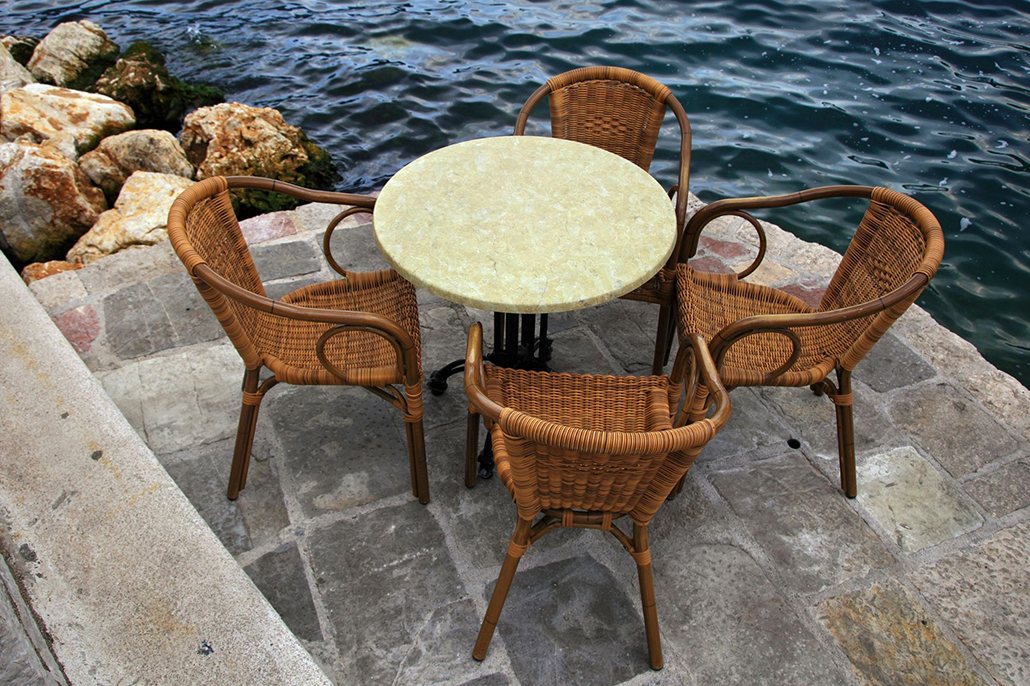
Natural-looking materials such as woven fibres and stone bring texture and warmth to outdoor coastal spaces, but durability matters too.
6. Choose materials that can cope with real life
Coastal homes look relaxed partly because they don’t feel too precious to live in.
Natural-looking timber, stone, textured fabrics, woven materials and practical surfaces give rooms warmth without making them feel formal.
But Queensland adds another requirement. Things need to cope with Queensland.
There’s a difference between something that looks coastal in a showroom and something that will actually perform well in a Queensland coastal environment. Heat, humidity, strong sunlight and, closer to the water, salt air can all take their toll.
Outdoor furniture can corrode. Fabrics fade.
Ventilation and passive cooling also become important considerations in Queensland’s warmer, humid conditions.
Beautiful finishes that require constant fussing can become considerably less beautiful once you’re the person doing the fussing.
That doesn’t mean everything has to be indestructible and beige. It simply means practicality deserves a seat at the decorating table.
Look for easy-clean fabrics, fade-resistant materials and surfaces that tolerate everyday wear. Think about ventilation and moisture. If something will live outside, check how its materials cope with sun, rain and salt-laden air rather than assuming “outdoor” means “Queensland-proof”.
Steal this idea
When you’re considering something new for your coastal home, ask yourself two questions.
Does it look good?
And then:
Will I still like it after a few Queensland summers?
The second question may save you considerably more money than the first.
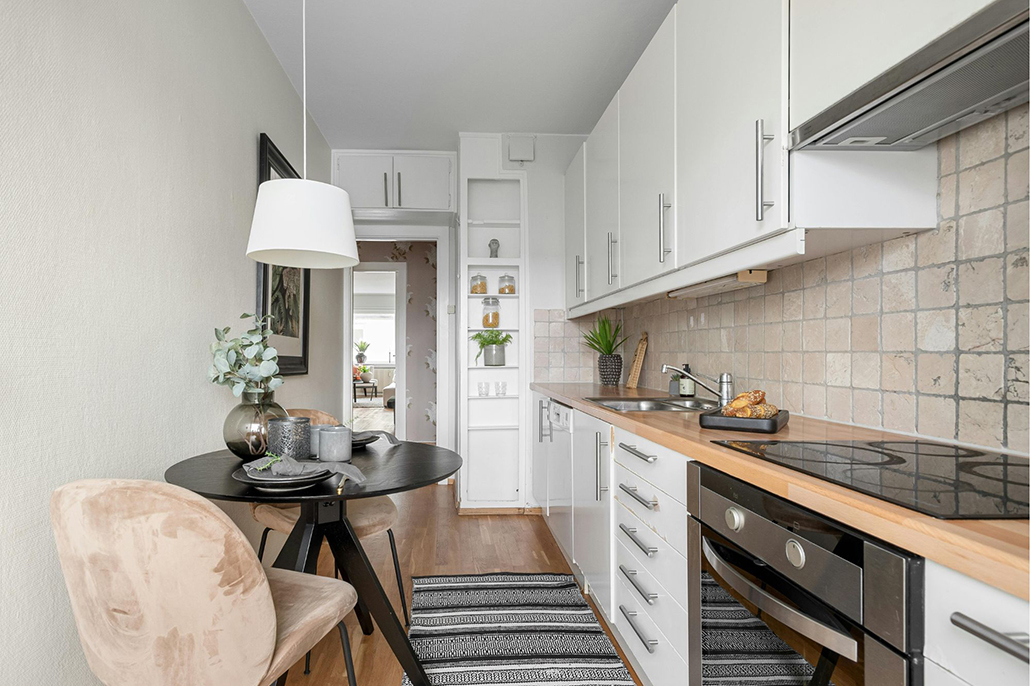
Good small-space design isn’t about squeezing in more; it’s about making every part of the home work harder for everyday life.
7. Design for the way you actually live
Perhaps the best lesson we can steal from beautiful homes isn’t about colour or furniture at all. It’s about ease.
The most appealing homes seem to anticipate everyday life. There’s somewhere to drop a bag, kick off shoes, store outdoor gear, pour a cold drink or sit with friends without worrying that everything has to remain immaculate.
That’s particularly important when you’re living in a smaller home.
Good storage, multipurpose spaces and thoughtful furniture placement can matter far more than additional square metres. A beautifully styled room that constantly gets in your way isn’t good design; however fabulous it looked in the photograph.
Think about the little annoyances in your own home. Is there nowhere sensible to leave shoes?
Do you walk through the door carrying shopping and immediately wonder where to put it?
Are outdoor cushions constantly being hauled inside?
Is the spot where you like your morning coffee inexplicably the least comfortable chair in the house?
These aren’t glamorous design problems. But solving them can change how a home feels every single day.
Steal this idea
Before buying another decorative object, identify one small irritation about the way your home works. Then fix that.
Add the hook. Move the chair. Find somewhere for the shoes. Create the coffee corner. Give the everyday clutter somewhere sensible to live.
Because a home shouldn’t merely photograph beautifully. It should make everyday life easier.
See also: Create a more relaxing space with these ideas for an at-home spa day.
You don’t have to own the dream home to borrow the dream
Perhaps that’s part of the pleasure of looking through beautiful homes. Most of us aren’t going to recreate them room for room and probably wouldn’t want to.
Instead, we notice something. The way sunlight falls across a pale timber floor. A garden framed perfectly by a window. Doors thrown open to a shaded terrace. A corner that looks made for morning coffee.
And we think: I could do something like that at home.
That’s the useful side of a little property dreaming. Take the idea. Adapt it to your space, your budget and the way you live.
Steal the look for less
You don’t need a designer budget to give your home a fresh coastal feel. Browse Harris Scarfe for homewares, bedding, cushions and everyday pieces that can help refresh a room without starting from scratch.
Start with the surfaces
From a bathroom refresh to an outdoor area, the right tiles can help create that relaxed coastal look while standing up to everyday life. Explore Lazy Tiles for inspiration for your next home project.
Or fancy the whole house instead?
Of course, there’s another way to get the coastal-home look. Take a peek at the latest Mater Prize Home and see what dream home is currently up for grabs.
- Jocelyn Magazine may receive a commission if you make an eligible purchase through links on this page, at no additional cost to you.