
Learn How K’gari Cultural Tours Connects Past and Present
I THOUGHT I knew K’gari (Fraser Island) well. Then I spent two days on a K’gari cultural adventure with Butchulla guide Luke Barrowcliffe. That experience deepened my understanding of the Butchulla people’s enduring connection to Country.
K’gari is the world’s largest sand island and a UNESCO World Heritage Site. Visitors come for its pure wongari (dingo) population and the haunting wreck of the SS Maheno. During World War II, the island also served as a secret training ground for Z Force commandos.
After three decades working in Fraser Coast media, I knew these stories and many more.
In 2014, I witnessed 450 Butchulla people gather to hear Justice Berna Collier recognise their native title.
Four years earlier, I spent a week with veteran photographer Darran Leal, capturing K’gari’s remarkable wildlife and landscapes.
Yet my understanding of the island’s Indigenous culture barely scratched the surface.
That changed when Luke shared his knowledge, stories and deep connection to Country.
Luke’s family ties to K’gari run deep. His cultural mentor, Aunty Olga Miller, is a respected historian, artist and author. His mother, NaiNai Bird, illustrated several of Aunty Olga’s books. These include Fraser Island Legends and Legends of Fraser Island.
With Luke leading the way, I saw familiar places through a different lens. His storytelling connected the island’s landscapes with generations of Butchulla knowledge, traditions and history.
Read on to join me as I revisit those two unforgettable days.
*This article contains affiliate links. If you click through and make a purchase, we may earn a commission, at no extra cost to you. It’s how we keep creating helpful stories and guides for you.
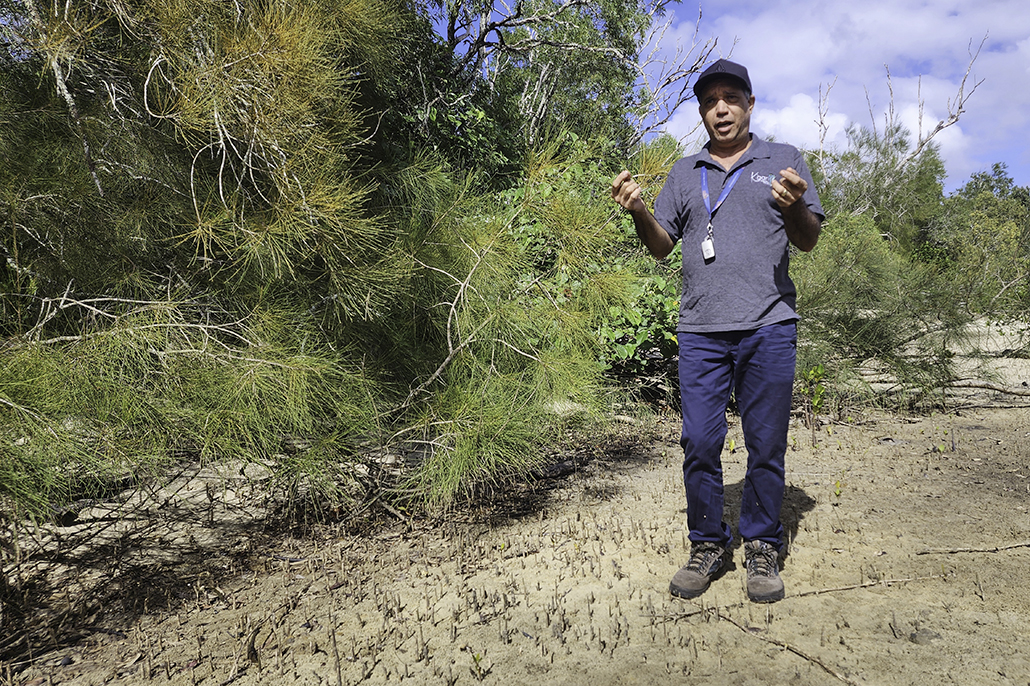
Butchulla man and tour guide Luke Barrowcliffe welcomes us to K’gari. Photos: Jocelyn Watts
An Unexpected Adventure on K’gari
I joined the adventure almost by chance. My friends Jill Byrnes and Jan Hollier needed a third person for a customised trial experience. The outing formed part of plans for a new venture.
Luckily, I had time to spare. They didn’t need to ask twice.
We boarded the barge at River Heads and crossed the scenic Great Sandy Strait towards kangaroo. The panoramic views whetted our appetite for the adventure ahead.
At Kingfisher Bay Resort, we stopped briefly for coffee and last-minute supplies. Then, we set off to discover more of K’gari’s Butchulla heritage and natural wonders.
Discovering Ancient Shell Middens
Luke led us to a secluded site where ancient shell middens lay among the mangroves.
“This is not a spot where people would usually come,” Luke said.
“It’s among mangroves, but mangroves were a productive source of food for our mob. Here, Aboriginal people gathered to feast on shellfish. They threw the shells away, which built up over thousands of years. All around Australia’s coastline, you’ll find middens like these.
“What’s also interesting is these middens have a lot of stone artefacts amongst them. There’s also ceramics and glass from the transition period of contact with Europeans.”
We examined shells, stones, ceramics and glass in an assortment of colours and shapes. Each discovery offered another glimpse into K’gari’s long human history.
We could have lingered much longer, but more discoveries awaited us.
For further reading on shell middens, explore this Queensland Museum research paper.

Aboriginal Shell Middens on K’gari.
Making String from Cottonwood Fibre
As we headed back to the car, Luke gathered small branches from a cottonwood tree. He had plans for another activity later in the day.
We would strip the bark with our thumbnails to reveal the inner fibre. Then we would use the fibres to make string for weaving baskets from palm fronds.
“It’s the inner bark you’re aiming for,” he said. “Use your thumbnail to peel back the fibre. You’ll need pieces that are about a metre long. Your nail acts like a scraper. Our women used to grow their nails long for tasks like this, and for handling prickly, toxic items.”
My nail-biting habit left me poorly equipped for the task. Fortunately, a small kitchen knife came to my rescue.
Ungowa: First Encounters and a Picnic by the Strait
Our next stop was Ungowa, on K’gari’s south-western shore. Towering eucalyptus trees provided shade, while sweeping views stretched across the Great Sandy Strait to the mainland.
Luke shared a Butchulla account of the first European ships appearing in the Strait. This was long before Ungowa became a regular mainland access point and a base for the forestry department.
“Our mob couldn’t comprehend what they were seeing. They knew beforehand that something was coming, though, because the message had been passed up the coast from Sydney. Each group, on seeing the ship, sent a smoke signal to neighbouring groups that something strange was in the ocean. They’d never seen a ship like that. They were spooked and superstitious.”
Today, Ungowa offers visitors a peaceful place to picnic and enjoy the scenery. On a clear day, views extend towards Bauple Mountain near Tiaro.
We settled beneath the eucalyptus trees to enjoy a picnic lunch prepared for our group. The menu featured roast beef sandwiches with quandong relish, native bush tomatoes and warrigal greens.
One unexpected highlight was Sobah’s Lemon Aspen Pilsner, a non-alcoholic craft beer made with native ingredients on the Gold Coast. Its refreshing citrus flavour added another Australian bush-food dimension to our lunch.
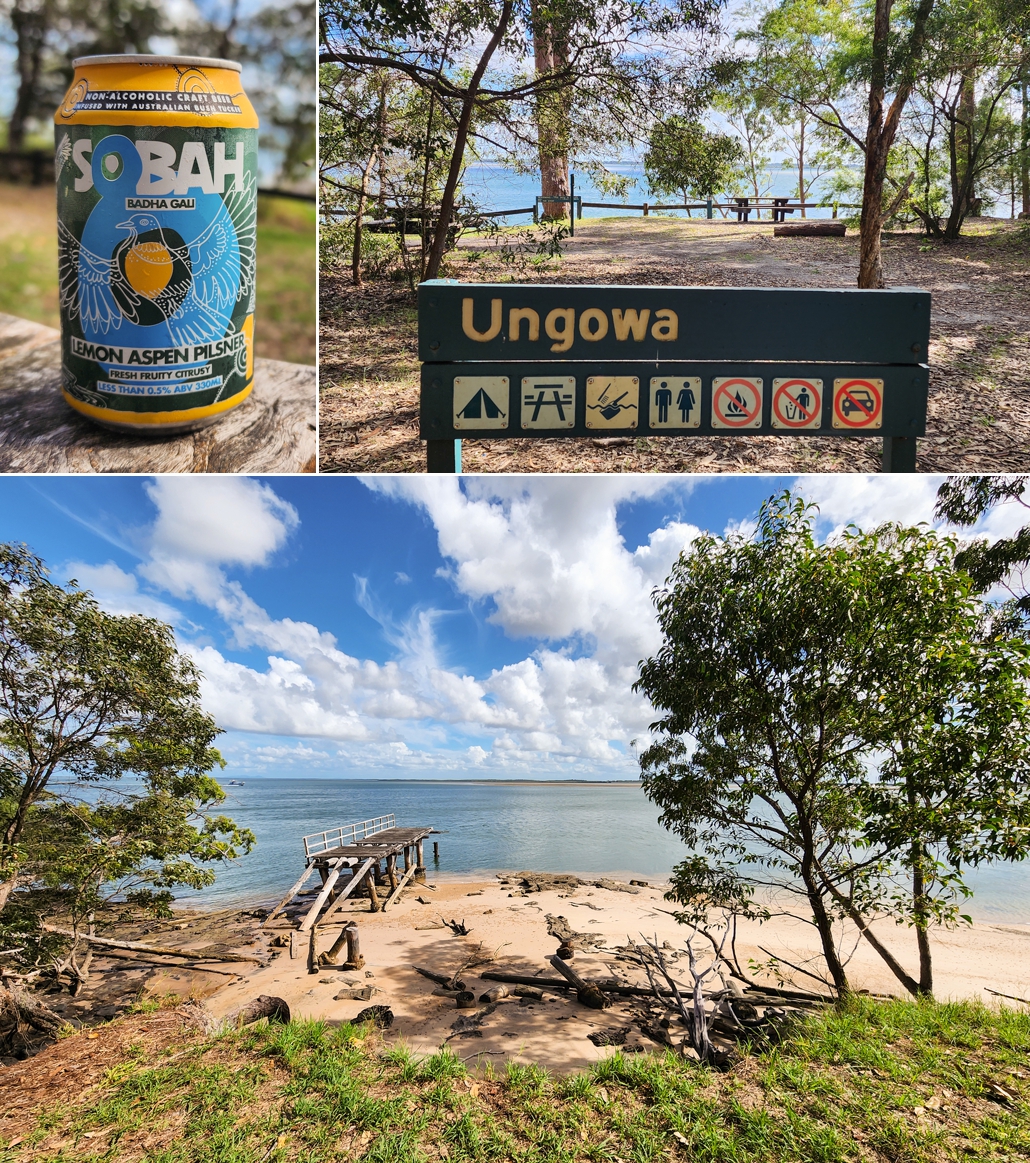
The breathtaking view from Ungowa on K’gari, gazing towards the mainland.
Ancient Trees and the Ghostly Maheno

A scar tree photographed during my K’gari cultural adventure with Butchulla guide Luke Barrowcliffe.
After lunch, Luke showed us a scar tree, and we stopped to photograph it. Its scars offered a glimpse into generations of Aboriginal knowledge and craftsmanship.
Traditionally, Aboriginal people removed bark or wood to make canoes, shelters, shields, containers and tools. Many of these trees continued growing long after the material was removed.
Next, we explored Central Station, once a busy logging camp in K’gari’s timber industry. During the early 20th century, workers harvested valuable timber, including satinay and kauri pine.
Today, lush rainforest surrounds the historic site, showcasing the island’s remarkable ecosystem.
“Experts estimate the creek here has been running for over 2000 years,” Luke said. “Rainwater is filtered through the sand for over 100 years before it comes back up through the spring.”
At Central Station, we also gathered native fruits, including crab apples, to add to our menu.
“Look for yellowish berries fallen on the ground,” Luke said. “We know a lot of our edible fruits and berries are ripe once they have fallen onto the ground.”
The crab apples tasted tart, rather like green apples. Their sharp flavour makes them suitable for sauces, jams and jellies when balanced with sweetness.
We also sampled small, reddish lilly pilly berries and midyim berries. The latter surprised me with their cinnamon-like flavour, which seemed perfect for cooking.
By mid-afternoon, we headed towards 75 Mile Beach on K’gari’s eastern coast.
As we approached the Maheno shipwreck, its rusting hull emerged through the misty rain like a ghostly sentinel.
The remains of the once-proud ocean liner stood against the vast beach, creating a haunting and unforgettable scene. I found myself reflecting on the power of nature and the passing of time.
Just before sunset, we travelled along the beach towards The Haven, our accommodation for the night. Along the way, we looked for a suitable spot to gather eugaries (also known as pipis) for dinner.
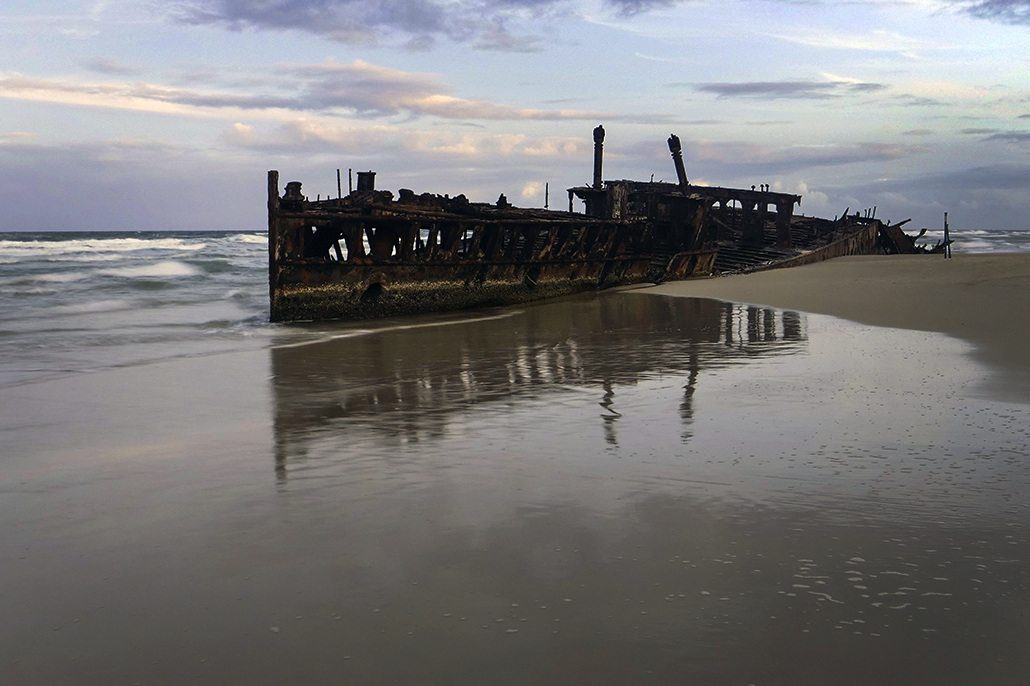
The Maheno shipwreck at dusk on K’gari (Fraser Island), Queensland.
The Eugarie Twist: Dancing for Dinner on K’gari
Finding eugaries takes a certain knack, and Luke had mastered it. He twisted his feet from side to side in the wet sand, then scooped up the shellfish. They would become our dinner that evening.
I couldn’t help thinking of the Twist dance craze of the 1960s. Who knew gathering dinner could look so much like dancing?
Jan soon joined Luke, but Jill and I were less enthusiastic. Jill tried digging with a piece of cuttlefish, without success.
I kept my camera safely away from the sand and photographed the action instead.
Between them, Luke and Jan collected dozens of eugaries. They stored their catch in a palm-frond basket, tied with string made from cottonwood fibre.
On our drive back to The Haven after sunset, Luke spotted a bandy-bandy snake in the headlights. By the time we stopped, it had disappeared into the dunes. My Samsung Galaxy S22 Ultra never got its chance.
The bandy-bandy’s striking black-and-white bands make it one of Australia’s most distinctive snakes. When threatened, it may raise and loop its body in a dramatic defensive display before retreating.
Back at The Haven, Jill, Jan and I relaxed over our BYO red wine. Luke, meanwhile, turned his attention to dinner.
He prepared a delicious eugarie risotto, finished with lemon-scented myrtle powder and native parsley.
After our afternoon on the beach, every mouthful tasted especially good.

Tour guide Luke Barrowcliffe and Jan Hollier collect eugaries for dinner.
Morning Feast: Pancakes and Finger Lime Marmalade
Luke was still in chef mode the next morning, mixing batches of apple and cinnamon pancake batter.
He served the pancakes with a tempting selection of Australian native spreads. These included roasted macadamia spread, riberry jam, desert quandong jam, rainforest plum jam and bush apple spread.
There was also native honey and marmalade made with Australian finger limes.
Naturally, so many delicious choices called for more pancakes!
My favourite was the Australian Finger Lime Marmalade. It combined the familiar taste of traditional marmalade with a distinctly Australian twist.
The first mouthful delivered a bright citrus burst, followed by a gentle sweetness that balanced the tartness. Refreshing, tangy and delicious!
We could also add sliced banana, Greek-style yoghurt, lilly pilly berries or bush crab apple berries. Native tea and wattleseed-infused coffee completed the breakfast menu.
Well fed and ready for another adventure, we climbed back into the 4WD.
We followed 75 Mile Beach along K’gari’s eastern coast, heading towards Waddy Point, the Champagne Rock Pools and Indian Head Lookout.
Luke explained that Butchulla Traditional Owner operators had different commercial access arrangements from other tourism operators. These included opportunities to share traditional cultural practices and experiences with visitors.*
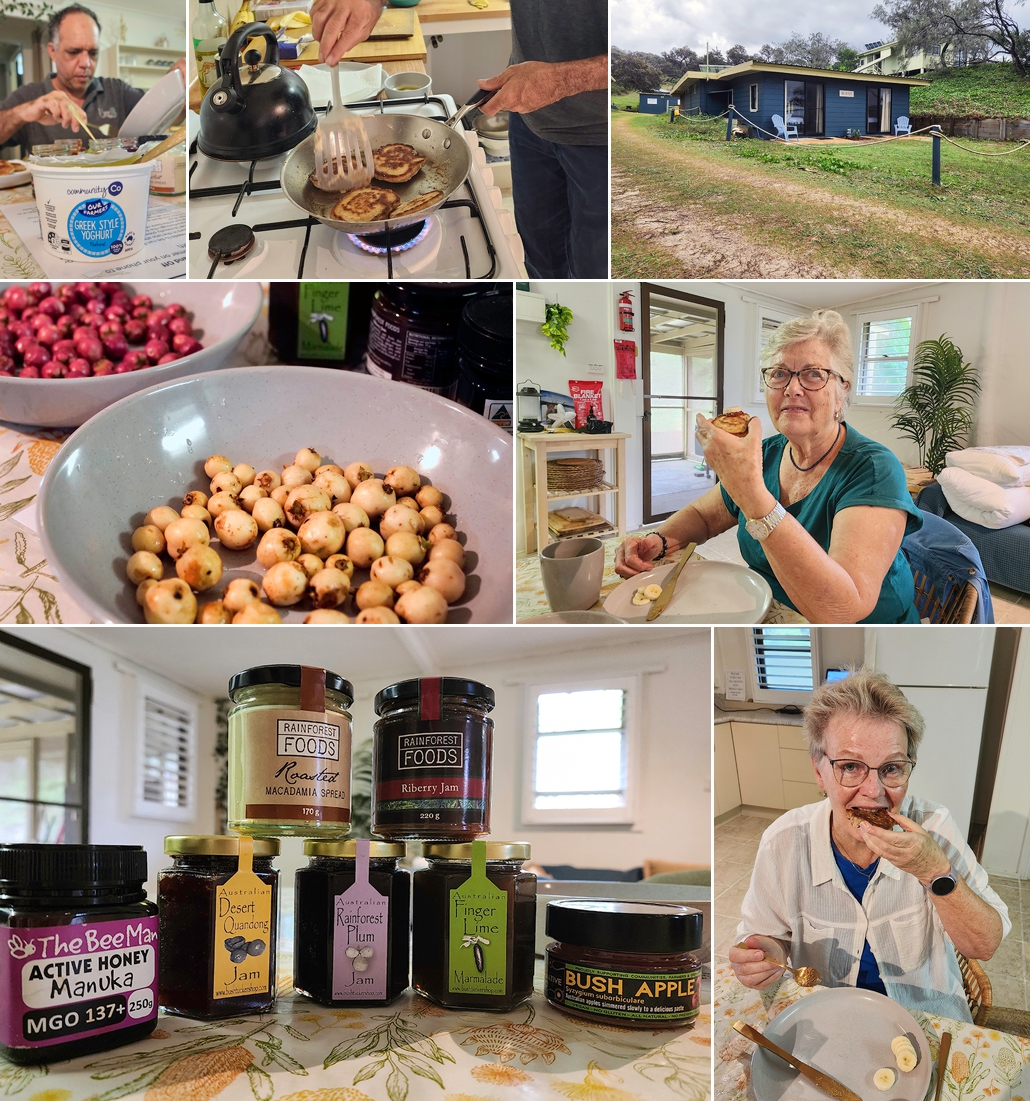
Jan Hollier and Jill Byrnes enjoy delicious pancakes for breakfast at The Haven, topped with Australian spreads, banana, and Greek yoghurt, accompanied by native berries.
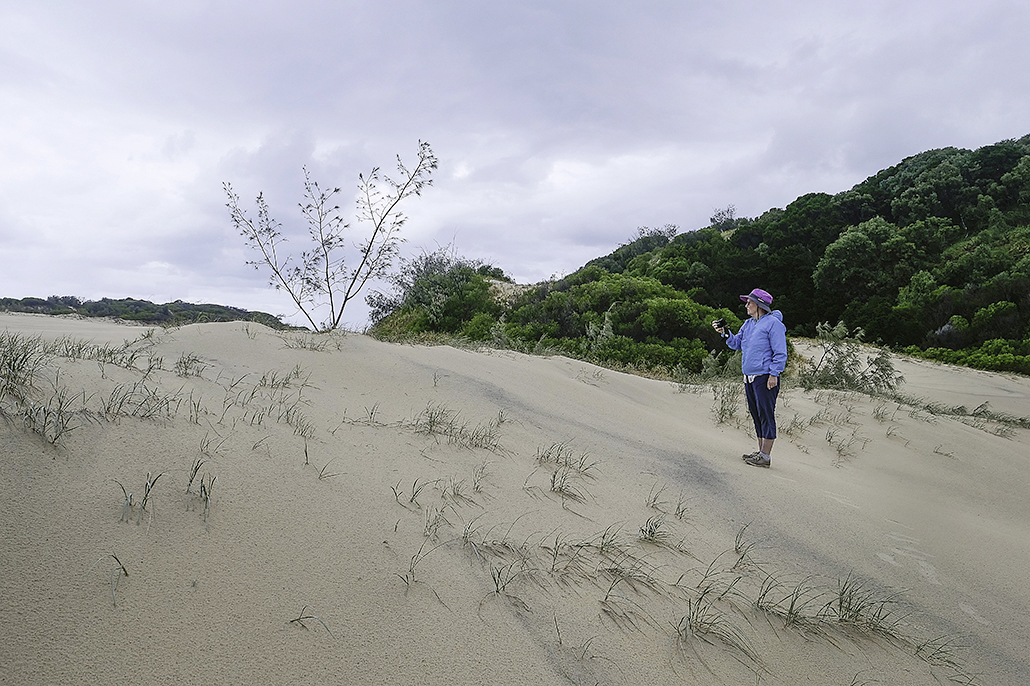
Jill Byrnes captures dunes at Waddy Point.
Butchulla Traditions and a Spiritual Connection to Country
We drove through Happy Valley, a small seaside settlement nestled among the dunes on K’gari’s eastern coast.
The village offers a café, shops and holiday accommodation. Its location makes it a convenient base for visiting the Maheno Shipwreck, Eli Creek and The Pinnacles.
Along the way, Luke spoke about his ancestors travelling to this part of K’gari for seasonal tailor festivals.
The abundant fish provided food and brought families together. Luke described these journeys as part of the Big Walk, connecting Aboriginal communities across Country.
“The walks were not just physical journeys but also opportunities for gathering knowledge, sharing stories through song and dance, and taking part in ceremonies,” he said.
These gatherings strengthened cultural knowledge and connections between people and Country.
Listening to Luke, I reflected on our shared human desire to travel, discover new places and feel a sense of belonging. Yet these traditional journeys carried cultural meaning far beyond simply exploring somewhere new.
Near Indian Head, Luke shared a childhood memory that revealed the headland’s spiritual significance to the Butchulla people.
“When I was young, I was taught that I wasn’t allowed to touch that rock because of its spiritual power,” he began.
“Only initiated men could go on the rock or touch it. Every time we came up here, Auntie Olga would be on at me, saying don’t touch that rock!
“I was under 16 and hadn’t done any ceremonial stuff. So, I waited until I had done the ceremony, then walked up the headland with hiking boots on.
“Not feeling anything, I believed I couldn’t connect with the spiritual power of the rock. But as we were driving back down the beach, I was near the Maheno and my feet started tingling and buzzing. I was full of jittery energy. I’ve never had another experience like that.”
His story offered a deeply personal insight into the spiritual relationship between the Butchulla people and their ancestral Country.
As at October 2026, the walking track at Tukkee Wurroo (Indian Head) remains closed because of severe erosion. Visitors should check the Queensland Parks alert before planning a walk.
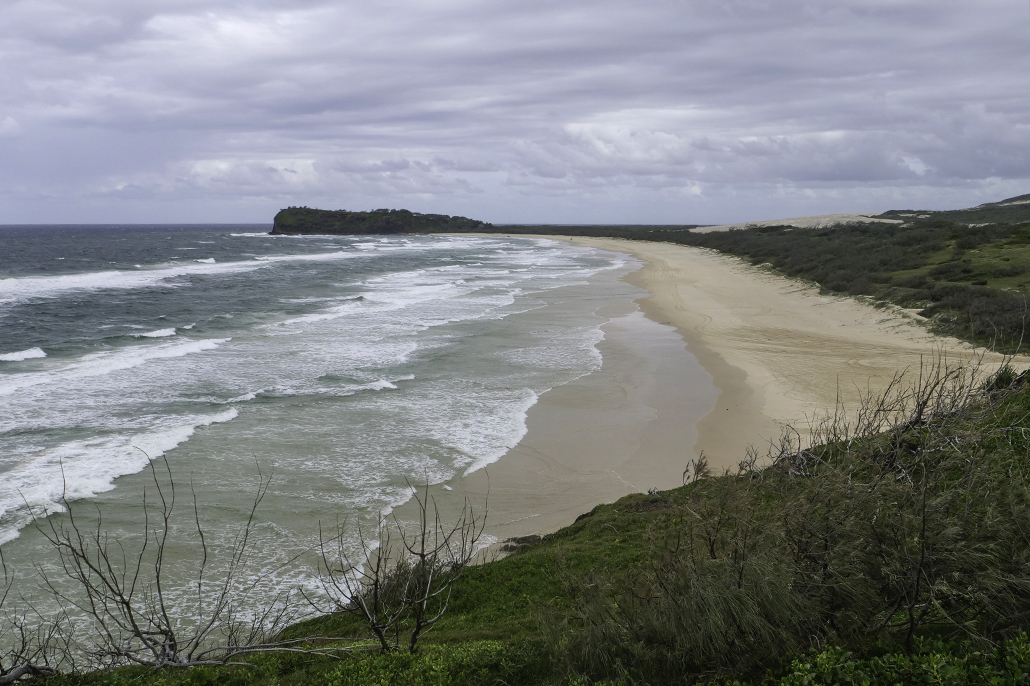
The sweeping view from the lookout near the Champagne Rock Pools towards Indian Head.
Fish Traps, Coffee Rock and Sacred Country
At Champagne Pools, near Indian Head, Luke explained how the natural rock formations helped Butchulla people catch fish during tailor season.
“In traditional times, we might have built the wall on the northern side to improve the traps’ functionality to trap a greater number of fish as the tide rose.”
On our return journey, Luke explained how K’gari’s remarkable sand dunes formed over time.
The University of the Sunshine Coast describes the dunes as “part of the longest and most complete age sequence of coastal dune systems in the world and are still evolving.”
Luke also pointed out dark brown coffee rock exposed along the beaches. He explained how layers of ancient organic matter had hardened over time, forming distinctive rock formations. Coastal erosion had since exposed some of these layers.
“The coffee rock is an interesting geological process that has taken millions of years to form, and then millions of years more of weathering as the rocks become exposed.”
Our conversations then turned to Butchulla creation stories and the cultural significance of different places on the island.
Luke described traditional men’s and women’s areas, including special birthing sites that hold cultural significance for the Butchulla people.
“Aboriginal society was gender-segregated, so we had men’s and women’s areas. Traditionally, all the children (girls and boys) grew up under the guidance and care of the woman, until the boys were old enough (10-12 years of age) to learn to be hunters and warriors with the men.
“Outside of having specific gendered areas, even in our communal areas, men, and women would remain in their groups. This is quite different to how we live today.”
These stories, and many more, kept us engrossed throughout the journey back across K’gari.
By the time we reached the barge at dusk, I had gained a deeper appreciation of the island’s remarkable heritage.
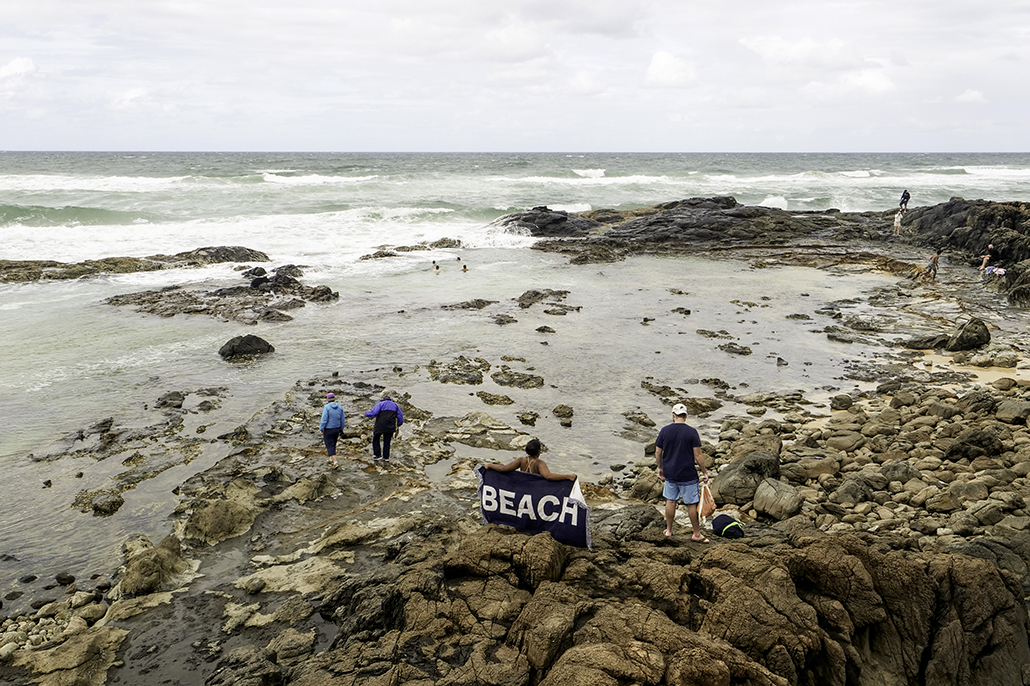
Sightseers swim in the Champagne Rock Pools, which once served as fish traps for the Butchulla people.
Reflections on Culture, Nature and Connection
As we farewelled K’gari, I reflected on everything Luke had shared during our two-day adventure.
His storytelling and knowledge revealed layers of Butchulla history and culture I had never fully appreciated.
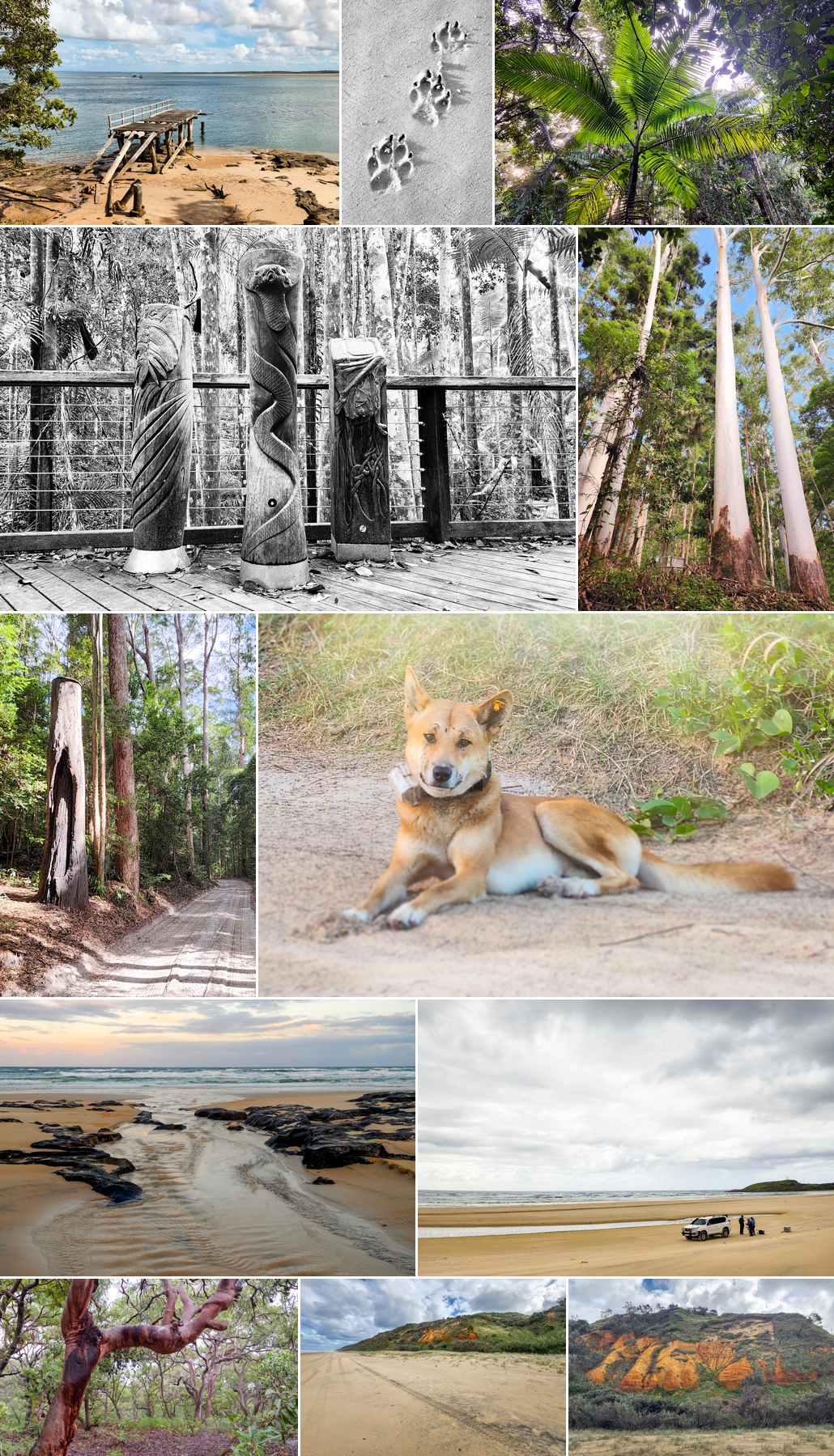
We explored natural fish traps at Champagne Pools and discovered the cultural significance of places like Central Station and Indian Head. Watching wongari (dingoes) roam the beaches also reminded me of K’gari’s extraordinary wildlife and natural beauty.
I left with wonderful memories, countless photographs and a deeper appreciation of the connections between people, culture and Country.
Before this adventure, I thought I knew K’gari. After those two days, I realised how much more there was to discover.
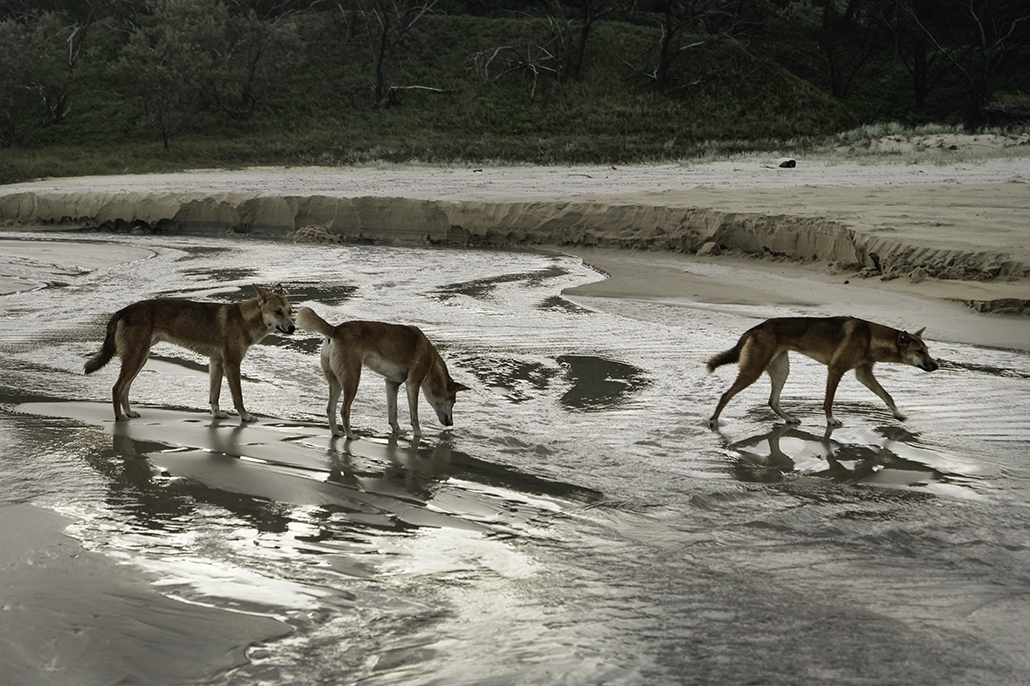
Wongari (dingoes) roam along the beaches of K’gari at dusk.
Interested in a K’gari Cultural Adventure?
Would you like to discover K’gari through the stories, knowledge and traditions of a Butchulla Traditional Owner?
Contact Luke Barrowcliffe at info@brownbitterncommercial.au to enquire about upcoming cultural experiences and booking arrangements.
Exploring K’gari with someone whose family connections span generations offers a perspective that goes far beyond conventional sightseeing.
First time visiting K’gari? Read Your First K’gari Trip: Prepare Before You Cross for practical planning advice.

Sunset as we departed K’gari, onboard the barge heading towards River Heads.
Tips for Travellers
Preparing for Your K’gari Adventure
A little preparation makes exploring K’gari more enjoyable. Check island conditions, pack light and protect yourself from the sun.
These resources may help you plan a comfortable, worry-free adventure:
→ Travel insurance: Explore options for pre-existing medical conditions with AllClear.
→ Packing organisers: Keep your gear tidy with Bagsmart.
→ Australian-inspired skincare: Discover native botanical products at Kakadu Plum Co.
→ Island essentials: Find sun-smart gear and travel accessories at Amazon Australia.
Photography by Jocelyn Watts
View the photo gallery
* DISCLOSURE — LUKE BARROWCLIFFE
The following statement was provided and approved by Butchulla guide Luke Barrowcliffe at the time of this experience.
This experience, and/or my experiences, were run as an independent Traditional Owner tourism operation. Being recognised as Native Title common law holders for K’gari and the surrounding mainland and sea Country provides all Butchulla descendants with the opportunity to run their own commercial enterprises on their traditional homeland Country and share their culture more broadly. Luke Barrowcliffe is in the process of building his commercial operations structure so he can host these experiences more often and make them bookable online. Native Title rights and interests also provide Traditional Owners with the legal freedom to incorporate bushfood and medicine tastings into our experiences; this is an exclusive element of Butchulla culture tours that mainstream operators are not afforded.
___
References & Further Reading
Queensland Parks and Forests — Traditional Owners: Butchulla People
Background on Butchulla Country, traditional custodianship and the long cultural connection with K’gari.
Traditional Owners — Butchulla People
Queensland Government WetlandInfo — K’gari (Fraser Island)
Information about traditional pathways to K’gari, seasonal travel and the Tailor fishing gatherings.
Great Sandy Strait and Surrounding Catchments — K’gari
Butchulla Native Title Aboriginal Corporation — Welcome to Butchulla Country
Information from the Traditional Owners about Butchulla Country, including K’gari and its connection with the mainland.
Butchulla Native Title Aboriginal Corporation