
Follow Ancient Pathways on K’gari
THE FIRST thing you notice when you step onto K’gari (Fraser Island) is the light. It’s softer somehow, even on a bright Queensland day. The salt air seems to move differently, too, as if the island breathes with you.
On this visit in October 2025, I joined a K’gari cultural experience, a pilot program guided by Traditional Owner Luke Barrowcliffe. A group of French visitors and a handful of Aussie relatives joined me.
We weren’t just sightseeing. Instead, we were following the memory of an ancient route. It once connected mainland to island, inland lakes to sandy trails, and communities to the seasonal rhythms of the sea.
This was a journey across Country, where the land itself did much of the talking, if you listened.
*This article contains affiliate links. If you click through and make a purchase, we may earn a commission, at no extra cost to you. It’s how we keep creating helpful stories and guides for you.
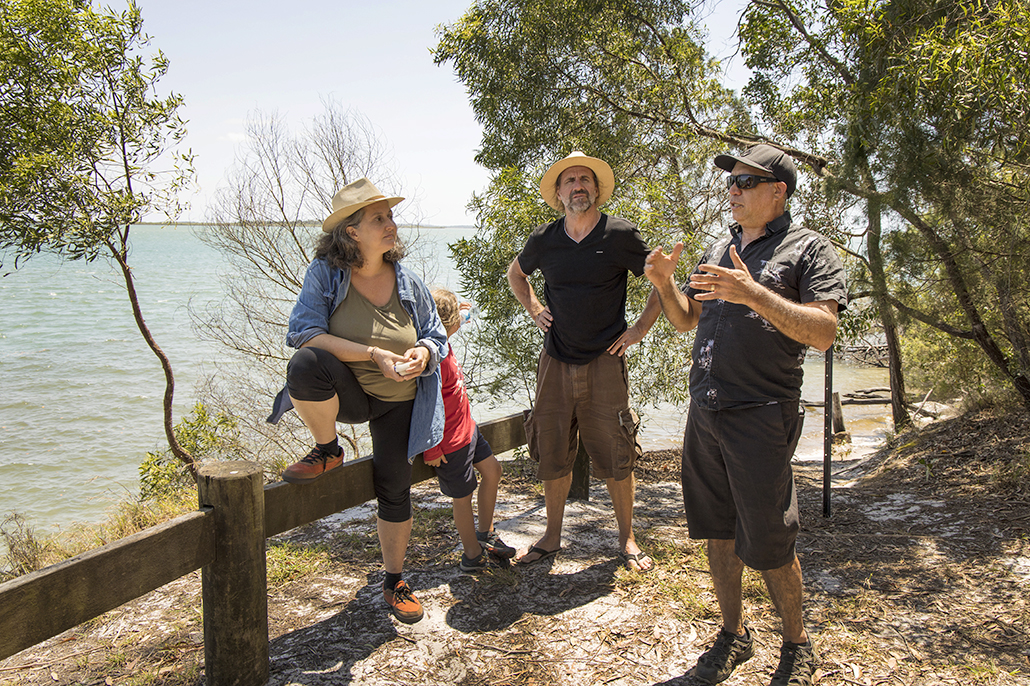
K’gari Cultural Experience guide Luke Barrowcliffe explains how Indigenous people once crossed from the mainland to Ungowa on their journey to the Tailor Festival.
The Heart of a K’gari Cultural Experience
Luke explained that the journey had its origins in Butchulla Country near BBauple Mountain, with pathways eventually taking people across the Great Sandy Strait to K’gari.
Indigenous families travelled this way to the island’s eastern beaches for the annual Tailor fishing season, when vast schools of fish gathered. It became one of the island’s great seasonal events: a time of community, harvesting, sharing and plenty.
Standing there, I imagined thousands of years of footsteps crossing the same terrain. It was hard not to feel the weight of continuity. Culture moves not only through language and art, but through the land itself.
Travel Well. Travel Covered.
K’gari is wild, beautiful and wonderfully remote — which is exactly why thoughtful travel insurance matters.
From Ungowa to Eurong: Reading the Landscape
Luke points out fresh bearded dragon tracks along the bush trail.
Our K’gari cultural experience took us across the island from Ungowa, winding inland towards Eurong. Along the way, the landscape shifted from stringybark and scribbly gum forest to softer sand and coastal heath.
A casual visitor might simply see bush. Luke showed us how to read the landscape as a living map.
Palm trees can indicate freshwater just beneath the sand. Certain plants have medicinal or ceremonial properties. Tracks tell stories about who, or what, has crossed the sand and how recently.
It was a reminder that Country is more than landscape. It is memory, science and story all at once.
The French visitors listened intently. At times they whispered translations to each other; at others, they simply absorbed their surroundings. It felt as though K’gari’s meaning could cross cultural boundaries, even without a shared language.
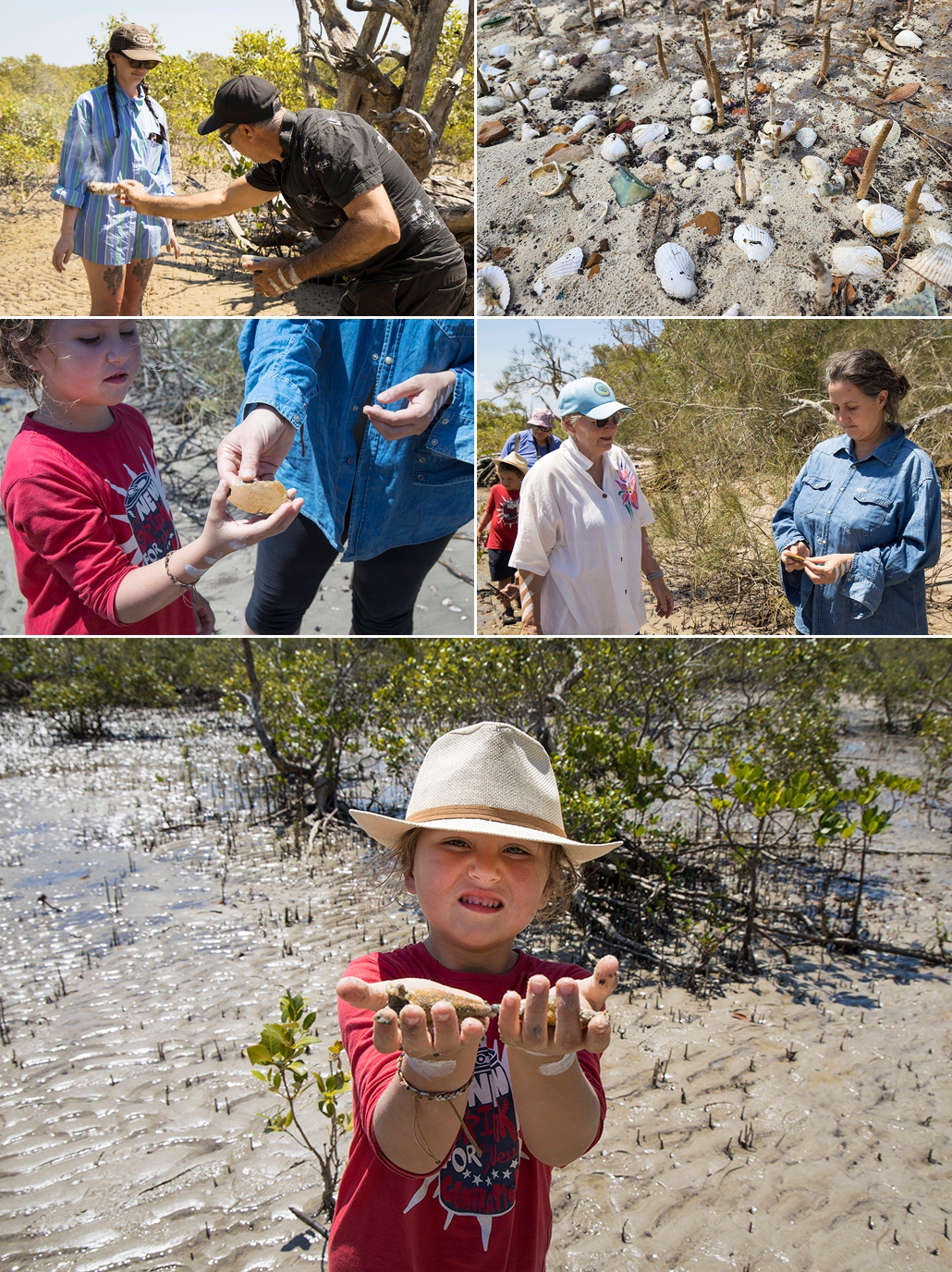
Before stepping onto sacred ground, Luke performs a smoking ceremony near ancient shell middens — traces of generations who lived, gathered, and shared on K’gari.
Bush Tucker: Food as Knowledge
As we walked, Luke pointed out native plants traditionally used as food, medicine or materials. Some flavours can seem sharp or bitter to an unfamiliar palate, while others are surprisingly familiar.
Bush foods weren’t simply “snacks along the way”. They formed part of the seasonal knowledge required to live with the land, rather than against it.
The tucker still features today, although often in a different context. Many native ingredients, once closely tied to place and purpose, are now available in modern forms. Sustainability and community benefit remain important considerations.
Ethical suppliers such as Kakadu Plum Co. stock native herbs, spices and teas, making it possible to bring some of these flavours into everyday cooking. Nothing, however, compares with learning about the plants where they grow.
Food, as Luke reminded us, is knowledge. And knowledge is a responsibility.
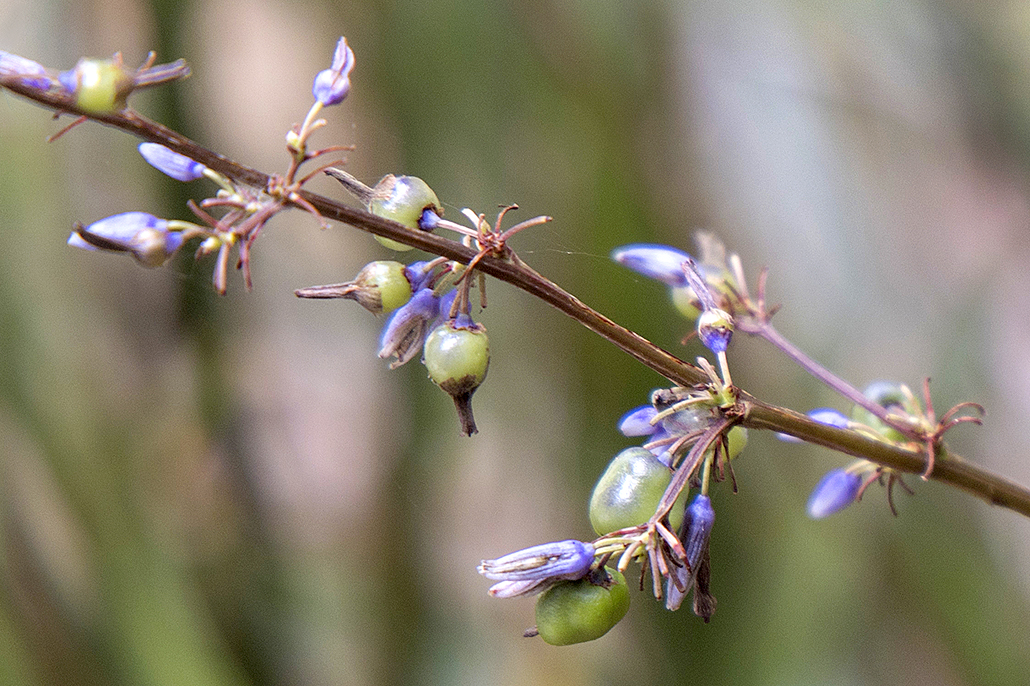
Flax lily (Dianella species) — its small purple berries were eaten in moderation by Indigenous Australians, while the leaves were used for weaving and making string.
The Tailor Season Pilgrimage
Eventually, our path opened onto the coastline, that iconic stretch from Eurong along the sand highway towards Indian Head and the Champagne Pools. The ocean felt immense, folding endlessly onto the beach with patient insistence.
This place was, and remains, the heartbeat of Tailor season.
Luke described how people once gathered here in large numbers to fish, share, celebrate and reconnect with community. Modern anglers continue the pilgrimage each year, drawn by the same run of fish and the timeless rhythm of tide and season.
Different equipment, different stories. The pull of the sea remains the same.
It struck me that culture can continue even when expressed in new forms. Continuity isn’t always dramatic. Sometimes it’s simply a fishing rod where once there was a spear.
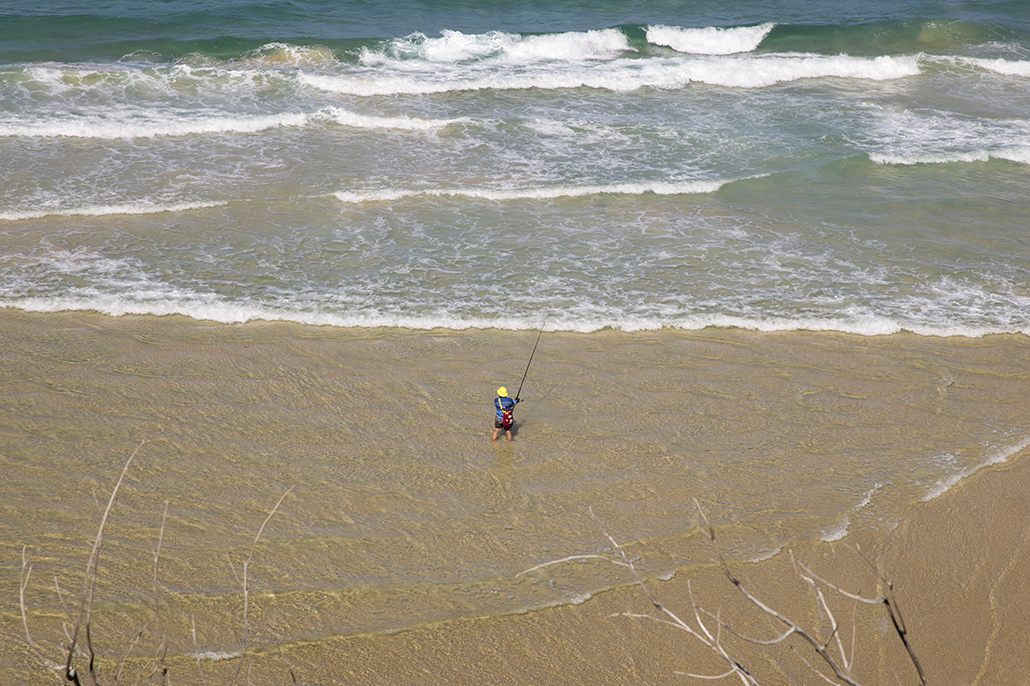
Today’s anglers still make the annual pilgrimage to fish for tailor on K’gari, continuing a tradition once carried out with spears along the same shoreline.
Take Only Memories
One of the most meaningful parts of our K’gari cultural experience came from what wasn’t said. There were respectful, considered pauses when nobody needed to fill the space.
We were guests on Country. With that comes a responsibility to listen, observe and leave no trace except, perhaps, a changed perspective.
At one point, the French group fell silent as we took in the layered cliffs of Indian Head rising above us. Stories belong to this place. Some are shared, some are held close, and others are not meant for tourists’ ears.
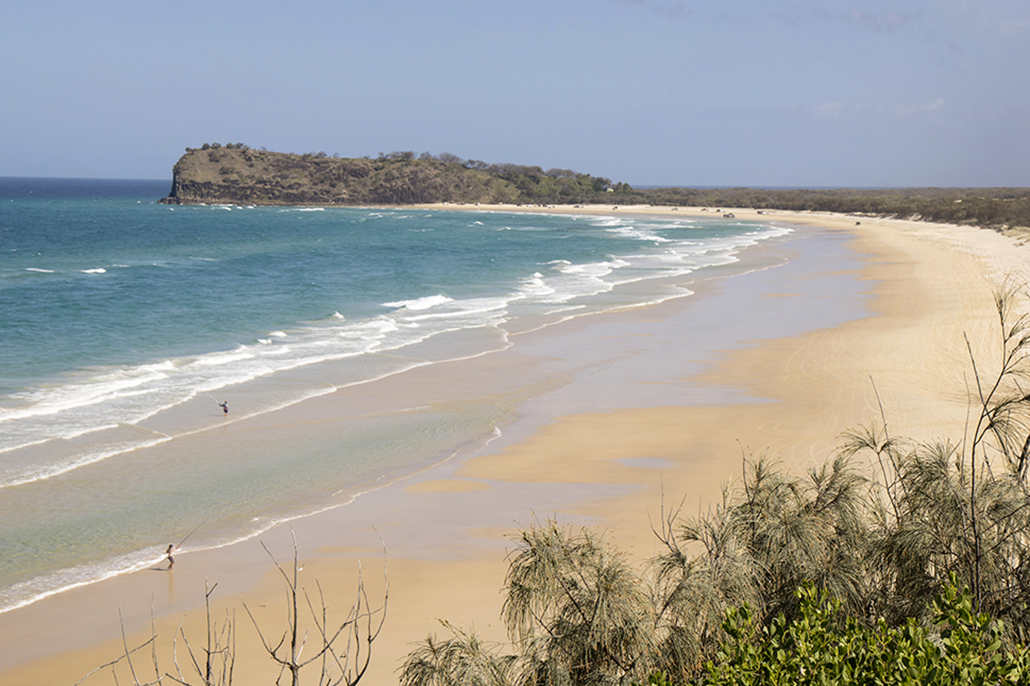
Indian Head, a striking headland on K’gari, holds stories that stretch far beyond its sweeping ocean views.
Champagne Pools: Saltwater, Sunlight and Reflection
Our final stop was the Champagne Pools, where the ocean breaks over volcanic rock and the water bubbles and fizzes like a natural spa.
Luke explained that Butchulla people once used the Champagne Pools as natural fish traps, capturing fish as the tides ebbed and flowed.
The water was cool and clear. Soon the mood shifted from contemplation to something joyfully human: laughter, splashes and shared delight in the simple pleasure of being alive in a beautiful place.
Yet the island’s presence remained. The rocks, tides and wind seemed connected to something much older, right down to the water wrapping around our ankles.
At that moment, I realised this wasn’t simply another K’gari cultural experience. It was an invitation to see differently.
That’s not something you pack in your backpack and take home. It’s something you carry with you and allow to change you a little.
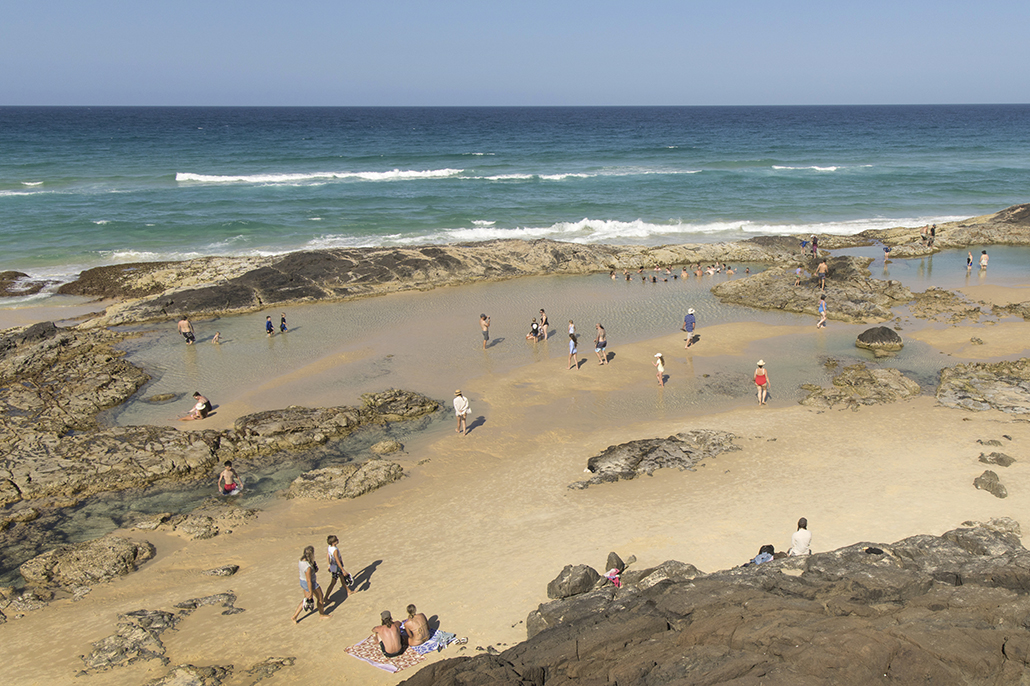
The Champagne Pools on K’gari — once used as fish traps — where ocean waves bubble over rock ledges to create one of the island’s popular natural swimming spots.
K’gari: More Than Paradise, It’s About Presence
K’gari is not just paradise, although it is certainly that. It’s a place of story, relationship and deep time.
Walking this ancient route with Luke wasn’t simply about learning facts. It was about learning how to be present.
- To walk gently.
- To listen deeply.
- To remember that every place has a history, and every history has a heartbeat.
Perhaps the best way to honour that is simply to pay attention.
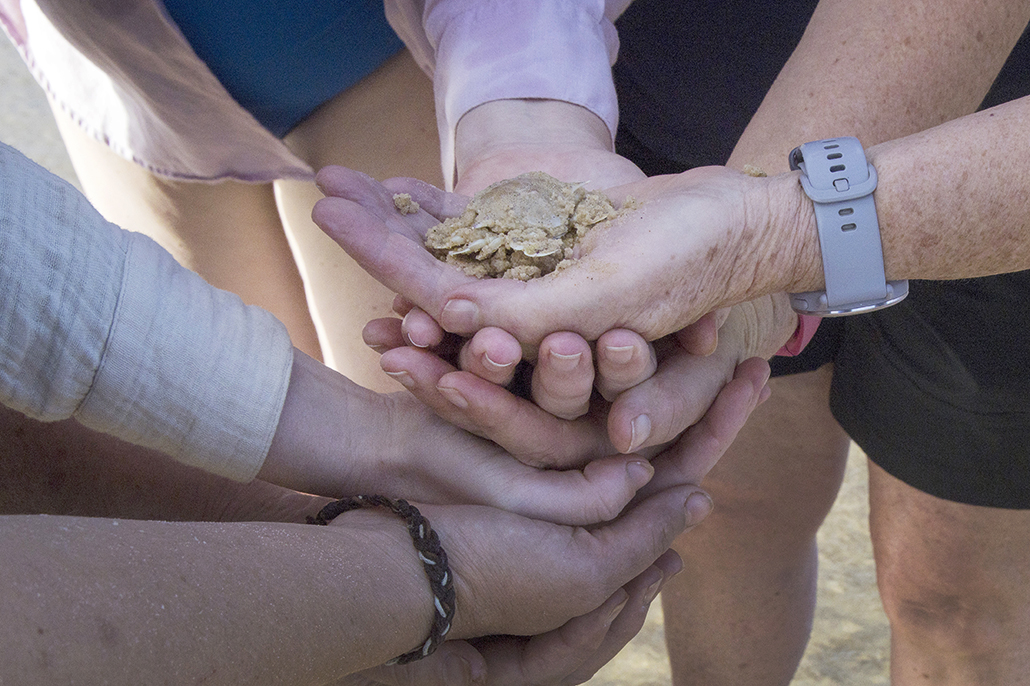
As the tour drew to a close, Luke invited us to make a wish on a small ‘wishing crab’ — a gentle ritual of hope before returning it to the sea.
Ready to Experience K’gari for Yourself?
To experience K’gari through the knowledge of those who know Country best, contact Luke Barrowcliffe at info@brownbitterncommercial.au, or read more about the K’gari Cultural Experience.
For a day on the island, pack light but come prepared. Sun protection, insect repellent, sturdy walking shoes, swimmers and a refillable water bottle are essentials. Add a light rain jacket for K’gari’s changeable coastal weather.
If it’s your first visit to K’gari, you might also like to read Visiting K’gari for the First Time: Essential Guide
Plan & Pack for K’gari
→ Explore travel insurance with AllClear
Travel cover, including options for travellers with pre-existing medical conditions.→ Browse travel organisers with Bagsmart
Lightweight organisers and travel gear for keeping things together between mainland and island.→ Discover Kakadu Plum Co
Australian native foods, botanicals and products inspired by ingredients grown on Country.→ Browse K’gari essentials at Amazon Australia
Sun-smart gear, water bottles, reef shoes and other practical island essentials.
DISCLOSURE
- This experience, and/or my experiences, are being run as an independent Traditional Owner tourism operation. Being recognised as Native Title common law holders for K’gari and the surrounding mainland and sea Country provides all Butchulla descendants with the opportunity to run their own commercial enterprises on their traditional homeland Country and share their culture more broadly. Luke Barrowcliffe is in the process of building his commercial operations structure so he can host these experiences more often and make them bookable online. Native Title rights and interests also provide Traditional Owners with the legal freedom to incorporate bushfood and medicine tastings into our experiences; this is an exclusive element of Butchulla culture tours that mainstream operators are not afforded.
Jocelyn thanks Luke Barrowcliffe for hosting her on this K’gari Cultural Experience.
___
References & Further Reading
Queensland Parks and Forests — Traditional Owners: Butchulla People
Background on Butchulla Country, traditional custodianship and the long cultural connection with K’gari.
Traditional Owners — Butchulla People
Queensland Government WetlandInfo — K’gari (Fraser Island)
Information about traditional pathways to K’gari, seasonal travel and the Tailor fishing gatherings.
Great Sandy Strait and Surrounding Catchments — K’gari
Butchulla Native Title Aboriginal Corporation — Welcome to Butchulla Country
Information from the Traditional Owners about Butchulla Country, including K’gari and its connection with the mainland.
Butchulla Native Title Aboriginal Corporation
