
What Ancient Wisdom Can Teach Modern Home Design
 Canva Pro
Feng Shui in Western Homes: Modern Design or Ancient Folklore?
FENG SHUI has a reputation problem in the West. It’s dismissed by some as superstition and embraced by others as an interiors trend, often without much thought about what lies behind it.
But strip away the mysticism and some feng shui principles start to look surprisingly familiar. They echo ideas architects and interior designers already use to create homes that feel calmer, more comfortable and easier to live in.
As someone who has spent years drafting house plans (before journalism), as well as styling and photographing interiors, I wanted to look at feng shui through a Western design lens. Which principles make practical or psychological sense, and which are probably better left to folklore?
Here’s what I found.
- This article contains an affiliate link. If you make a booking through that link, Jocelyn Magazine may receive a small commission at no additional cost to you.

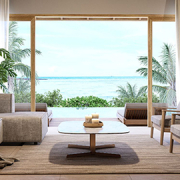
Natural light, open sightlines and an easy connection with outdoors can make a home feel calmer and more inviting.
What is feng shui actually trying to do?
Feng shui is an ancient Chinese practice concerned with the relationship between people and their surroundings. At its heart is the idea of qi, or energy, and how it moves through a space.
Traditional feng shui is complex. It considers orientation, placement, balance and the relationship between different elements. However, the version adopted in Western homes is often much simpler.
Move the bed. Add a plant. Don’t put a mirror opposite the front door. Keep the toilet lid down or your wealth might disappear with the next flush.
Some advice sounds remarkably sensible. Some requires a rather greater leap of faith.
Rather than asking whether qi can be measured, I’m interested in a more practical question. Do some feng shui principles simply make our homes work and feel better? Let’s put a few of them to the test.
1. The command position: why we like to see the door

Feng shui’s command position favours a secure, anchored position with awareness of the surrounding room.
One of the best-known feng shui principles is the command position.
The idea is simple. When sitting at a desk, lying in bed or relaxing in an important chair, you should be able to see the entrance to the room. However, you shouldn’t be directly in line with the doorway.
There’s a surprisingly practical argument for this.
Most of us feel more comfortable when we can see who is entering a room. Sitting with your back to a busy doorway can leave you feeling slightly exposed. You may not consciously think about it, but your brain still registers movement behind you.
The same principle can influence furniture placement.
A sofa floating randomly in a room may feel less settled than one anchored by a wall or clearly positioned within the space. Similarly, a desk can feel more comfortable when you aren’t constantly wondering who’s walking up behind you.
As a photographer, I’ve noticed another benefit. Well-positioned furniture often makes a room easier to photograph. The eye understands where to travel and where to settle.
Perhaps the ancient masters were onto something.
The verdict: Design sense.
2. Clear the clutter, no mysticism required
Feng shui tells us clutter can block the flow of qi.
Western design psychology offers another explanation. Clutter creates visual noise. It also creates work.
A kitchen bench covered in appliances, paperwork and yesterday’s shopping constantly reminds us of things requiring attention. An overflowing entrance makes arriving home less pleasant. Meanwhile, an overfilled bedroom can make a space intended for rest feel surprisingly busy.
However, this doesn’t mean every home should resemble a minimalist display suite.
Books, photographs, artwork and collected objects give homes character. There’s a big difference between possessions that tell our story and possessions that simply get in our way.
Good storage helps. So does periodically asking whether the things occupying our rooms still deserve the space we’re giving them.
You don’t have to clear every surface to improve the feeling of a room. Sometimes creating a little breathing space is enough.
The verdict: Feng shui and modern design agree.

Good circulation matters whether you describe it as allowing qi to flow or simply giving people room to move.
3. Furniture needs room to breathe
Feng shui places considerable importance on allowing energy to move freely through a home.
From a Western design perspective, I’d replace the word energy with people.
Good circulation is one of the fundamentals of a functional floor plan.
You shouldn’t have to turn sideways to squeeze between the dining table and wall. A bedroom door shouldn’t collide with a bedside table. Nor should you have to negotiate an obstacle course between the sofa and kitchen every time the phone rings.
This becomes particularly important in small homes.
Oversized furniture can make a perfectly adequate room feel cramped. Conversely, choosing pieces in proportion to the available space can make the same room feel surprisingly generous.
You can see these principles applied in nine coastal apartment ideas for small spaces, where furniture scale, visible floor space and clear pathways help create a more relaxed, resort-style interior.
I’ve spent years drawing and redrawing house plans. A few centimetres can sometimes make an extraordinary difference to how comfortably a space works.
Furniture placement can do the same. Before buying another chair or side table, consider the pathways through the room. If you regularly have to walk around something, there’s a fair chance it shouldn’t be there.
The verdict: Definitely design sense.
4. Why your bed position really does matter

A solid wall behind the bed, visual balance and awareness of the doorway are feng shui ideas that also make practical design sense.
Feng shui has plenty to say about beds.
Ideally, the bed should have a solid wall behind it. You should be able to see the door without lying directly opposite it. Balance on either side is encouraged, while certain positions beneath windows or beams are discouraged.
Not all of these rules need a mystical explanation.
A bed with a solid wall and headboard tends to feel visually anchored. Space on either side can make it easier to use, particularly for couples. Balanced bedside tables and lighting can also give a room a calmer appearance.
Then there are practical considerations.
Windows can bring light, noise and draughts. Doors create traffic paths. Overhead cupboards or heavy architectural features can make a bed feel enclosed.
A bedroom should ultimately make its occupants feel comfortable and secure. That matters far more than blindly following a diagram.
As for warnings that sleeping with your feet pointing towards the door could affect your fortunes? That’s where I’m happy to leave a little room for scepticism.
The verdict: Mostly good bedroom design, with a sprinkling of folklore.
5. Mirrors: clever design tool or feng shui menace?
Mirrors seem to have particularly complicated lives in feng shui.
Depending on which advice you follow, they shouldn’t face the front door. They shouldn’t reflect the bed. Two mirrors shouldn’t confront each other. A badly positioned mirror may even send positive energy straight back out of the house.
Interior designers also care about mirror placement, although usually for different reasons.
A mirror can bounce natural light into a darker area. It can make a small room feel larger and create an interesting sightline.
However, a mirror only improves the view if it reflects something worth seeing.
Position one opposite a beautiful window and you’ve effectively doubled the outlook. Put it opposite a pile of washing and you’ve achieved much the same thing in reverse.
Mirrors can also create glare or distracting reflections. In a bedroom, some people simply dislike catching unexpected movement in a mirror at night.
So yes, where you hang a mirror matters. I’m just not convinced your prosperity will bounce out the front door with the reflection.
The verdict: Placement matters. The mystical bit is optional.

A well-placed mirror can reflect greenery and natural light rather than simply doubling whatever happens to be in front of it.
6. Natural light, plants and our connection with nature
This is where ancient feng shui and contemporary design begin to find interesting common ground.
Feng shui values natural light, fresh air, plants and connections with the natural world. Modern designers increasingly talk about similar ideas through biophilic design.
Biophilic design aims to strengthen our connection with nature through the built environment. That might involve plants, natural materials, daylight, outdoor views or access to gardens and balconies.
You don’t need to turn your living room into a greenhouse.
A leafy plant beside a window can soften a hard corner. Timber, stone, linen and other natural materials add texture. Meanwhile, opening curtains to daylight can transform the mood of a room almost instantly.
This is particularly relevant to coastal homes. One of the great pleasures of coastal living is the relationship between indoors and outdoors. Breezes, changing light, greenery and glimpses of sky or water all contribute to the character of a home.
Good design makes the most of those connections rather than fighting them.
The verdict: A strong design case.
Create a calmer space with better lighting
Good lighting can change the mood of a room just as effectively as rearranging the furniture. Consider layered lighting — combining ambient, task and accent lights — to create a warmer, more flexible interior.
Explore lighting ideas at Mica Lighting

Plants, daylight and natural materials create a connection with nature that appears in both feng shui and modern biophilic design.
7. Sharp corners and awkward spaces
Traditional feng shui can be suspicious of sharp corners pointing towards beds, chairs and other important positions. These are sometimes described as creating poison arrows.
The terminology may sound dramatic. Yet there is a practical idea buried underneath it. We tend not to enjoy spaces that feel physically threatening or awkward.
A sharp furniture corner jutting into a walkway is irritating. A low shelf positioned at forehead height isn’t going to improve anyone’s wellbeing. Nor is a coffee table that attacks your shin every morning.
Architectural corners can affect a room visually, too. Strong projecting angles may direct attention towards or away from particular areas.
Often the solution is simply thoughtful furniture placement. Move the chair. Reposition the table. Soften an awkward corner with a plant or lamp. Most importantly, remove anything that regularly requires you to dodge it.
The verdict: Less poison arrow, more bruised shin.
8. And then there’s the toilet …

Feng shui has plenty to say about bathrooms, although good ventilation, light and thoughtful planning may be explanation enough.
No examination of Western feng shui would be complete without discussing the bathroom.
Bathrooms attract an impressive collection of feng shui rules.
Depending on the interpretation, toilets can drain energy from a home. They may also be accused of flushing away wealth. Hence the often-repeated advice to keep the toilet lid down.
I’m all for keeping the toilet lid down. However, hygiene and aesthetics are convincing enough reasons for me.
There are also sound design arguments for treating bathrooms carefully. Good ventilation matters. Natural light helps. Storage prevents toiletries taking over every available surface.
Ideally, a toilet also shouldn’t dominate the view from a living or dining space. That’s not because prosperity is disappearing down the plumbing. It’s because nobody wants to contemplate the loo over lunch.
The verdict: Good hygiene and good planning don’t require qi.
Attractive baskets, drawer organisers and small-space storage solutions can help keep everyday clutter under control without stripping a home of personality.
So, does feng shui work in Western homes?
That depends on what we mean by work. If we expect moving a mirror or adding a money plant to change our fortunes, feng shui asks us to accept ideas that can’t easily be tested through a Western design lens.
However, dismissing the entire tradition as superstition seems equally simplistic. Some feng shui principles for Western homes make surprisingly good practical sense.
We like clear pathways. We respond to natural light. We generally feel more comfortable when we can see a room’s entrance. Proportion matters. Clutter can make us feel overwhelmed, while nature can make an interior feel softer and more inviting.
None of those ideas requires a belief in invisible energy. Instead, they suggest people have been observing the relationship between humans and their surroundings for a very long time.
Different cultures may simply use different language to explain what they observe.
Perhaps the best feng shui rule is simply to pay attention
There’s one aspect of feng shui I find particularly appealing. It asks us to notice our surroundings. Most of us know when a room doesn’t feel quite right, even when we can’t immediately explain why.
There’s the chair nobody chooses to sit in. The hallway that always feels dark and unwelcoming. The dining table everyone bumps into. Then there’s the sunny corner where people naturally linger with a morning coffee.
Our homes influence how we move, rest, work and interact with other people.
Sometimes the problem can be solved by moving a piece of furniture 30 centimetres. Sometimes we need better lighting, less clutter or a clearer pathway. Occasionally, the architecture itself is working against us.
Perhaps we don’t need to agree on whether qi is flowing through the front door to learn something useful from feng shui. We simply need to notice how our homes make us feel. And that’s one ancient design principle worth keeping.
Refresh the space you already have
Sometimes a home doesn’t need a complete redesign. Better lighting, a calmer colour palette or a simple surface update can change how a room looks and feels.
Explore Mica Lighting
Discover Lazy Tiles
—
References & further reading
- Tekin, B.H. et al. — A Systematic Review and Conceptual Framework of Biophilic Design Parameters in Clinical Environments. This peer-reviewed review supports the discussion of natural light, fresh air, views, comfort, security and connection with nature as elements associated with wellbeing.
Read the study via PubMed Central - Vartanian et al. / review — Psychological and neural responses to architectural interiors. Particularly relevant to the sections on the command position, visual openness and why some spatial arrangements feel more comfortable or secure than others. It discusses prospect-refuge theory and research into people’s psychological responses to open and enclosed interiors.
Read the research overview - Ige et al. — Built and natural environment planning principles for promoting health: an umbrella review. A substantial review of 117 systematic reviews and other review-level documents. It supports the broader premise that characteristics of our built environment — including housing quality, lighting, access to nature and ease of movement — can influence health and wellbeing.
Read the study via PubMed Central
 Jocelyn Watts

 Canva Pro
 Jocelyn Watts
 Canva Pro
 Canva Pro
 Canva Pro
Your distinction between possessions that tell a story and clutter that creates work is especially useful. The command position also makes practical sense when framed as sightlines and a feeling of security rather than measurable qi. I like that each principle gets a clear design-or-folklore verdict.
Thanks for reading and commenting. I’m glad that distinction resonated. Our homes can be full of meaningful possessions without feeling cluttered.